
Reviewed · PUERTO VALLARTA TOURS
Whale and Dolphin Watching with a Biologist in Puerto Vallarta
Wildlife in Puerto Vallarta gets personal fast. With a cetacean biologist guiding you and a citizen science angle, you are not just watching humpbacks, you are learning how they behave and even helping a real research effort. The main consideration: sightings depend on conditions, so you might get a slower start on the water.
You will likely love the way the trip mixes science and fun, from an on-land briefing to hearing whales through a hydrophone. If you want a small-group feel, this one caps at 20 travelers, which makes it easier to move for good views. A final heads-up from the real world, there is no bathroom on the boat.
In This Review
- Key things I’d zoom in on before you book
- Why humpbacks in Puerto Vallarta feel extra special
- What makes this tour different: a biologist plus citizen science
- Who you might see: humpbacks, dolphins, turtles, mantas, and more
- The 4-hour flow, from check-in to the best viewing zone
- 1) Start at Opequimar, then get your bearings
- 2) Head out and search, with whale behavior guiding the route
- 3) The main whale viewing time, including sound
- 4) Dolphin viewing and other extras, when the day allows
- 5) Return to harbor
- The boat and comfort details that actually matter
- Price and value: is $105 worth it?
- Who this tour is best for, and who should think twice
- The people factor: guides and captains make a difference
- My booking verdict: should you book this whale and dolphin watch?
- FAQ
- What is the duration of the whale and dolphin watching tour?
- Where does the tour meet and how does it end?
- What animals can I expect to see?
- Is the tour led by a biologist?
- How big is the group?
- Is the tour offered in English?
- Is it suitable for everyone?
- What happens if weather is bad?
- What is the cancellation refund policy?
Key things I’d zoom in on before you book
- Biologist-led with real research focus, including participation in whale and dolphin studies
- High humpback chance in winter, when Puerto Vallarta whales arrive to mate and give birth
- Small boat group size (max 20) for better sight lines and less crowding
- Listening to whales with a hydrophone, a standout science-to-wow moment
- More than whales, with possible dolphins, turtles, and giant manta rays
- Weather matters, and the tour can be rescheduled or refunded if it cannot run safely
Why humpbacks in Puerto Vallarta feel extra special
Puerto Vallarta is one of those places where the ocean can turn into a living classroom. In the winter months, humpback whales come into the bay area to mate and to give birth. That is important, because you are more likely to see mothers, calves, and groups with clear social behavior, not just a quick glimpse.
This tour leans into that seasonal timing. Instead of treating whale watching like a generic wildlife cruise, you are set up for a deeper read of what you are seeing, and why. When a whale is singing, surfacing, rolling, or staying near a calf, your guide is there to connect it to actual whale behavior.
Vallarta outings in Puerto Vallarta we have also put through the notes
- Puerto Vallarta Best Zipline Canopy + Tequila and Speed Boat Ride
★ 5.0 · 3,786 reviews - Winner 2025 Downtown Vallarta Food Tour with Vallarta Food Tours
★ 5.0 · 3,738 reviews - Outdoor Ziplining, Waterfalls & Speed boat in Puerto Vallarta
★ 5.0 · 1,796 reviews - Private Tour: Puerto Vallarta ATV Adventure
★ 5.0 · 1,100 reviews - Taco Adventure Evening Food Tour with Vallarta Food Tours
★ 5.0 · 934 reviews
What makes this tour different: a biologist plus citizen science
The biggest upgrade here is the guide. You are not getting a talk from someone who once read a blog post. You have biologists with advanced marine training, and the provider describes their lead guides as biologists with Master’s degrees in Marine Ecology, plus credentials that include science journalism and professional wildlife photography.
On the water, that matters in practical ways. You are more likely to:
- Understand what you are looking at when the whale is far off
- Predict where the animals might surface based on behavior patterns
- Appreciate the difference between mothers and calves versus other groups
- Hear and interpret whale sounds through a hydrophone
And then there is the citizen science element. The provider frames your participation as part of what makes their research possible. Translation for you: you will not just be passive. You should expect prompts and involvement that help the team collect useful observations.
Who you might see: humpbacks, dolphins, turtles, mantas, and more
This is a whale and dolphin watching tour, but the scope is wider than just humpbacks. Depending on the day, you might see:
- Humpback whales, especially during winter when they are arriving to mate and birth calves
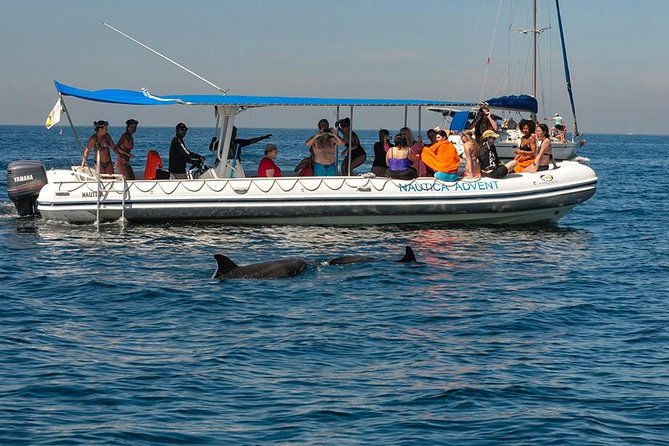
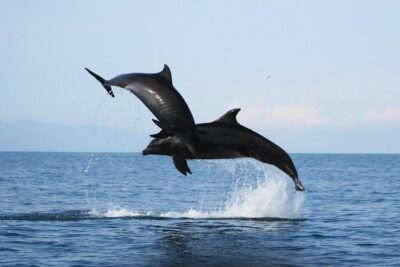
- Multiple dolphin species, and the chance to see different groups (like bottlenose, spotted, spinner, and rough toothed)
- Orcas or false orcas with luck
- Giant manta rays
- Marine turtles
Here is the key: you are not promised a single species parade in one predictable order. Instead, you get a guided search and interpretation, and the tour is designed to adapt as sightings happen.
From the field notes people shared after their trips, whales can show up quickly on some outings, and other times it can take longer. If you are the type who gets impatient, give yourself grace. Once the whales appear, the experience can accelerate fast.
The 4-hour flow, from check-in to the best viewing zone
This is about four hours on the water, give or take. Your start is at Opequimar Centro Marino, Av. Paseo de la Marina Sur 214, Marina Vallarta (Marina Vallarta area). The end is back at that same meeting point.
While the exact schedule can shift based on where the whales are, the trip rhythm is typically something like this:
1) Start at Opequimar, then get your bearings
Before you motor out, you can expect a quick educational setup. People noted a pre-cruise presentation on land, and in some cases the briefing included hands-on science moments, like touching baleen and seeing the size of whale vertebrae. Even if you skip all the details, you will come back on the water better prepared to spot whale behavior.
Practical tip: if you want the most out of the talk, arrive on time. The whole experience works better when you understand what to watch for when the whales surface.
Other whale trips in Puerto Vallarta that earned a write-up
- Whale and Dolphin Watching with a Biologist in Puerto Vallarta★ 5.0 · 666 reviews
- Sunsets and Whales Mega Yachts ALL INCLUSIVE: Puerto Vallarta★ 5.0 · 509 reviews
- Whale Encounter Puerto Vallarta★ 5.0 · 469 reviews
- Whale Watching Cruise In Puerto Vallarta & Nuevo Vallarta★ 5.0 · 398 reviews
- Small-Group Half-Day Whale-Watching Tour in Puerto Vallarta★ 5.0 · 334 reviews
- Whale & Dolphin Watching Cruise in Puerto Vallarta All Inclusive★ 4.0 · 212 reviews
- Whale Watching Experience★ 4.5 · 186 reviews
2) Head out and search, with whale behavior guiding the route
Once you launch, you are usually not waiting around blindly. Your cetacean specialist is there to help locate the right animals and read what they are doing.
Based on real trip accounts, whales can appear within about 15 to 20 minutes after departure on a good run, while other days can start slower, around an hour. The point is not the clock, it is the search quality and the ability to interpret what is happening when you finally get eyes on them.
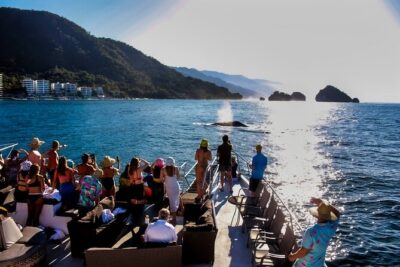
Also, a covered boat is part of the comfort story here. In sun or wind, that coverage can make the ride more pleasant without blocking your view.
3) The main whale viewing time, including sound
This is the heart of the tour. Many of the most memorable moments revolve around:
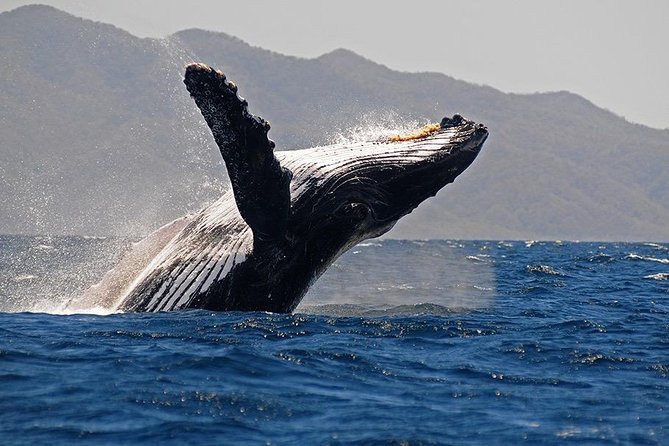
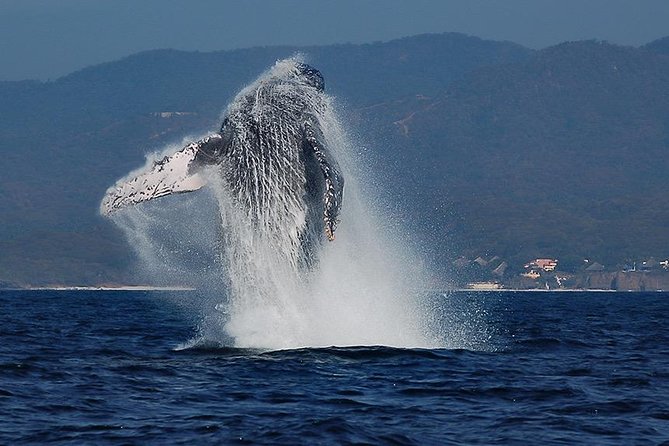
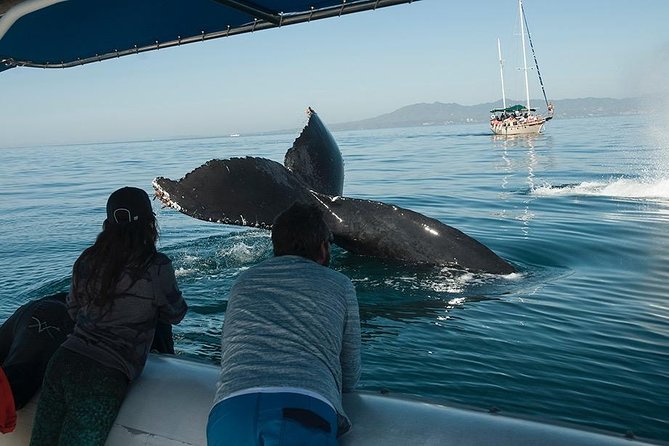
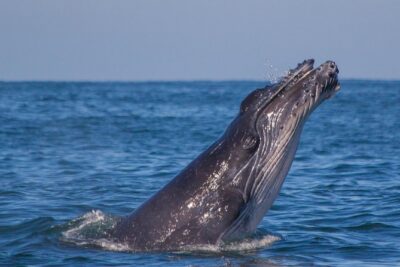
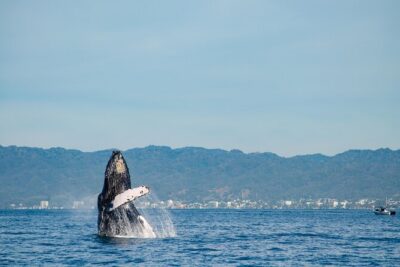
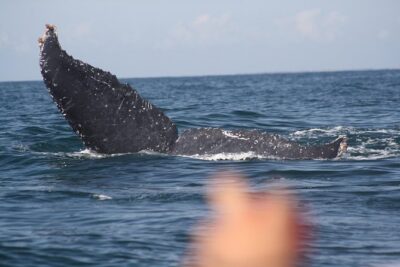
- Close surfacing and fluke displays
- Breaches and mother-calf interactions
- Males competing or moving through groups
- Listening to whale songs with a hydrophone, which gives you a sense of the underwater world you cannot see
One standout pattern in people’s experiences: when the mother and calf are present, behavior can turn into a kind of wildlife lesson. You may see communication moments like tail slapping and learn how calves respond to adult cues.
If you are chasing photos, you will likely appreciate the idea that the captain can reposition to keep whales in view while still maintaining space. People also talked about the ability to get into strong fluke viewing angles during surfacing.
4) Dolphin viewing and other extras, when the day allows
After whale time, the tour typically shifts to dolphins. Dolphins are often described as playful and active around whales, but you will still want to watch behavior, not just bodies in water.
On some outings, additional wildlife shows up, like manta rays and turtles. Those are not guaranteed, but the tour is framed to look for them, and some people did get those bonus sightings.
5) Return to harbor
Once the best viewing window is done, you head back to Opequimar Centro Marino. People described time spent with whales as often lasting well over an hour, with sandwich and drinks sometimes included during the whale-area stop. The overall experience still lands around the four-hour mark.
The boat and comfort details that actually matter
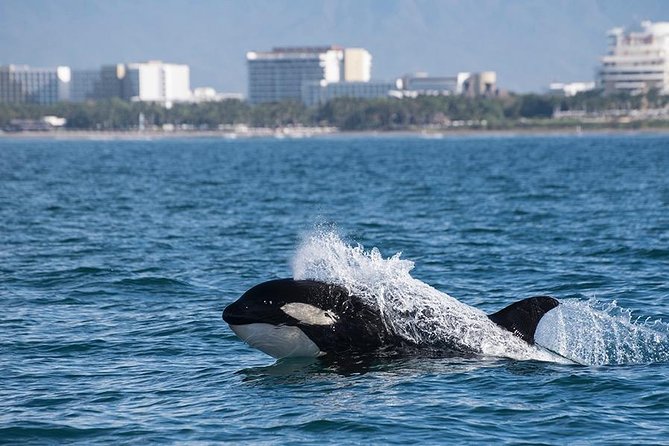
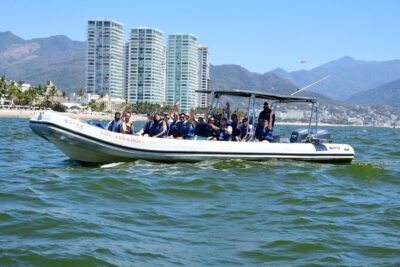
This tour is capped at a maximum of 20 travelers, and many experiences mentioned smaller groups on the water. Smaller groups help in two ways:
- Less scrambling for a good seat or viewing spot
- A calmer feel, especially when you are trying to watch for surfacing cues
A few practical notes based on what people reported:
- The boat has no bathroom, so plan accordingly before you go
- You may be wearing life jackets during the ride, and the crew helps with that quickly
- Wind and sun can happen in coastal weather, so bring sun protection even if the boat is covered
If you get motion sickness easily, consider a remedy in advance, since you are on moving water for the better part of the afternoon.
Price and value: is $105 worth it?
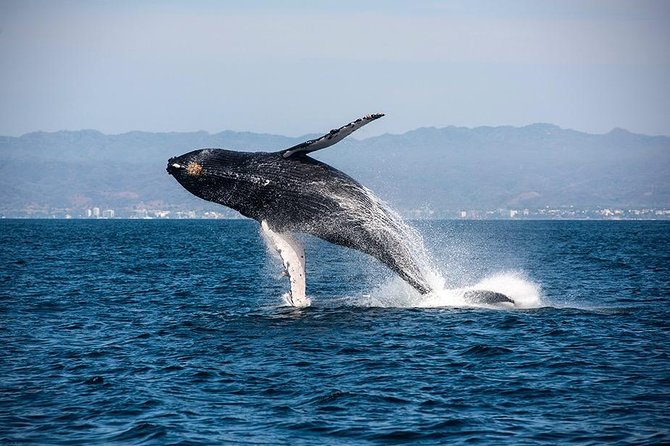
At $105 per person for about four hours, this is not the cheapest whale watch option, but it does not pretend to be. The value comes from what you get per minute:
- A marine biologist guide instead of a general guide
- A research or citizen science participation component
- The chance to hear whale songs with a hydrophone
- Small-group limits that support better viewing and learning
- A stated guarantee concept: the provider says there is a guarantee to find the animals, and if not, money back
Important reality check: the ocean controls the show. No company can force whales into a predictable schedule. But if you care about the quality of the guide and the science experience, not just the novelty of seeing a whale, the price-to-experience ratio can feel fair.
Also, winter whale season in Puerto Vallarta is a limited window. Booking the right tour early helps you lock in your preferred date. People often book this about 26 days in advance, which tells you demand is real.
Who this tour is best for, and who should think twice
This is a strong pick if you want:
- A guided, education-forward experience
- A more intimate group size (max 20)
- More than a checklist of animals, you want behavior explained
- A chance at multiple species, not only humpbacks
It can also work well for families, including teenagers, since the guide style is designed around explaining what you are seeing while still keeping it fun.
This is also listed as not recommended for people more than 7 months pregnant. Service animals are allowed, and the meeting point is near public transportation.
If you are someone who needs predictable schedules regardless of sightings, this might feel less structured. The ocean is fluid, and the tour adapts as animals appear.
The people factor: guides and captains make a difference
The guide lineup you might encounter includes cetacean biologists such as Camilla, Jemma, and others, and the provider also emphasizes that the guides have strong marine ecology credentials and media experience.
From the way the crew was described, the team dynamic matters:
- The biologist explains behavior clearly and keeps you oriented
- The captain handles safe navigation and repositioning to put you in strong viewing spots
- The partnership helps when the day is windy or when whales show up suddenly
Even small details can improve the day. People mentioned thoughtful touches, like the guide using humor and knowledge to keep the energy up, and one person noted a birthday celebration during the trip. Those are not the core reason to book, but they show you the tour aims for more than a corporate script.
My booking verdict: should you book this whale and dolphin watch?
If you want your Puerto Vallarta whale watching to feel like a real wildlife education experience, I think this is a solid book. The biologist-led format is the big draw, and the hydrophone plus behavior focus is exactly what separates this from a generic boat ride.
I would book it if:
- You are visiting in winter and want humpback whale odds
- You like science and want your questions answered on the water
- You prefer smaller groups and better viewing options
I might hesitate if:
- You need a guaranteed set of animals every time, with no flexibility
- You are very sensitive to wind, motion, or long stretches without a bathroom onboard
- You fall into the late-stage pregnancy guidance (over 7 months)
If you come prepared, keep a flexible mindset, and lean into the guide’s instructions, you are likely to leave with those moments you cannot recreate at home. Hearing whale songs and watching mothers and calves in the wild is one of those experiences that sticks.
FAQ
What is the duration of the whale and dolphin watching tour?
The tour is approximately 4 hours.
Where does the tour meet and how does it end?
You meet at Opequimar Centro Marino, Av. Paseo de la Marina Sur 214, Marina Vallarta, 48450 Puerto Vallarta, Jal., Mexico. The activity ends back at the meeting point.
What animals can I expect to see?
The tour is designed for humpback whales and dolphins, and with luck you may also see marine turtles and giant mantas. Different dolphin species may appear, and orcas or false orcas are mentioned as a possibility with luck.
Is the tour led by a biologist?
Yes. The tour is led by cetacean specialists described as biologists with Master’s degrees in Marine Ecology, and the provider also lists additional credentials for some guides.
How big is the group?
The tour has a maximum of 20 travelers.
Is the tour offered in English?
Yes, it is offered in English.
Is it suitable for everyone?
Most travelers can participate. It is not recommended for people more than 7 months pregnant.
What happens if weather is bad?
This experience requires good weather. If it is canceled due to poor weather, you will be offered a different date or a full refund.
What is the cancellation refund policy?
You can cancel up to 24 hours in advance for a full refund. Canceling less than 24 hours before the start time is not refunded.
More dolphin trips that made the Puerto Vallarta cut
Whale trips still worth a look around Puerto Vallarta
Further Vallarta outings we have reviewed in Puerto Vallarta
Not quite it? More Puerto Vallarta tours from our review pile


Puerto Vallarta Tours in one list.
 ★ 5.0Puerto Vallarta Best Zipline Canopy + Tequila and Speed Boat RideFrom $1203,786 reviews
 ★ 5.0Winner 2025 Downtown Vallarta Food Tour with Vallarta Food ToursFrom $593,738 reviews
 ★ 5.0Outdoor Ziplining, Waterfalls & Speed boat in Puerto VallartaFrom $1291,796 reviews
 ★ 5.0Private Tour: Puerto Vallarta ATV AdventureFrom $1181,100 reviews
 ★ 5.0Taco Adventure Evening Food Tour with Vallarta Food ToursFrom $55934 reviews
 ★ 5.0Puerto Vallarta’s Best Canopy Zipline + Jorullo Bridge walk!From $58817 reviews
 ★ 5.0Sierra Madre ATV Adventure from Puerto VallartaFrom $81809 reviews
 ★ 5.0Signature Taco Tour in PV with Vallarta EatsFrom $62758 reviews
Where else it sits