
Reviewed · HISTORICAL TOURS
Walking Tour of the Historic Center of Mexico City
Mexico City’s center tells two stories at once. This 3-hour walk threads together pre-Hispanic and colonial landmarks so you can see how Mexico’s identity formed in stone, power, and street life.
I love the small-group pace. Guides like Fer (often seen as part of the green-shirt umbrella crew), Luis, Fernanda, Gabby, Alexia, Eduardo, Nat, Benjamin, Oscar, Thomas, and Sarah tend to tell history like a story, not a lecture, so you get context you can actually use while you wander afterward. I also love the stop inside the Ministry of Education building at Museo Vivo del Muralismo, where you’ll see a third of Diego Rivera’s murals and learn how art captured festivals, trade, social struggle, and politics in the early 1900s.
One possible drawback: plan for a lot of walking, including cobblestone streets, with limited spots to sit. If you’re not used to Mexico City’s elevation or you need frequent breaks, bring water and pace yourself.
In This Review
- Key Highlights You Should Know Before You Go
- Getting Your Bearings in Centro’s Pre-Hispanic and Colonial Maze
- Start at the Zócalo, Where Mexico City’s Power Still Hangs in the Air
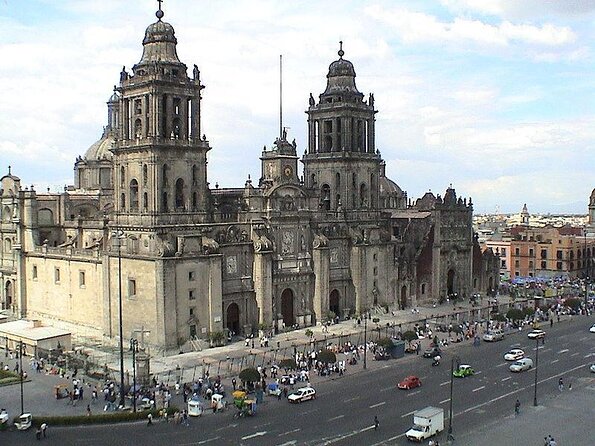
- Catedral Metropolitana Outside: Baroque to Neoclassical Without the Ticket Hassle
- Templo Mayor Area: Understanding Mexica Worldview Through the Ruins
- Diego Rivera’s Third of a Career at Museo Vivo del Muralismo
- Santo Domingo Plaza and Plaza Tolsa: From Viceroyalty to Day of the Dead Conversations
- Ventana Arqueologica: The Past Literally Under the Sidewalk
- Palacio de Bellas Artes and Palacio Postal: When City Power Lives in Pretty Buildings
- House of Tiles at the End: A Photo Magnet With Real Cultural Weight
- What You’ll Learn From the Tour’s Big Theme: Fusion of Cultures
- Pacing, Walking, and Comfort: Small Group, Big Streets
- Booking Value: Where Included Tickets Actually Help
- Guides, Tone, and the Human Touch
- Who Should Book This Walk, and Who Might Skip It
- Should You Book This Historic Center Walk?
- FAQ
- How long is the Walking Tour of the Historic Center of Mexico City?
- Is the tour offered in English?
- What sites have admission included, and what is not included?
- Does the tour include seeing the cathedral and postal palace?
- Where does the tour start and end?
- How big is the group?
- What is the cancellation policy?
Key Highlights You Should Know Before You Go
- Small-group format (max 10 travelers) keeps the walk lively and easier to manage at busy crossings
- Museo Vivo del Muralismo entry included, so you don’t have to hunt tickets mid-walk
- Templo Mayor and Ventana Arqueologica show you Mexico City’s layered past underfoot
- A history stop that connects art to everyday life, especially through Diego Rivera’s murals
- Stops focused on public squares, so you get the city feeling, not just monument photos
- English guides with story-driven explanations, including recognizable guide styles like green shirts and umbrellas
Getting Your Bearings in Centro’s Pre-Hispanic and Colonial Maze
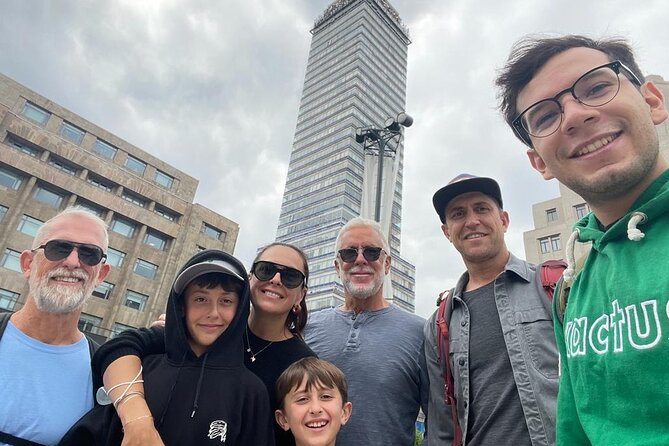
Mexico City’s Historic Center can feel like a big, noisy puzzle. This walk helps you put the pieces together fast. In just about 3 hours, you cover key landmarks linked to the city’s biggest shift: when Mexica life, Spanish conquest, and later national culture got layered on top of each other.
The route stays mostly in the open air, with short transitions between sites. That matters because it lets you read the city the way locals do, by looking up at facades, down at street layouts, and around at how squares pull people in.
You’ll also get a guide who turns architecture into meaning. Instead of memorizing dates, you learn what each place was for, who had power there, and why it still shapes how the center works today. That is the real value of this tour, especially if it’s your first day in CDMX.
More city circuits across Mexico City, same treatment
- Mexico City: Teotihuacan, Tlatelolco & Guadalupe Shrine Tour
★ 4.6 · 3,773 reviews - Teotihuacan Hot Air Balloon Flight from Mexico City / Volare
★ 5.0 · 3,262 reviews - Teotihuacan Private Tour from Mexico City
★ 5.0 · 1,890 reviews - Historic Center Food Tour in Mexico City
★ 5.0 · 1,263 reviews - The best tour to Teotihuacán from Mexico City
★ 5.0 · 1,236 reviews
Start at the Zócalo, Where Mexico City’s Power Still Hangs in the Air
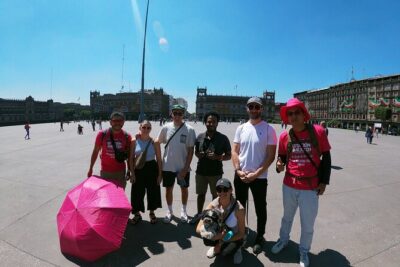
You begin at Plaza de la Constitución, the Zócalo. This square is surrounded by major institutions, including the National Palace and the Supreme Court of Justice. Even if you do nothing else in the area, standing here gives you the scale of the whole center.
You’ll also notice the practical side of the Zócalo. Silversmith shops line parts of the neighborhood, so you get both the official face of the country and the everyday market energy that makes the square feel alive.
Admission here is free, and that’s a big plus when you’re trying to manage costs in a city where paid entry adds up quickly. This first stop also acts like a warm-up for the rest of the walk.
Catedral Metropolitana Outside: Baroque to Neoclassical Without the Ticket Hassle
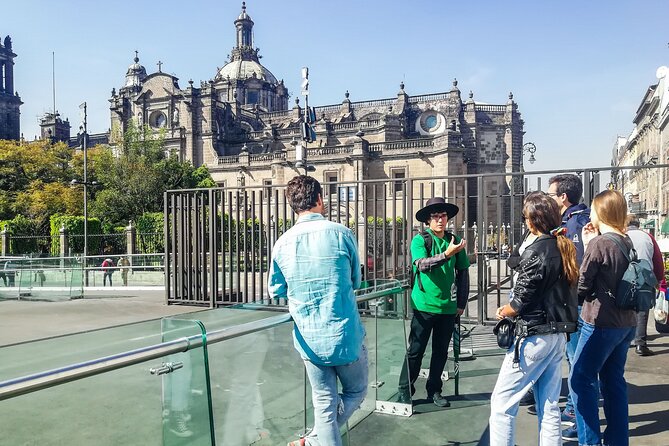
Next comes Catedral Metropolitana de la Ciudad de México, where you’ll learn from the outside. The cathedral’s exterior is a lesson in changing tastes over time, with references to Baroque and neoclassical architecture.
One consideration: admission is not included. That does not mean you skip the best parts, because this tour still gives you the context you need to appreciate what you see. But if you want to go inside, plan to buy the ticket separately.
I like this approach for first-time visitors. Seeing the cathedral from outside first helps you understand what you’re looking at, so an inside visit later feels less like random stairs and more like a continuation of the story.
Templo Mayor Area: Understanding Mexica Worldview Through the Ruins
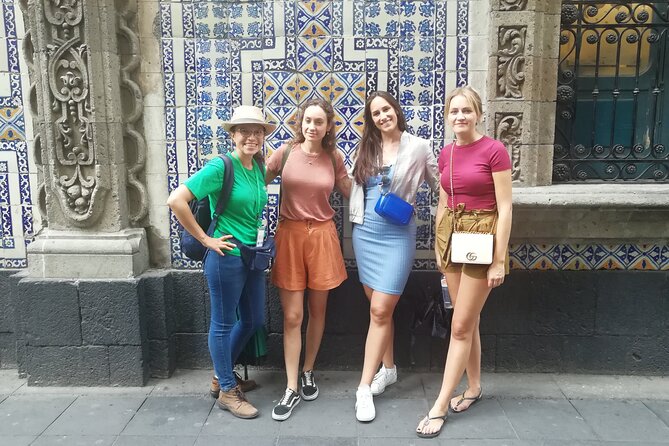
One of the most compelling moments is when you reach the area of the Templo Mayor, dedicated in Mexica tradition to the god of rain and the god of the sun. You won’t be inside a museum here. You’ll be looking at what the city has uncovered and what it still communicates through location and layout.
What makes this stop hit is the way it reframes the center. Instead of thinking of CDMX as only “colonial Mexico,” you start seeing it as a city built on a much deeper map of beliefs, ceremonies, and geography.
If you’re the kind of traveler who likes big ideas you can visualize, this is where the tour earns its keep. You get a quick explanation of why the Templo Mayor mattered so much for the Mexicas, and how its setting helped define their understanding of the world.
Diego Rivera’s Third of a Career at Museo Vivo del Muralismo
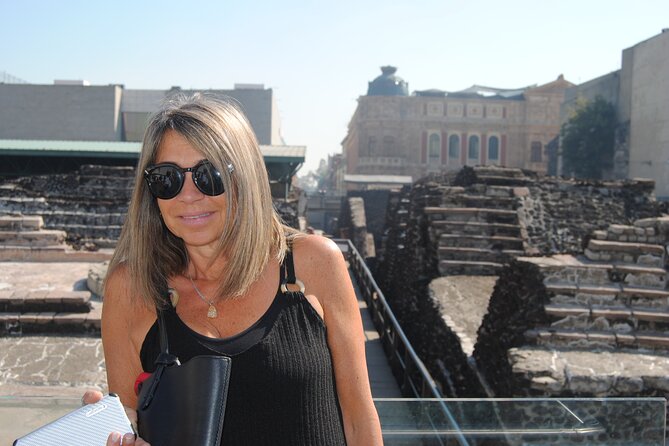
At Museo Vivo del Muralismo, you go indoors, into the Ministry of Education building. Admission here is included, which is a smart piece of planning on a walking tour like this.
The highlight is the scale and focus: there is a section with a third of Diego Rivera’s murals across his career. Rivera is easy to love if you already know his name, but you do not need to. The guide’s job here is to connect the murals to the human stakes inside them.
You’ll see themes such as festivals and traditions, social struggle, trade, and politics from the early 20th century. That turns art into a kind of social history. You start noticing how painting becomes a record of who had power, who resisted it, and how ordinary life fit into national change.
Practical note: since it’s a walk, this indoor moment also gives you a breather. Even a short one helps when you’ve been in the sun.
Walking circuits in Mexico City we have also put through the notes
- Historic Downtown Walking Tour★ 5.0 · 1,289 reviews
- Mexico City: Historic Downtown Walking Tour★ 4.8 · 1,039 reviews
- Frida Kahlo VIP [Museum Tickets Included] Walk, Markets & Churros★ 5.0 · 982 reviews
- Walking Tour of the Historic Center of Mexico City★ 5.0 · 870 reviews
- Anthropology Museum Private Experience Walking Tour★ 5.0 · 355 reviews
- Walking Tour in Mexico City for Exploring their Cultural Heritage★ 5.0 · 245 reviews
- Walking Tour – Impressive murals in Historical Center of Mexico City★ 5.0 · 224 reviews
Santo Domingo Plaza and Plaza Tolsa: From Viceroyalty to Day of the Dead Conversations
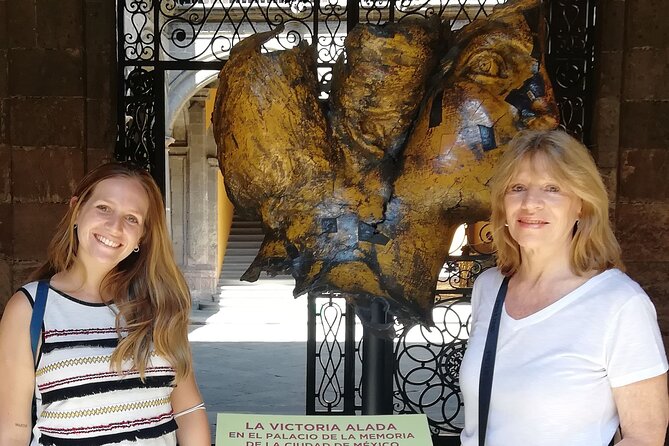
After the mural stop, the tour shifts back to the squares. These are not just pretty plazas. They were stages for big forces in Mexico’s colonial and post-colonial story.
At Plaza de Santo Domingo, you’ll learn how this space witnessed major events of New Spain. The discussion includes trade routes tied to Asia, the machinery of the Holy Inquisition, and even attempts by France to conquer Mexico. That range is part of why this stop works. It helps you see that empire and religion were not separate subjects, they were connected.
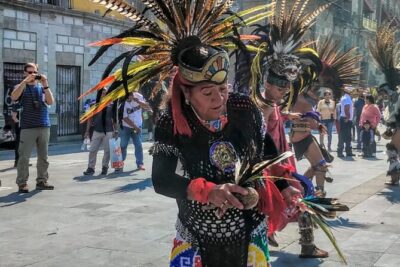
Then you arrive at Plaza Tolsa, where you also get a more relaxed rhythm. This is where the guide brings in longer conversation topics like indigenous languages, the tradition of the Day of the Dead, music, politics, and gastronomy. You’ll also get a chance to rest in the shade, which matters because this part of the walk can be in bright sun.
Around the plaza, you’ll point out several exterior sights:
- the equestrian statue of Charles IV, often called the little horse
- the exterior of the National Museum of Art
- the Mining Palace
Admission is free for this stop. It’s also a good place to reset your brain. After the heavier themes, these cultural threads help you see the center as a living place, not only a historical set.
Ventana Arqueologica: The Past Literally Under the Sidewalk
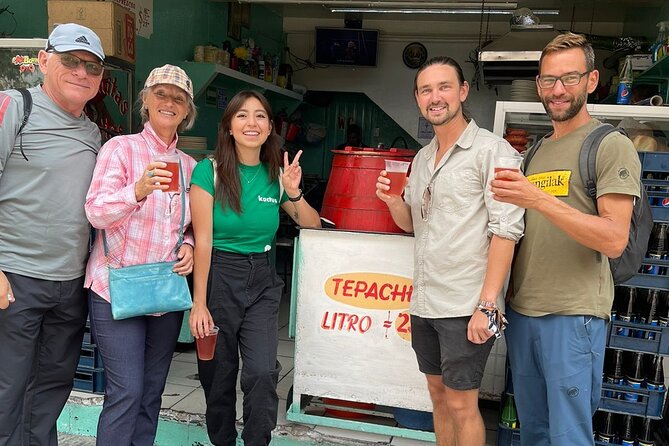
Then comes one of the most visual “wait, what?” moments: Ventana Arqueologica. You’ll see archaeological ruins under a street, located near the main temple area. This is where you get a clearer idea of how many buildings in the city center hide older layers.
The tour explains how it was found and what this reveals about the city. Even with only a short time here, it changes how you view CDMX. You stop thinking of streets as fixed and start seeing them as a surface built on top of history.
Admission is included. I like that because it prevents a mid-walk budget surprise and keeps the tour flowing without delays.
Palacio de Bellas Artes and Palacio Postal: When City Power Lives in Pretty Buildings
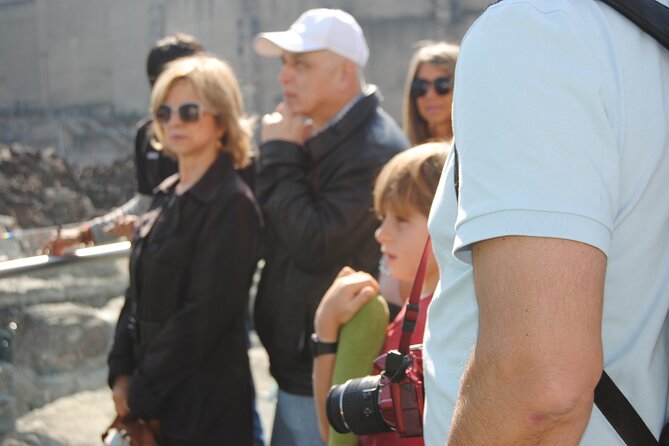
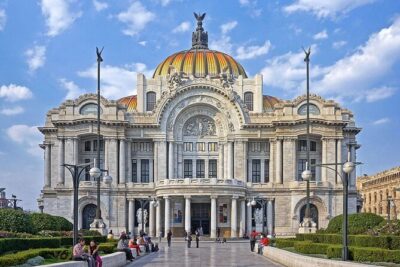
Next you reach Palacio de Bellas Artes, a must-see for most first-time visits. You’ll learn about both the exterior and the interior feeling of the building. The tour time here is brief, but the payoff is big: the palace is art in both form and intention, and it helps you understand why CDMX treats culture as a public matter.
Admission is listed as free for this stop, so expect the experience to focus on what you can see and understand without a separate ticket step.
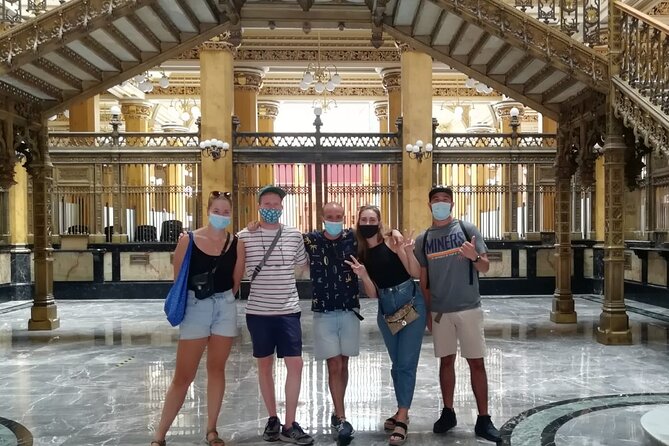
After that, you’ll visit Palacio Postal. This is still an operating palace, and the tour frames it as more than a pretty backdrop. You learn about the economic and political effects of having a grand communications hub.
Admission is not included for Palacio Postal, so you may only get the outside view unless you choose to pay separately on your own. Either way, it’s a great contrast after Bellas Artes because it shifts your attention from performing arts to networks, logistics, and power.
House of Tiles at the End: A Photo Magnet With Real Cultural Weight
Your walk finishes near Edificio Guardiola and ends at the side of Palacio de Bellas Artes and the tile house, known as the House of Tiles. This final stop is one of those places you’ll feel in your camera roll right away.
The House of Tiles is famous for its tile work, but it’s also a reminder that “decorative” can carry meaning. Tiles historically cost money, and choosing them signals a kind of ambition. In a city where so much has been rebuilt, the persistence of a landmark like this makes the center feel stitched together rather than erased.
Admission here is free during the tour, so it’s a satisfying wrap-up when you’re still energized and not stuck in a paid line.
What You’ll Learn From the Tour’s Big Theme: Fusion of Cultures
The whole point is more than seeing landmarks. This is about understanding Mexico City as a fusion of cultures, represented in history and architecture.
Here’s how it clicks while you walk:
- At the Zócalo and cathedral area, you see authority and religion taking visible form.
- At the Templo Mayor area and Ventana Arqueologica, you get the sense that older spiritual and political maps never fully vanished.
- At Museo Vivo del Muralismo, you see that the 20th century kept arguing about identity, not just celebrating it.
- In the squares like Santo Domingo and Plaza Tolsa, culture becomes a daily practice: languages, music, food traditions, and Day of the Dead.
This is the kind of tour that helps you avoid the “checklist vacation.” Instead, you leave with a framework for what you see the rest of your trip.
Pacing, Walking, and Comfort: Small Group, Big Streets
The tour runs about 3 hours, and it’s led for a maximum of 10 travelers. That small size is a real benefit in a place like Centro, where sidewalks can be tight and groups can bottleneck at crosswalks.
Still, you should plan for physical reality. You’ll cover multiple stops with limited seating. Some streets are cobblestone, which can slow a group down and make the ground feel uneven. One way to make it easier is to wear shoes you’d actually walk in all day, not just “good for photos.”
Also, Mexico City altitude can feel like a factor for many people. You do not need to fear it, but you should treat it with respect. Go slow the first part, carry water, and take advantage of shade at Plaza Tolsa when it’s offered.
Finally, the tour operates with a good expectation of English-speaking travelers, and service animals are allowed. That’s helpful for planning your comfort and logistics.
Booking Value: Where Included Tickets Actually Help
Since you won’t be paying for every stop, it’s smart to know which admissions are included. Two of the most time-based indoor or ticketed moments are covered:
- Museo Vivo del Muralismo (included)
- Ventana Arqueologica (included)
Other major stops are either free to view or not included for entry:
- Zócalo, Santo Domingo Plaza, Plaza Tolsa area, Bellas Artes (tour listed free), and the House of Tiles are free in the context of the tour
- Catedral Metropolitana and Palacio Postal are listed as not included
So, you get a helpful chunk of value because two ticketed experiences are already built in. If you were thinking of skipping them due to cost or time, this tour makes them easier to justify.
Guides, Tone, and the Human Touch
A big reason this tour rates so highly is the storytelling style. You’ll see names repeatedly, like Fer, Fernanda, Luis, Gabby, Alexia, Eduardo, Nat, Benjamin, Oscar, Thomas, and Sarah. That tells me the experience is shaped by strong guide personality, not only by the itinerary.
Also, guides are easy to spot. One practical tip is that you may identify them by green shirts and umbrellas. That small detail saves you from the usual day-one chaos of meeting up in a crowded square.
You’ll likely get a mix of architecture and present-day context, plus space for questions. Even when stops are brief, the way the information is connected makes it feel like the tour builds toward a single understanding of the city.
Who Should Book This Walk, and Who Might Skip It
Book it if:
- it’s your first time in Mexico City and you want orientation fast
- you like connecting art, politics, and architecture into one story
- you want a route that prioritizes major sights without turning your day into a museum sprint
Consider another option if:
- you have limited mobility or you really need frequent seating
- cobblestones and long continuous walking are a challenge
- you want a deeply long visit inside every major building (this tour is paced for the overall center route)
If you can handle uneven sidewalks and you’re okay with short stop windows, this is a strong fit for a half-day start.
Should You Book This Historic Center Walk?
Yes, if you want the Historic Center to make sense. This tour gives you the key layers, pre-Hispanic and colonial, plus the 20th century argument over identity, all in a simple walk. The included entry at Museo Vivo del Muralismo and Ventana Arqueologica makes it feel like good value, and the small group size keeps it human.
I’d pass only if you know you need lots of seating or you struggle with long walks on cobblestones. Otherwise, book it early in your trip. You’ll use what you learn all day, as you wander into side streets and notice details you would have missed.
FAQ
How long is the Walking Tour of the Historic Center of Mexico City?
It runs about 3 hours.
Is the tour offered in English?
Yes. The tour is offered in English.
What sites have admission included, and what is not included?
Admission is included for Museo Vivo del Muralismo and Ventana Arqueologica. Admission is not included for the Catedral Metropolitana and Palacio Postal.
Does the tour include seeing the cathedral and postal palace?
You’ll see the cathedral from the outside. You’ll also visit Palacio Postal, but admission is not included.
Where does the tour start and end?
The tour starts at Plaza de la Constitución in the Centro Histórico area. It ends at the side of Palacio de Bellas Artes and the tile house.
How big is the group?
The group size is capped at a maximum of 10 travelers.
What is the cancellation policy?
Free cancellation is available. You can cancel up to 24 hours in advance for a full refund. The experience may be rescheduled or refunded if canceled due to poor weather.
Further walking circuits we have reviewed in Mexico City

More city circuits that made the Mexico City cut


Keep comparing guided outings across Mexico City
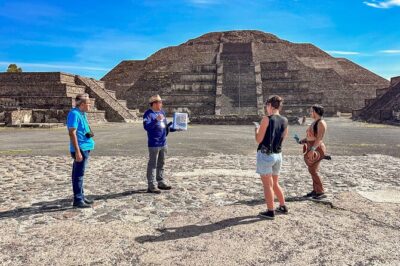

Not quite it? More Mexico City tours from our review pile
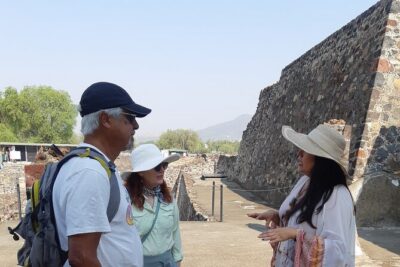
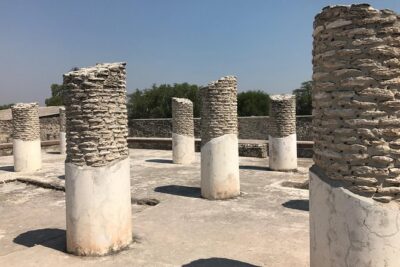
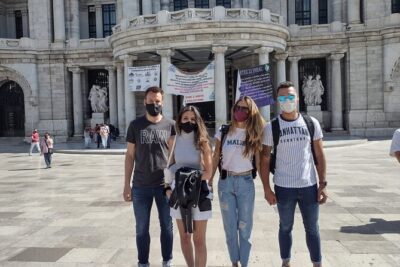


Historical Tours in one list.
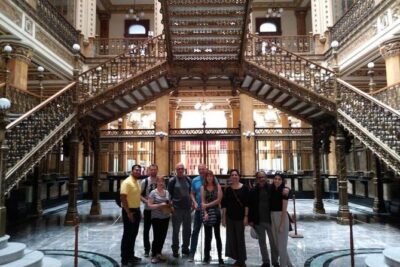 ★ 5.0Historic Downtown Walking TourFrom $261,289 reviews
 ★ 5.0Historic Center Food Tour in Mexico CityFrom $1151,263 reviews
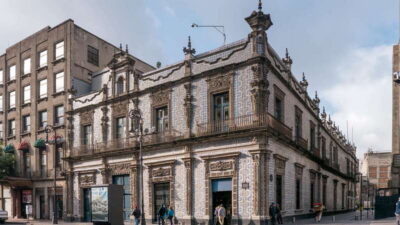 ★ 4.8Mexico City: Historic Downtown Walking TourFrom $261,039 reviews
 ★ 5.0Mexico City Historical Centre Food Tour with 7 Authentic TastingsFrom $65723 reviews
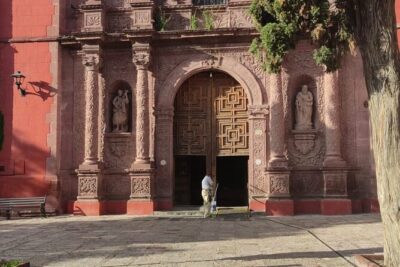 ★ 5.0Historical and Cultural Walking Tour of San Miguel de AllendeFrom $34641 reviews
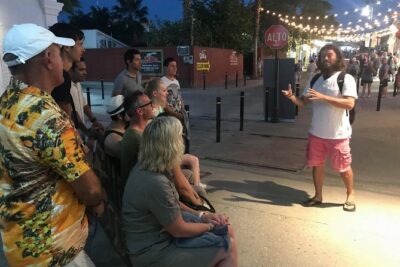 ★ 5.0Historical and Cultural Walking Tour of San José del Cabo576 reviews
 ★ 5.0Walking Tour in Mexico City for Exploring their Cultural HeritageFrom $25245 reviews
 ★ 5.0History and Murals: Walking Tour GuadalajaraFrom $53237 reviews
Where else it sits