
Reviewed · HISTORICAL TOURS
Explore Mexico City: A Journey Through History, Art, and Cuisine!
A walk through Mexico City’s core can feel like a blur. This one is different because you get the story behind the sights, fast. You’ll start at the Museo del Templo Mayor and move through the Zócalo, major churches, and landmark buildings, with a guide who keeps the pace friendly and the explanations clear. I particularly like how the tour builds quick context for Aztec to Spanish to modern Mexico City, and how it adds stops like Dulcería de Celaya and the original post office that most first-timers miss.
Price-wise, it’s also a strong deal for a 2-hour guided circuit in Centro Histórico. A possible drawback: don’t assume every interior is automatically covered. Some entry tickets can be on your own, including sites where online ticketing may not be the smoothest option.
In This Review
- Key highlights you’ll feel right away
- First stop: Museo del Templo Mayor and the Aztecs’ stage
- Zócalo orientation: learning why Mexico City’s main square matters
- Catedral Metropolitana: architecture lessons you can actually see
- Dulcería de Celaya: a candy store stop that feels like culture
- Casa de los Azulejos: the House of Tiles and its visual payoff
- Palacio Postal: the postal palace still doing its job
- Palacio de Bellas Artes: where the billboards and building history connect
- Diego Rivera murals at Secretaría de Educación Pública: art tied to everyday identity
- How the pacing works, and why the route makes sense
- The guide factor: friendly, prepared, and able to connect dots
- Price and value: a low-cost orientation you can build on
- What to bring so nothing slows you down
- Who should book this tour (and who might want something else)
- Should you book it?
- FAQ
- How long is the Mexico City historic center walking tour?
- What time does the tour start and where do I meet?
- Where does the tour end?
- Is the tour offered in English?
- Is admission included for the stops?
- Do I need to pay extra or bring money for anything?
- How big is the group?
- What is the cancellation policy?
Key highlights you’ll feel right away
- Aztec to modern in one route, with clear connections between the eras you’re seeing
- Centro Histórico landmarks plus everyday culture, like the oldest candy shop
- Small group size (max 20), which helps questions and keeps the pace relaxed
- Guides with excellent English and real enthusiasm, including guides like Belen, Sara, and Diego
- A practical walking itinerary, built around short stops that add up to a smart overview
First stop: Museo del Templo Mayor and the Aztecs’ stage
The Museo del Templo Mayor is your history anchor. You’ll spend about 15 minutes here, and the goal is not to race through everything. Instead, you’ll get the bigger picture of the Aztecs: where they came from, how they lived, and why this area became the stage for their power.
What I like about starting here is how it changes the rest of the day. When you later look at the Zócalo and other major sites, you stop seeing only colonial-era buildings and start noticing how layers of Mexico City overlap. Even if you only have two hours total, this framing gives you mental hooks.
Practical note: the tour info lists admission as free for this stop, but at least one rider experience flagged that museum entry may not always be included. So, I’d treat museum access as something you may need to handle yourself on the day, not something guaranteed.
More city circuits across Mexico City, same treatment
- Mexico City: Teotihuacan, Tlatelolco & Guadalupe Shrine Tour
★ 4.6 · 3,773 reviews - Teotihuacan Hot Air Balloon Flight from Mexico City / Volare
★ 5.0 · 3,262 reviews - Teotihuacan Private Tour from Mexico City
★ 5.0 · 1,890 reviews - Historic Center Food Tour in Mexico City
★ 5.0 · 1,263 reviews - The best tour to Teotihuacán from Mexico City
★ 5.0 · 1,236 reviews
Zócalo orientation: learning why Mexico City’s main square matters
Then you head straight to the Zócalo, Mexico City’s main square, for about 10 minutes. You’ll learn why it’s called Zócalo, and what the area looked like before the Spanish arrived. You’ll also see the National Palace from the square, which helps you connect the architecture to the political story of modern Mexico.
This is the kind of stop that feels small but is useful. When your bearings are correct, the city becomes easier. You’ll also understand why guides and locals keep referring back to this square. It’s not just a postcard location, it’s a reference point for where power and identity have been argued, displayed, and rebuilt.
Catedral Metropolitana: architecture lessons you can actually see
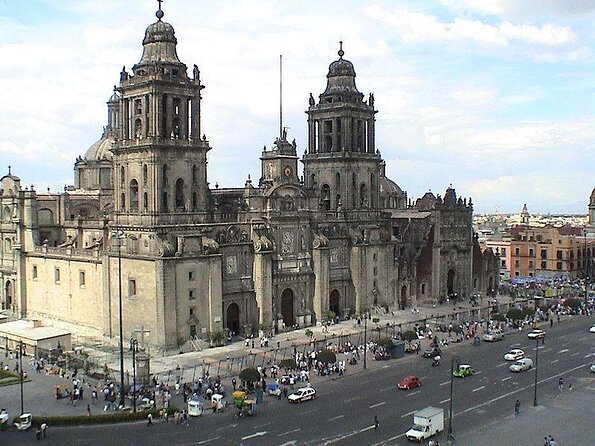
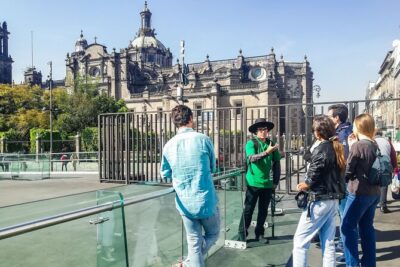
From the Zócalo, you walk to the Catedral Metropolitana de la Ciudad de México for around 8 minutes. Here, the focus is architectural style and history, not a full cathedral tour. In a short time, you’ll learn how to look at what’s in front of you: the style choices, what they reflect, and how the cathedral fits the city’s timeline.
This stop works best if you pay attention to details rather than trying to photograph everything at once. If you do that, the cathedral stops being just a big church and becomes a readable piece of Mexico City’s evolution.
Dulcería de Celaya: a candy store stop that feels like culture
Next is Dulcería de Celaya, a traditional candy shop stop with about 10 minutes. Yes, it’s candy. But it’s also a snapshot of how traditions are kept alive through small, repeatable routines, like making and selling sweets that people still recognize.
You’ll hear what types of sweets are traditional, how they’re prepared, and where these treats come from. I love this kind of pause in a history walk because it stops everything from feeling like lecture mode. A candy store makes the story tasteable.
Also, it’s an easy win for families and couples, since you can enjoy the explanation and then decide whether to buy something. Just be aware that this is the kind of place where you might want cash, depending on what you plan to purchase.
Casa de los Azulejos: the House of Tiles and its visual payoff
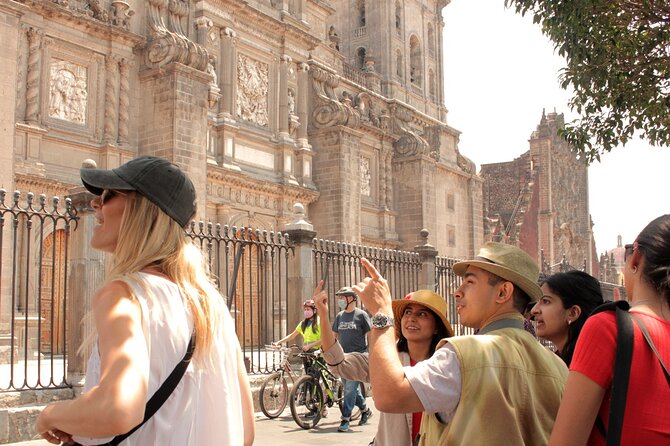
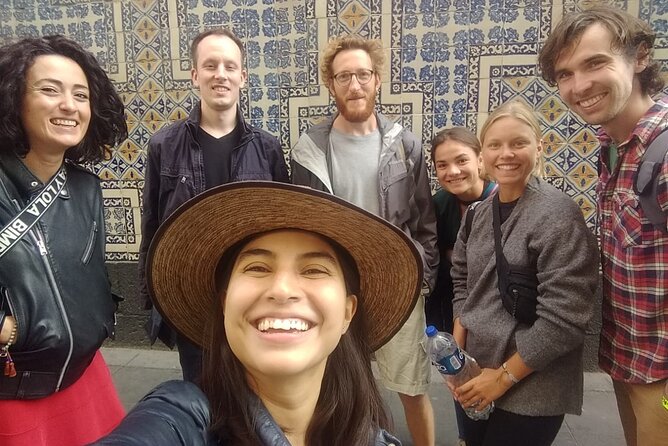
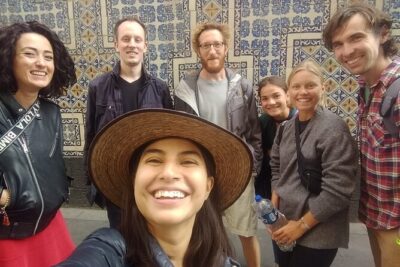
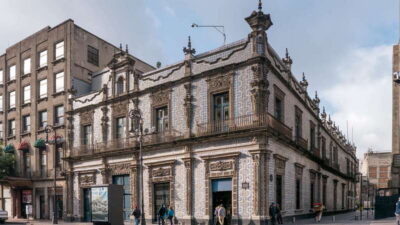
About 15 minutes takes you into the House of Tiles (Casa de los Azulejos). You’ll get the history and explanation behind the place, plus time to look at the artwork and design that makes it memorable.
This stop matters because you finally get a strong visual reward after several story-heavy landmarks. The tiles are the kind of detail that you miss if you’re passing by quickly. Having someone point out what you’re looking at turns a quick visit into a proper appreciation.
One more reason I like this stop: it’s a good example of how Mexico City’s “famous” sights include both grand monuments and highly designed spaces that feel almost ornamental.
Still deciding? These history walks in Mexico City are reviewed too
- Historic Downtown Walking Tour★ 5.0 · 1,289 reviews
- Mexico City: Historic Downtown Walking Tour★ 4.8 · 1,039 reviews
- Walking Tour of the Historic Center of Mexico City★ 5.0 · 870 reviews
- Mexico City Historical Centre Food Tour with 7 Authentic Tastings★ 5.0 · 723 reviews
- Walking Tour in Mexico City for Exploring their Cultural Heritage★ 5.0 · 245 reviews
- Walking Tour – Impressive murals in Historical Center of Mexico City★ 5.0 · 224 reviews
- Mexico City: Guided walking tour through the most historic parts of the city.★ 4.5 · 172 reviews
Palacio Postal: the postal palace still doing its job

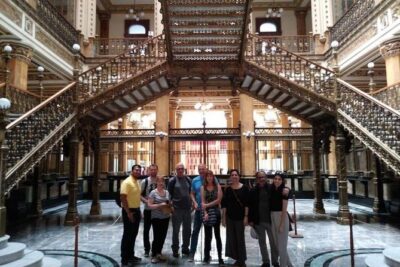
The next 15 minutes brings you to Palacio Postal. You’ll learn what it used to be and how it still works today. This is one of those “wait, that’s still operating?” moments that makes a city feel real, not staged.
If you like places with practical history, you’ll probably enjoy this stop a lot. It’s not just a museum building. It’s part of how the city functions, which makes the architecture feel less like a dead relic and more like a living landmark.
Palacio de Bellas Artes: where the billboards and building history connect
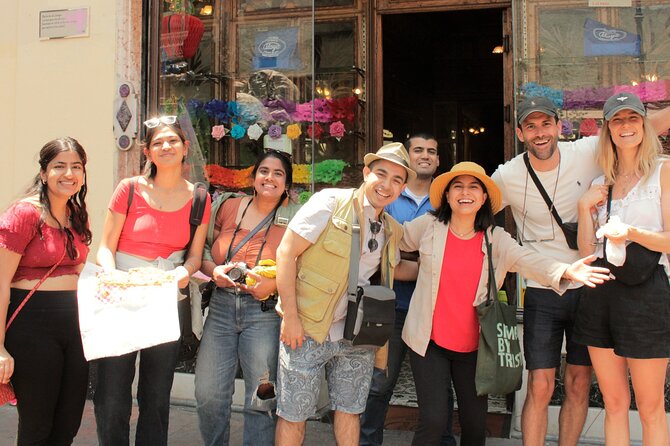
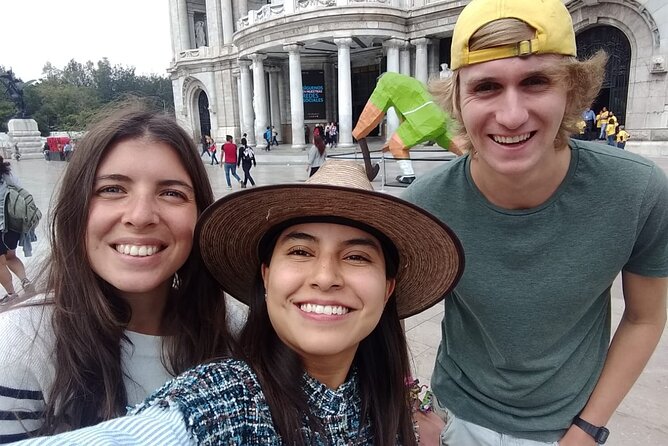
You’ll spend about 15 minutes at Palacio de Bellas Artes. You’ll learn about the architectural style, curious facts, and history, and you’ll also notice what’s happening in the public-facing areas, including its billboard.
This is one of the stops that can create the most confusion. One rider experience specifically warned that museum or venue tickets might not be included, and that Palacio de Bellas Artes tickets are not necessarily sold online. So if you care about going inside for any exhibits or performances, I’d plan time for ticketing on the spot.
Even if you don’t enter, it’s still a strong stop for architecture. If you do enter, double-check what’s included with your ticket so you don’t waste time.
Diego Rivera murals at Secretaría de Educación Pública: art tied to everyday identity
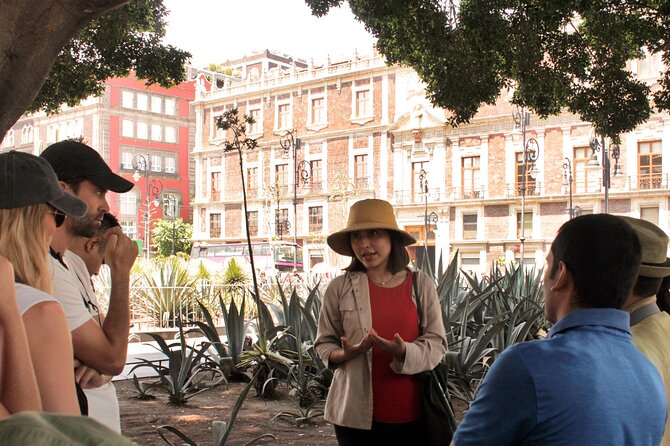
The final content-heavy stop is about 20 minutes: Murales de Diego Rivera en la Secretaría de Educación Pública. This is where the walk shifts from landmark sightseeing to art as storytelling.
You’ll discover the murals by Diego Rivera and learn how they help you understand Mexican traditions and customs. Rivera is one of those artists that shows up in many places in Mexico City, but these murals are a focused introduction because the city uses art to explain itself.
If you tend to drift past murals without really looking, this is the stop where you’ll change that habit. A guided explanation helps you see patterns, themes, and the cultural references you might otherwise miss.
How the pacing works, and why the route makes sense
This tour is about 2 hours total, with short stops sprinkled along a focused path through Centro Histórico. That timing matters. You’re not trying to absorb everything in one go. You’re getting an efficient overview, with enough time to stop, learn, and walk away with specific ideas.
Also, the group size stays small, up to 20 people. That’s important on busy streets, because it reduces the feeling of being herded. It also makes it more likely you’ll get answers to questions instead of hearing the same facts repeated at the speed of a whistle.
I also like that the walking pace is described as reasonable. Even if you’re not a fast walker, you should be able to keep up. The tour is also offered in English, and riders have mentioned guides speaking fluent English, including Belen and Sara in past experiences, plus Diego.
The guide factor: friendly, prepared, and able to connect dots
Several past experiences praise the guides for being friendly and well prepared, with guides like Belen, Sara, and Diego specifically named. That tells me something important: you’re not just buying access to a list of famous buildings. You’re paying for someone to connect what you see to what it means.
That connection shows up in small ways. For example, the Zócalo stop isn’t just a geography lesson. It explains the name and what existed before Spanish arrival, which then makes later stops feel more coherent. The same idea is behind the Rivera murals. It helps you understand why these images matter, not only what they depict.
One wrinkle: a rider experience mentioned the guide suggesting how much to tip. Tipping is normal on a free walking tour style experience, but I’d personally treat any suggestion as optional guidance. If you’re not sure what amount fits your budget, just set your own tip based on how the tour felt to you.
Price and value: a low-cost orientation you can build on
The price is listed at $20 per person, for an approximate 2-hour walk. That’s a fair setup for a route packed with major Centro Histórico landmarks and an art stop tied to Diego Rivera.
Then there’s the included detail: the guide and experience are described as free, and you can pay a tip at the end if you want. In practice, that usually means you’re paying to secure the tour, while the guide’s work is compensated through the optional tip. So you should think of it as good value for guided context, rather than as an all-in ticket package.
Just don’t assume every interior admission is handled for you. The most important value shift here is mental: you’re paying for clarity and sequencing. If you want museum-style, inside-only deep visits, you may need additional time and tickets beyond what this 2-hour walk provides.
What to bring so nothing slows you down
The tour is walking in Centro Histórico. The simplest move is to bring water, especially because the route is compact but still outdoors for the full 2 hours.
I’d also bring comfortable shoes, since you’ll be moving between several landmarks close together but still on city sidewalks. If you plan to enter any venues that may require tickets, have a backup plan for payment, like a card plus cash if possible.
Who should book this tour (and who might want something else)
I think this tour is perfect if you want:
- A quick orientation to Mexico City’s historic center without planning every stop
- Clear explanations of Aztec roots, Spanish-era transformation, and modern identity
- A mix of big sights and cultural stops, like the candy store and working postal palace
- An English-speaking guide who can connect architecture and murals to meaning
It may be less ideal if you want:
- A strict, fully ticketed itinerary where every museum entry is already included
- A slow, sit-down deep dive into any one venue
If you’re the type who likes to hit the highlights and then return later for a longer visit, this is a smart first step.
Should you book it?
Yes, I’d book it if your goal is to get your bearings and understand what you’re seeing. The route covers the Aztec story, the Zócalo’s meaning, major architecture, and Diego Rivera murals in a tight time window, and multiple named guides have been praised for being friendly, prepared, and strong in English.
Just go in with two expectations set correctly: bring water and plan for possible ticketing if a site requires entry. If you handle that, you’ll get a lot of context for the price, plus a route that feels like it’s showing you the city, not just standing near it.
FAQ
How long is the Mexico City historic center walking tour?
It runs for about 2 hours.
What time does the tour start and where do I meet?
It starts at 9:30 am. The meeting point is República de Guatemala 4, Centro Histórico, Cuauhtémoc, 06020 Mexico City.
Where does the tour end?
It ends at Palacio de Bellas Artes, Av. Juárez S/N, Centro Histórico, Cuauhtémoc, 06050 Mexico City.
Is the tour offered in English?
Yes, the experience is offered in English.
Is admission included for the stops?
The tour includes the guide and experience, and you can tip at the end. However, entry tickets for some museum or venue stops may be something you need to buy yourself, so plan for that possibility.
Do I need to pay extra or bring money for anything?
The tour is priced at $20 per person, and bottled water is not included. The tour info suggests bringing water, and if any stop requires a ticket you may need to purchase it on your own.
How big is the group?
The tour has a maximum of 20 travelers.
What is the cancellation policy?
You can cancel for a full refund if you cancel at least 24 hours before the experience starts. If you cancel within 24 hours, the amount paid is not refunded.
Other history walks we have been through in Mexico City
More city circuits that made the Mexico City cut


Not quite it? More Mexico City tours from our review pile




Historical Tours in one list.
 ★ 5.0Historic Downtown Walking TourFrom $261,289 reviews
 ★ 5.0Historic Center Food Tour in Mexico CityFrom $1151,263 reviews
 ★ 4.8Mexico City: Historic Downtown Walking TourFrom $261,039 reviews
 ★ 5.0Walking Tour of the Historic Center of Mexico City870 reviews
 ★ 5.0Mexico City Historical Centre Food Tour with 7 Authentic TastingsFrom $65723 reviews
 ★ 5.0Historical and Cultural Walking Tour of San Miguel de AllendeFrom $34641 reviews
 ★ 5.0Historical and Cultural Walking Tour of San José del Cabo576 reviews
 ★ 5.0Walking Tour in Mexico City for Exploring their Cultural HeritageFrom $25245 reviews
Where else it sits