
Reviewed · WALKING TOURS
Town walking tour of the city
Puebla tells its story on foot. This guided walking tour strings together Puebla’s biggest landmarks, folklore stops, and a couple of optional ticketed interiors, so you get oriented fast without feeling rushed. You’ll move through the Centro histórico on a tight loop that works well as a first or second day plan.
I especially like the way the route mixes major sights with street-level character, from the Zócalo to Callejón de los Sapos. I also like the human factor, guides such as Josué, Renato, and Bere are repeatedly praised for clear English and for making the history feel like a living thing, not a list of dates.
One thing to consider: two stops have admission that is not included (Biblioteca Palafoxiana and the Revolution-era museum at Casa de los Hermanos Serdán). So you may want to set aside a little extra time and money if you want to go inside both.
In This Review
- Key highlights you will feel right away
- How this Puebla walking tour helps you get your bearings fast
- Zócalo de Puebla: the foundation story at Puebla’s main square
- Puebla Cathedral: quick entry into the religious core
- Biblioteca Palafoxiana: a ticket stop you might want to plan for
- Callejón de los Sapos: the toad alley moment
- Puente de Ovando and Analco: neighborhoods with legends attached
- Barrio del Artista: a quick look at creative Puebla
- Revolution-era museum stop: Casa de los Hermanos Serdán (ticketed)
- Calle de los Dulces: candy tasting on Santa Clara Street
- Mercado El Parián: crafts, not mass-market souvenirs
- Price and time value, and why it feels fair at $48
- What to look for in your guide, based on real experiences
- Who this tour suits best (and who may want something else)
- Should you book this Puebla walking tour?
- FAQ
- How long is the Puebla town walking tour?
- What is the price per person?
- Is the tour offered in English?
- Which stops require admission tickets?
- Where does the tour start and end?
- What is included in the tour price?
- What happens if the tour is canceled due to weather?
Key highlights you will feel right away
- A focused 2 to 3 hour walking loop that hits the center without turning into an all-day marathon
- Strong English guide experience, with multiple guides named for communication and warmth
- Story stops built around Puebla legends, like Callejón de los Sapos and Puente de Ovando
- Food and candy time on Santa Clara Street, plus plenty of chances to ask what to try next
- A real local crafts stop at Mercado El Parián for souvenirs that do not feel generic
- Free admission at most major exterior stops, so your money goes further
How this Puebla walking tour helps you get your bearings fast
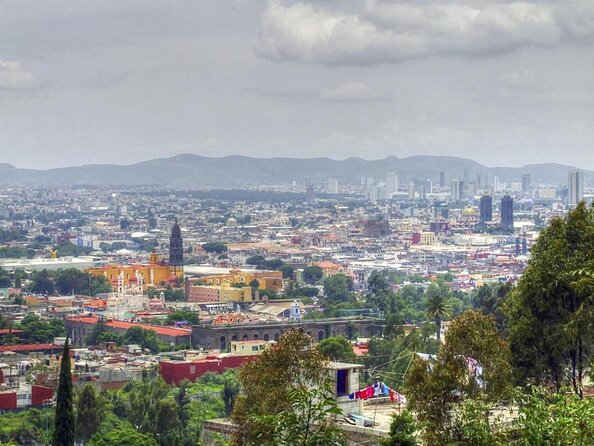
Puebla is one of those cities where the center is packed, and you can waste a lot of time trying to connect the dots on your own. This tour works because it’s built as a sequence: you start at the biggest public square, you branch into the religious and cultural anchor points, then you move into the smaller lanes where Puebla gets more personal.
You also avoid the common problem of walking with only a vague sense of what you’re looking at. The guide’s job here is to connect each stop to a story, whether that’s why Puebla is known as Puebla de los Ángeles, or the legend behind the bridge area near Analco.
The group size is capped at 100, so you should expect a typical walking-tour pace. Still, it’s a city-center route, so comfortable shoes matter. If you know you get tired quickly on cobblestones, plan to take it slow and drink water when you can.
More city circuits across Puebla City, same treatment
- City walking tour in Puebla (private tour)
★ 5.0 · 40 reviews
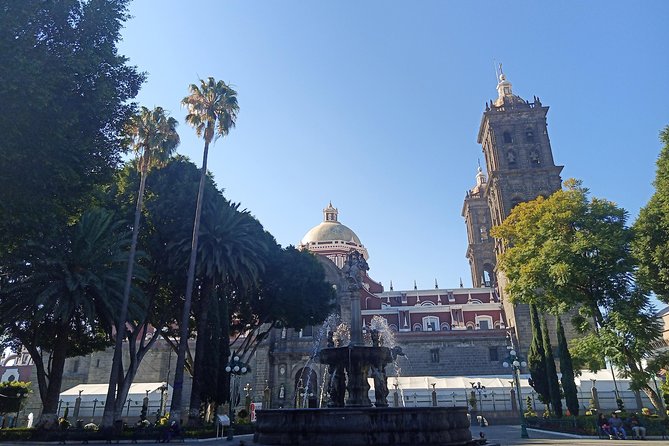
Zócalo de Puebla: the foundation story at Puebla’s main square
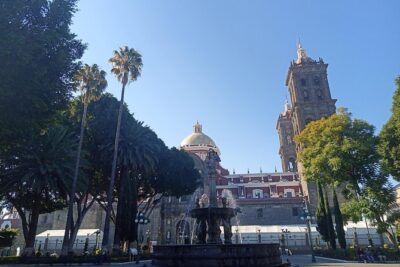
Your first stop is the Zócalo de Puebla. This is where the tour gives you the big picture: how the city was founded, and why it became known as Puebla de los Ángeles. That context pays off later, because so many of Puebla’s buildings and traditions tie back to this period.
Even if you have only seen the Zócalo from the outside before, having the guide’s explanation helps you notice the details you would otherwise miss. You’re essentially getting a mental map: which corners of the center are tied to the earliest identity of the city, and which ones grew later.
This stop is short, about 15 minutes, and that’s a good thing. You get the story without losing the rest of your afternoon to standing in one place.
Puebla Cathedral: quick entry into the religious core
Next you visit Puebla Cathedral for a guided look inside and around the key features. The stop is around 10 minutes, so think of this as a focused orientation, not a long architectural lecture.
Why it’s worth it on a walking tour: cathedral exteriors and interiors can look similar across Mexico cities if you do not know what to look for. A good guide points you toward what stands out in Puebla, and it helps you appreciate the city’s blend of faith, art, and civic pride.
Admission is listed as free for this stop, so you’re not juggling extra ticket decisions right at the beginning. That makes the start feel smooth.
Biblioteca Palafoxiana: a ticket stop you might want to plan for
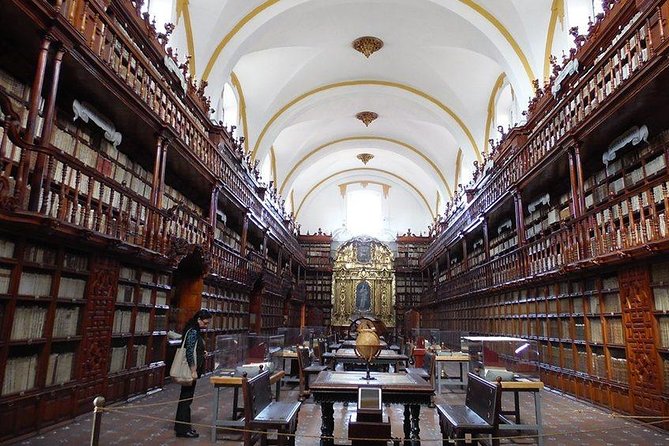
Then comes Biblioteca Palafoxiana, with about 20 minutes dedicated to the library. Admission here is not included, so you’ll pay separately if you want to enter.
What makes this stop valuable is the contrast. You’ve just been in a religious site and public square space. The library adds a cultural layer, and it’s one of those Puebla experiences that makes the city feel more than scenic streets. It’s also a nice change of pace during a walk, because you get a more quiet, indoor feel compared with the open squares and alleys.
If you prefer interior visits, I’d treat this as a must. If you’re traveling light on time or money, you can still learn from the exterior framing, but you will get less of the full experience.
Callejón de los Sapos: the toad alley moment
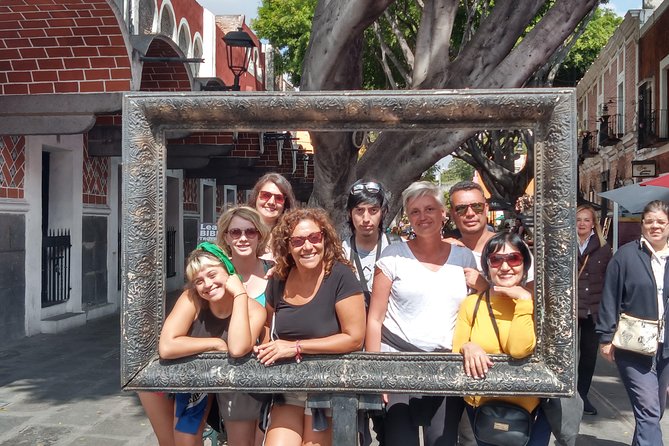
Callejón de los Sapos is short, around 10 minutes, and that’s perfect. This is one of those places where the story is half the attraction, and the setting does the other half.
The tour frames it as the toad alley. Even if you’re not a folklore collector, you’ll probably enjoy this stop because it feels like Puebla’s personality showing up in a tiny space. The legends in places like this are often the fastest way to understand what locals enjoy telling.
Practical tip: this is a stop where you’ll want to slow down your photo taking. You get the best effect when you listen first, then look. Otherwise, the alley can feel like a quick picture stop and nothing more.
- Hiking Excursion to the Iztaccíhuatl Volcano from Puebla★ 5.0 · 74 reviews
- Cholula tour from Puebla★ 5.0 · 66 reviews
- Cholula Magical Twon on a Traditional Tram from Puebla★ 4.5 · 61 reviews
- Cholula experience (private tour)★ 5.0 · 52 reviews
- Private Hiking Tour in Iztaccihuatl★ 5.0 · 45 reviews
Puente de Ovando and Analco: neighborhoods with legends attached
After the alley stop, you head to Puente de Ovando. The walk includes learning about the old neighborhoods around the city, and you hear the legend tied to this peculiar bridge in the Analco neighborhood.
This portion is about 20 minutes. That’s long enough to feel like you’ve left the main-square zone, but short enough that you’re not exhausted before the more fun food and market blocks later.
What I like about including a bridge legend in a walking tour: it gives you a reason to pay attention to your surroundings. Instead of just seeing a landmark, you understand how stories get attached to streets and crossings, which is very Puebla.
Barrio del Artista: a quick look at creative Puebla
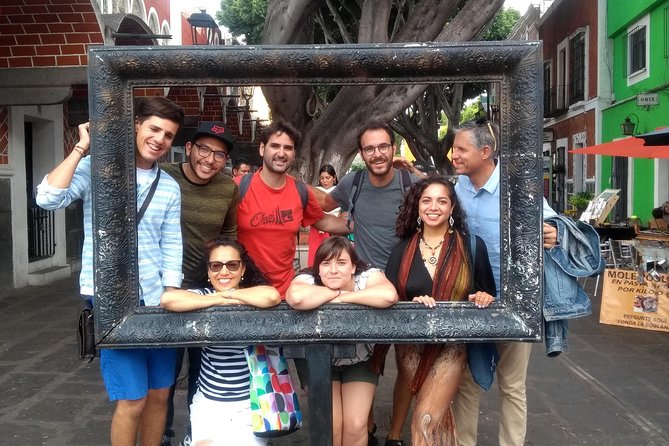
Next is Barrio del Artista, a shorter stop of about 10 minutes. This is another shift: from big historic anchors and legend-linked architecture to the vibe of a neighborhood where art and makers shape the feel of the streets.
You’ll walk through the area, and you should come out with a sense of where creative energy shows up in the center. Even in a short window, it helps you move beyond purely monumental sightseeing.
If you like to shop for small, local pieces later, this neighborhood stop sets you up for that mindset. It tells you how to look at crafts and art when you reach the market.
Revolution-era museum stop: Casa de los Hermanos Serdán (ticketed)
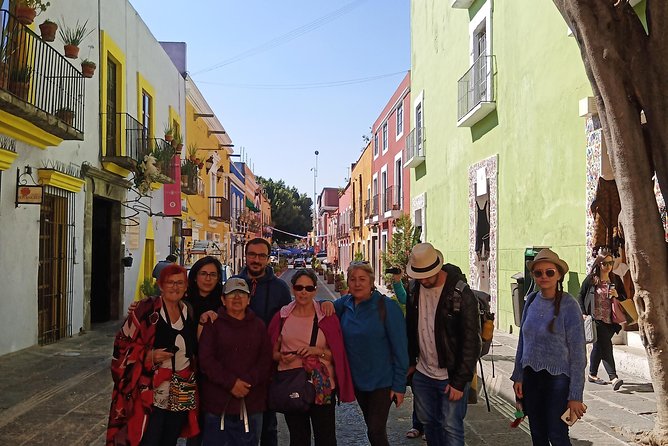
The tour then includes the Museo Regional de la Revolución Mexicana, Casa de los Hermanos Serdán. The time here is about 10 minutes, and the admission is listed as not included.
This is a quick stop, so treat it as an introduction rather than a deep museum visit. Still, it’s a valuable addition because Puebla’s identity is not only about colonial buildings and churches. It also includes the story of revolution-era figures connected to the region.
If you’re the kind of traveler who loves political and historical context, you might appreciate fitting this museum into your day, even if it’s brief. If museums are not your priority, you can still use the guide’s framing to understand what you’re seeing outside.
Calle de los Dulces: candy tasting on Santa Clara Street
Now for a delightful change: La Calle de los Dulces, with about 20 minutes, includes a candy tasting stop on Santa Clara Street, often called candy street.
This is the kind of segment that makes the tour feel like more than sightseeing. Even if you have only a small sweet tolerance, the main point is learning the flavors and getting a sense of local treat culture.
You’ll also get a chance to ask your guide what else to try. One review specifically mentions guide recommendations like mole poblano and churros after the walk. That tells me the guides often share next-step food ideas, not just facts.
This stop is free for the tour, but tasting is a common reason you may want to have a little extra cash on hand, just in case your guide offers optional samples or paid additions. The provided details say admission is free here, but they do not list exact tasting terms.
Mercado El Parián: crafts, not mass-market souvenirs
The final substantive stop is Mercado El Parián, about 20 minutes. This is a tour of the handicraft market, and it’s where you can connect the day’s story to what you might take home.
I like how this ending works. It’s both a reward and a reset: you’ve walked history and legends, and now you get to see objects that show how Puebla’s creativity turns into tangible things.
If you want souvenirs that feel more personal than typical tourist trinkets, a market stop like this is a good bet. It’s also a great place to ask how to spot local quality.
You will end back at the meeting point, so you do not have to worry about navigating your way out at the end of a busy circuit.
Price and time value, and why it feels fair at $48
At $48 per person for about 2 to 3 hours, this tour is priced in a mid-range band for a guided city-center walk. You are paying primarily for two things: a local guide and a structured route that saves you the time of planning.
Most stops listed have free admission, which helps your overall value. The two ticketed stops (Biblioteca Palafoxiana and the Casa de los Hermanos Serdán museum) are the main places where your spending could rise if you enter both.
Also, you’re getting a tour with group discounts and mobile ticket support, which suggests this is designed to be easy to buy and use. The tour duration is short enough that you can still fit another activity the same day without feeling locked in.
If your goal is an efficient first look at Puebla’s core, this kind of price makes sense. If you plan to only stand outside at everything and skip the ticketed interiors, you can still get plenty of value from the guided storytelling.
What to look for in your guide, based on real experiences
The strongest theme in the feedback is how well the guide carries the day. Names that show up in praise include Josué, Renato, Bere, and Andrea.
What they are consistently credited for:
- Strong English that makes the history understandable
- A friendly, personable approach, which keeps the pace comfortable
- Folklore and story delivery that turns alleyways and bridges into meaningful stops
- Practical suggestions after the walk, including food ideas like mole poblano and churros
So when you show up, do not treat this as a one-way lecture. Bring questions. Ask what to eat nearby, ask what to see next if you have extra time, and ask for reading ideas if history interests you. The best walking tours feel like conversation plus walking.
Who this tour suits best (and who may want something else)
This tour is ideal if you:
- Want a short, guided introduction to Puebla’s center
- Like history tied to place names, legends, and neighborhood feel
- Prefer walking in manageable chunks, with frequent stops rather than long segments
It might not be the best fit if:
- You want long museum time and deep interior visits, because some ticket stops are brief
- You have limited tolerance for cobblestones and city-center walking
The good news is that most travelers can participate, and it’s near public transportation. So you can usually recover between activities if you plan the day well.
For timing, the tour uses good-weather logic. If Puebla is having a weather day, you might want to keep a flexible schedule. If the tour is affected by poor weather, you should expect a different date or a refund, based on the tour’s stated policy.
Should you book this Puebla walking tour?
Book it if you want the easiest way to understand Puebla’s center in a single outing. The route covers the Zócalo, cathedral area, a standout alley legend, a bridge story tied to Analco, a creative neighborhood stop, candy tasting on Santa Clara Street, and a hands-on market finish at El Parián. That’s a lot of variety for a half-day length.
Skip it or choose a different style if you mainly want large, unhurried museum time, because two ticket stops are short. For most people, though, this is exactly what you want early on: a guided framework for the city, plus enough local food and market energy to make the day feel real.
If you do book, I’d plan one more meal you can look forward to right after, and I’d ask your guide for one specific place to eat. That’s where the experience often turns from sightseeing into memory.
FAQ
How long is the Puebla town walking tour?
The tour lasts about 2 to 3 hours.
What is the price per person?
It costs $48.00 per person.
Is the tour offered in English?
Yes, the tour is offered in English.
Which stops require admission tickets?
Admission is not included for Biblioteca Palafoxiana and for the Museo Regional de la Revolución Mexicana Casa de los Hermanos Serdán.
Where does the tour start and end?
It starts at an unnamed road in Centro histórico de Puebla, 72000 Heroica Puebla de Zaragoza, Pue., Mexico, and ends back at the meeting point.
What is included in the tour price?
A local guide is included.
What happens if the tour is canceled due to weather?
The experience requires good weather. If it is canceled due to poor weather, you will be offered a different date or a full refund.
Further walking circuits we have reviewed in Puebla City
More city circuits that made the Puebla City cut
Keep comparing guided outings across Puebla City

Not quite it? More Puebla City tours from our review pile
Walking Tours in one list.
 ★ 5.0Historic Downtown Walking TourFrom $261,289 reviews
 ★ 5.0Playa del Carmen Walking Food TourFrom $841,274 reviews
 ★ 4.8Mexico City: Historic Downtown Walking TourFrom $261,039 reviews
 ★ 5.0Walking Tour of the Historic Center of Mexico City870 reviews
 ★ 5.0Puerto Vallarta’s Best Canopy Zipline + Jorullo Bridge walk!From $58817 reviews
 ★ 5.0Historical and Cultural Walking Tour of San Miguel de AllendeFrom $34641 reviews
 ★ 5.0Tacos and Tequila Walking Tour with Taste of MiguelFrom $89583 reviews
 ★ 5.0Historical and Cultural Walking Tour of San José del Cabo576 reviews
Where else it sits