
Reviewed · CHAPULTEPEC & THE ANTHROPOLOGY MUSEUM
Mexico City: Anthropology Museum Tour with Historian
Symbols here tell real stories. This historian-led tour turns Mexico City’s Anthropology Museum into one connected lesson on Mesoamerica, with meaning built around standout artifacts like the Sun Stone and the Olmec colossal head. I love how the guide links civilizations instead of treating each gallery like a separate field trip, and I love the small-group pace that keeps a huge museum from feeling chaotic.
One consideration: 3 hours moves fast in a museum this big. You’ll see major highlights and learn how to read them, but if you like long label-reading breaks, you may want to plan extra time afterward.
In This Review
- Key Points You’ll Care About
- Entering the Anthropology Museum With a Historian
- Why the Museum’s Design Matters (More Than You Think)
- Mesoamerica, Explained as a Shared Cultural Region
- Textiles, Agave, and Natural Pigments: Craft as Culture
- Cultural Blending: Ritual Objects and Shared Visual Language
- Olmec Colossal Head: Why This Civilization Gets Called a Mother Culture
- Mexica Highlights: Templo Mayor, Chinampas, and the Sun Stone
- Teotihuacán as a Multicultural Metropolis
- Maya Writing, Art, and the Story Behind Pakal’s Tomb Replica
- 3 Hours, $175, and What You Actually Get
- Who This Tour Fits Best
- Should You Book This Mexico City Anthropology Museum Tour?
- FAQ
- How long is the Mexico City Anthropology Museum tour with a historian?
- Where do we meet the guide?
- What’s included in the price?
- Is the tour wheelchair accessible?
- How big is the group?
- Are there any rules for children?
Key Points You’ll Care About
- A graduate historian guides the story with clear, human explanations that connect myths, symbols, and art across time.
- You see the museum’s message, starting with the building’s design and murals, not just a list of objects.
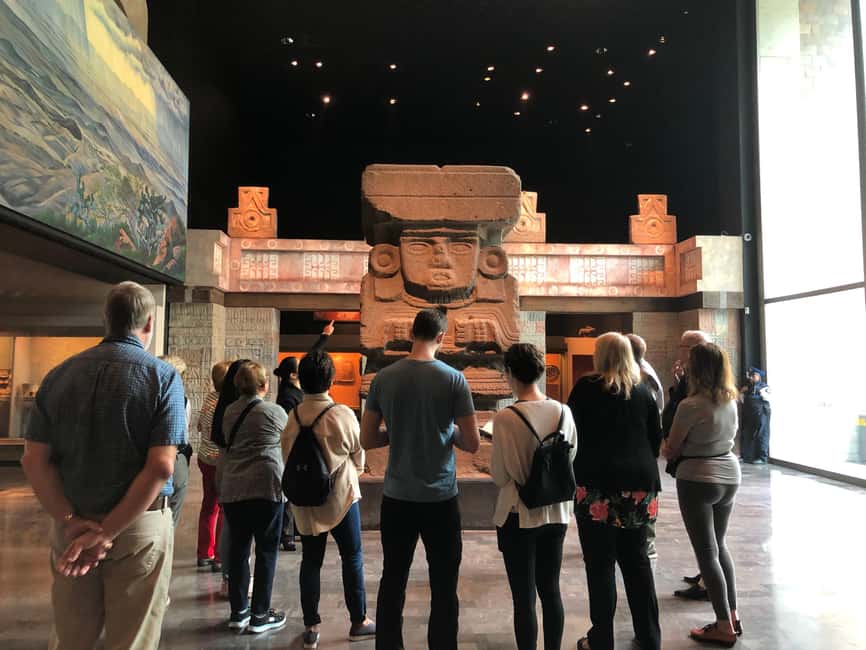
- Headsets help in crowded rooms, so you can actually hear the guide and ask questions.
- The tour walks you through “how Mesoamerica worked”, from shared ideas to practical tech like textiles and pigments.
- You finish with a dramatic stop, the replica of Pakal’s tomb, plus a famous museum heist story.
Entering the Anthropology Museum With a Historian
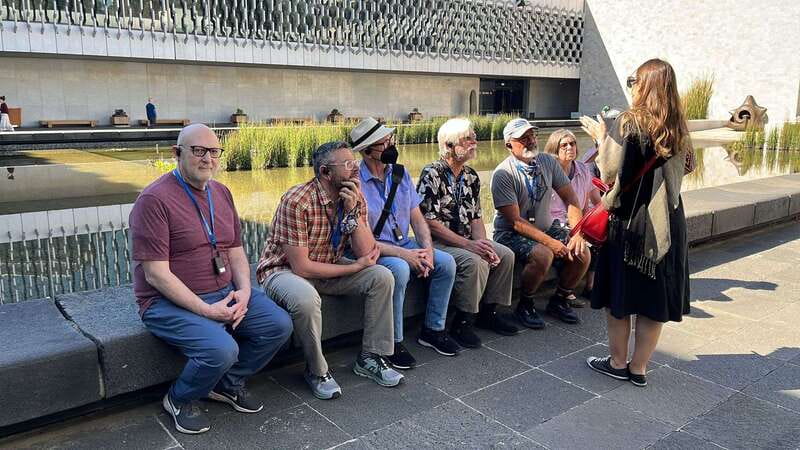
Meeting at the museum’s main lobby near the ticket booth is the right kind of low-stress start. Your guide is easy to spot, with the WALK MEXICO logo, and you begin right in the museum where you avoid the usual problem: wandering for an hour and remembering nothing.
The big value here is the human layer. You get an expert guide with graduate training in art history or history, and the tour is designed to be more than “look at this, now look at that.” The guide’s job is to help you interpret what you’re seeing, so objects stop being random carvings and start feeling like messages from real people.
Also, the small group matters. Limited to 10 participants, it’s the sort of setup where you can ask questions and keep the pace moving without losing the thread.
Why the Museum’s Design Matters (More Than You Think)
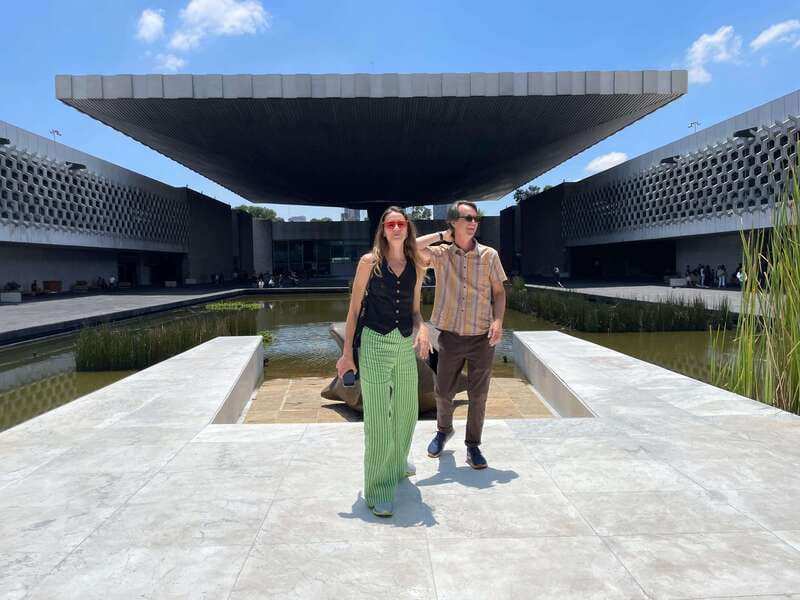
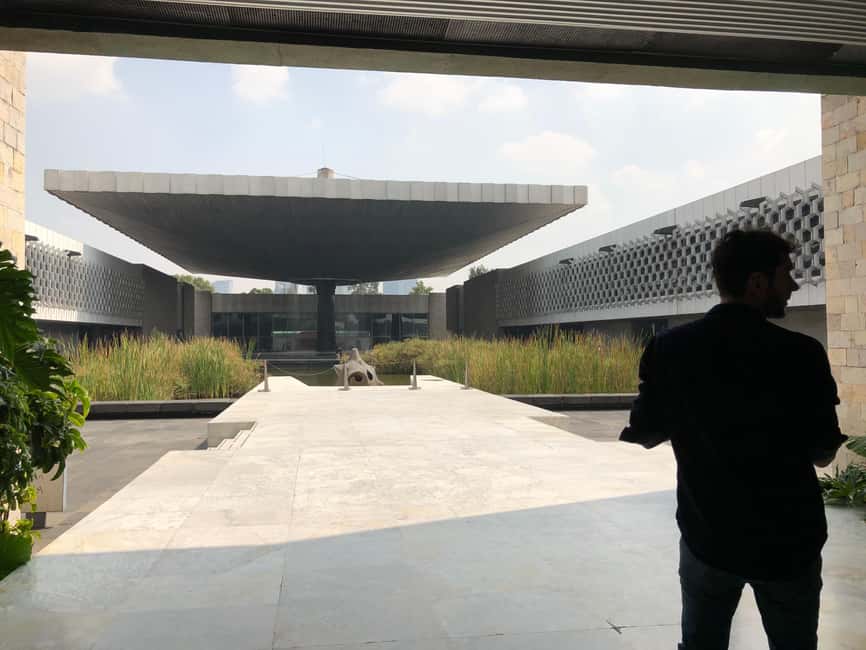
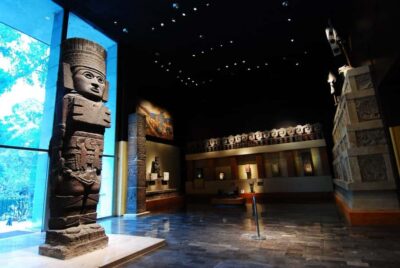
Before you even get deep into galleries, the tour starts by showing you how the museum itself was shaped to honor Mesoamerican cultures. You learn how architects and artists collaborated to create spaces that use murals, symbolism, and monumental replicas to help you understand the collections.
This is one of those details that sounds like trivia until you’re actually walking through the museum. When you know how the building is communicating, you begin to notice the same storytelling approach used on the walls and in the display layout. You stop seeing the museum as a warehouse and start seeing it as a lesson plan.
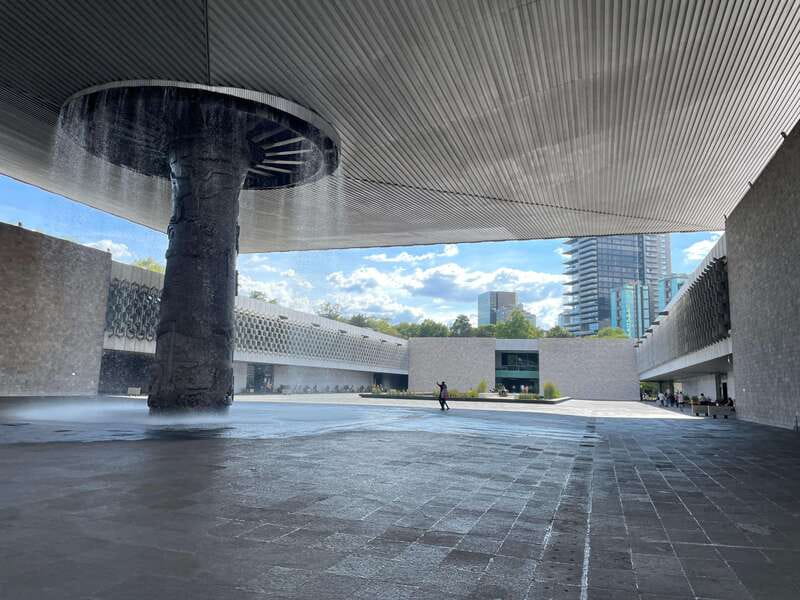
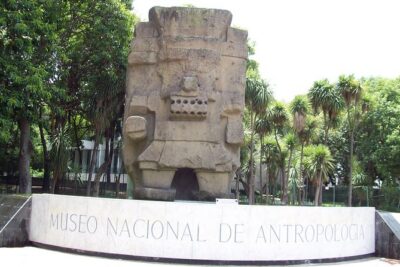
Then comes a centerpiece that’s almost impossible to ignore: the museum’s famous courtyard fountain. The guide explains what it symbolizes and why it lands so strongly in the overall experience. If you like architecture or visual symbolism, this is the moment that clicks.
Mesoamerica, Explained as a Shared Cultural Region
One hall reframes everything with a simple question: what does it mean that these cultures are linked?
You’ll learn Paul Kirchhoff’s definition of Mesoamerica as a shared cultural region, built from connections that went beyond political borders. The guide points out patterns that keep showing up across distance and time, like shared cosmological ideas, agricultural systems, and common traditions. The effect is practical, not academic. Instead of memorizing timelines, you start to recognize recurring themes in images, rituals, and daily objects.
This is where people who only planned to “see the highlights” often get pulled in. The museum becomes a map of relationships, and you start thinking in networks, not isolated civilizations.
Textiles, Agave, and Natural Pigments: Craft as Culture
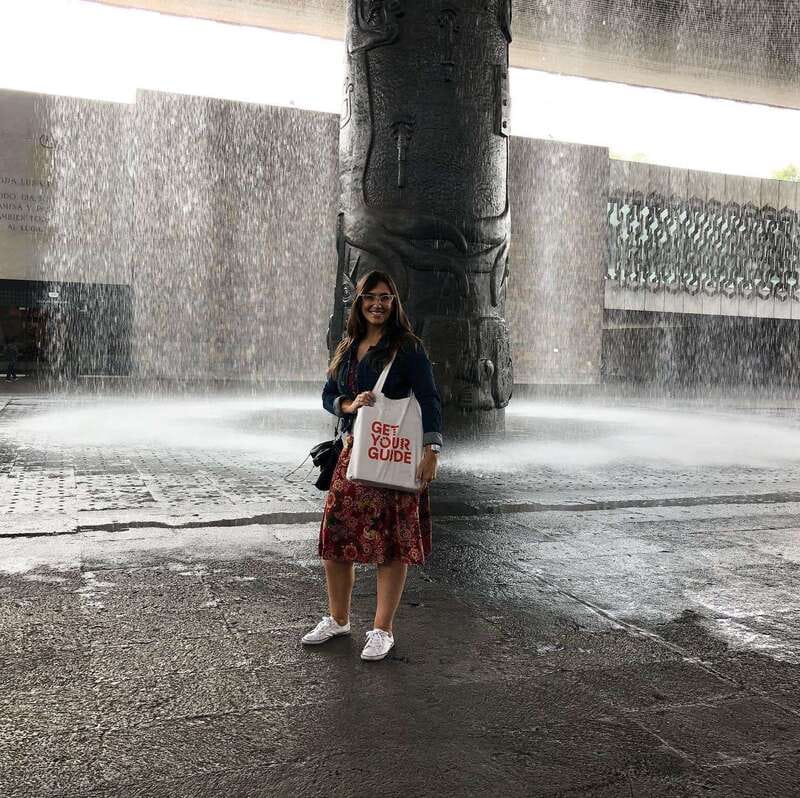
After symbols and big-picture definitions, the tour shifts to hands-on culture. The Textiles, Agave & Natural Pigments segment is one of the smartest parts of this tour because it connects art to work.
You see looms and garments from across Mesoamerica, then connect them to what agave could do. Agave wasn’t just a plant you admired. You learn about its uses in fibers and tools and household items, and you hear how spinning, weaving, and dyeing were made using organic pigments.
The takeaway for you is simple: when you understand the materials and processes, the visual language becomes easier to read. Patterns stop looking decorative and start looking intentional. Even if you’re not a textile person, you’ll likely find yourself noticing textures and technique you would have missed on your own.
This is also the portion that feels especially good for mixed groups. If you’re traveling with kids, or with friends who think they are not “museum people,” craft tends to hold attention.
Cultural Blending: Ritual Objects and Shared Visual Language
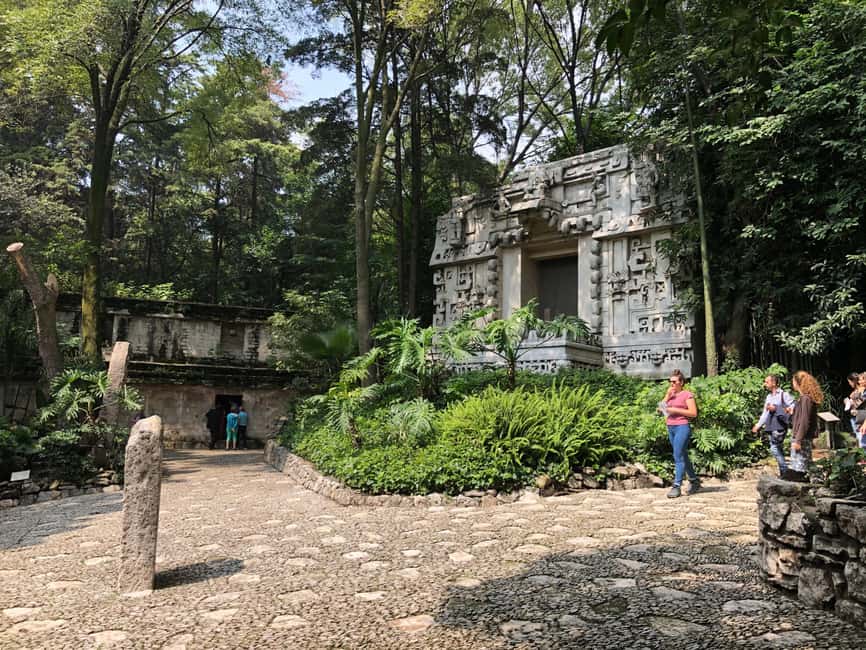
The tour then moves through displays focused on cultural exchange and blending, especially in ritual life. You’ll walk past ritual attire and ceremonial objects, and the guide explains how centuries of contact shaped festivals, body decoration, and artistic identity across the region.
This is another key value point. It stops you from imagining pre-Columbian cultures as sealed containers. Instead, you see how ideas moved, and how styles adapted. That makes the museum feel less like a set of museum labels and more like a story of living communities.
Olmec Colossal Head: Why This Civilization Gets Called a Mother Culture
Next up is the Olmec gallery, anchored by an iconic colossal head. The tour frames the Olmec as a “mother culture” of Mesoamerica, and you learn why later societies were influenced by earlier artistic styles and religious concepts.
This stop can feel slightly different from the others, because monumental art tends to intimidate people. A guide changes that. You learn what to look for, what ideas it likely carried, and how it fits into the larger web of Mesoamerican development.
If you’re the type who likes to understand where something begins, this is the moment you’ll appreciate most.
Mexica Highlights: Templo Mayor, Chinampas, and the Sun Stone
The Mexica segment is where the tour gets especially concrete, because you see how belief and engineering met.
You start with key Mexica highlights, including Templo Mayor and the chinampas system. The guide explains how chinampas were artificial islands supported by bridges, aqueducts, and a sophisticated hydraulic setup. Then a detailed scale model helps you picture what was happening beneath colonial Mexico City, which is a mind-bender in the best way.
After that, the tour tackles one of the most famous objects that often gets misunderstood: the piece people commonly call the Aztec Calendar. You’ll learn the correct name and meaning instead of relying on a catchy but misleading label.
Finally, you return to the big icon theme with the Sun Stone and related Mexica visual storytelling. This is where the earlier Mesoamerica framing pays off. By now, you recognize recurring symbol logic and begin to see how the Mexica embedded time, cosmos, and ritual in a single image system.
Teotihuacán as a Multicultural Metropolis
Then you shift to Teotihuacán, presented as a cosmopolitan city inhabited by multiple cultures. The guide walks you through theories about its rise and mysterious decline, without turning it into a guessing game that wastes your time.
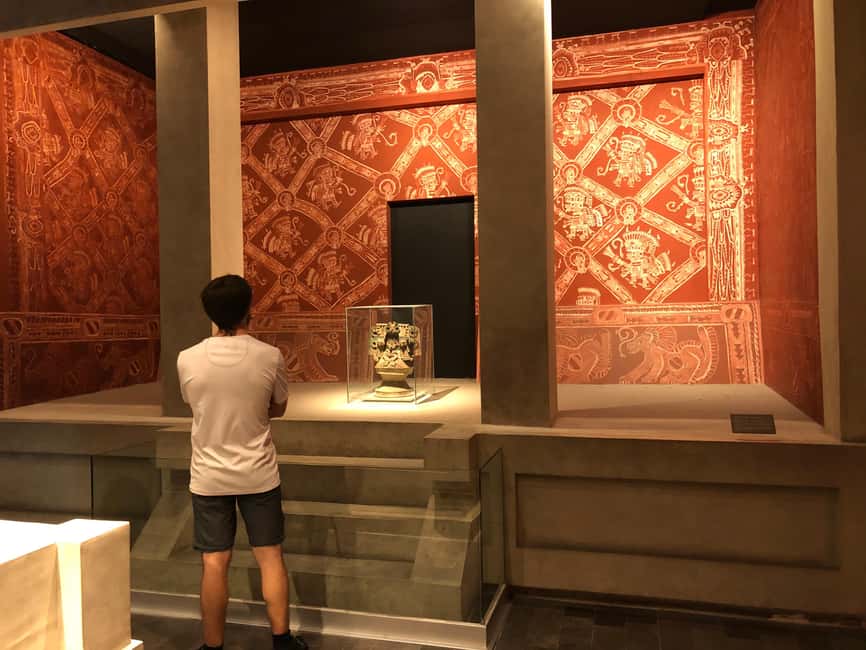
What you’ll actually enjoy is how the tour uses what you can see. You’ll examine refined ceramics, obsidian masterpieces, mural fragments, and colorful architectural replicas. You start noticing patterns in artistic technique and materials that hint at contact and shared practices.
For your brain, this is the best kind of museum education. It doesn’t ask you to memorize facts. It teaches you to interpret.
Maya Writing, Art, and the Story Behind Pakal’s Tomb Replica
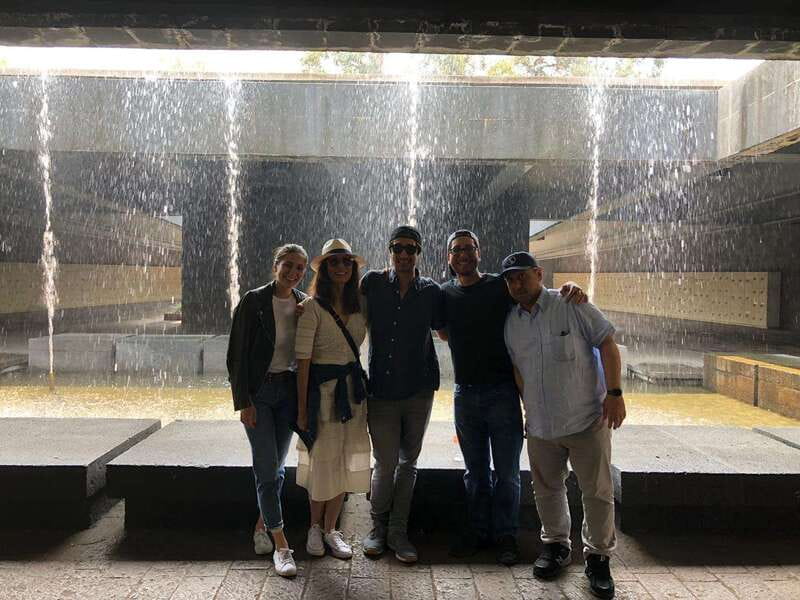
You end in the Maya hall, which is a strong closer because it gives you both visual beauty and real intellectual momentum.
You’ll see ceramic portraits, vibrant vessels, and jade carvings, then hear how Maya writing was deciphered. The guide tells the story in a way that feels like real history, spanning colonial archives, lost manuscripts, and the work of a WWII Russian soldier. Even if you know the basics, the narrative structure helps it land.
Then comes the most dramatic moment: the replica of Pakal’s tomb. It’s a space designed to hit you emotionally, and the guide connects that impact to what the tomb represents.
You also hear a striking 1985 Christmas Eve museum heist story involving Pakal’s mask and other treasures. That adds a modern pulse to the experience. You’re no longer just looking at the past, you’re seeing how fragile these artifacts can be and why museums protect them.
3 Hours, $175, and What You Actually Get
At $175 per person for a 3-hour tour, you’re paying for three things that are hard to replicate without a guide: interpretation, pacing, and selection.
Here’s what justifies the price for you if you care about meaning:
- You get an expert guide with graduate training in history or art history.
- The tour includes a museum ticket, so you are not paying separately to enter.
- Headsets are included, which helps you hear the guide when rooms get busy.
- The tour doesn’t try to cover everything. It picks the strongest connections across Mesoamerica so your time feels purposeful.
If you’re more of a casual museum browser, you might feel the time squeeze. If you love asking questions and learning how symbols work, the value is much easier to justify.
Also, because the group is limited to 10, you get something you often miss in large groups: a guided experience that still feels human.
Who This Tour Fits Best
This is a great match if:
- You want to understand what you’re looking at, not just see famous objects.
- You like a clear narrative thread, from Olmec and Mexica into Teotihuacán and Maya.
- You’re traveling with mixed interests and want craft, architecture, and symbolism in the same tour.
It may be less ideal if:
- You plan to spend most of your time photographing and reading every label slowly.
- You only want a quick highlight sweep with minimal explanation.
Should You Book This Mexico City Anthropology Museum Tour?
Yes, if you want your visit to feel like a guided argument for understanding Mesoamerica, not a pile of exhibits. The historian-led format helps you decode symbols, connect civilizations, and notice how the museum is teaching you as you walk.
Book it now if your schedule is tight and you need a route that covers the big ideas in three hours. Consider adding extra self-guided time afterward if you know you’ll want to linger with Pakal’s tomb replica, the fountain courtyard, or anything that catches your eye during the tour.
If you want, tell me your travel dates and whether you prefer more art interpretation or more practical culture and I can suggest how to pair this with other nearby Mexico City sights on the same day.
FAQ
How long is the Mexico City Anthropology Museum tour with a historian?
It lasts 3 hours.
Where do we meet the guide?
You meet at the Anthropology Museum in the main lobby near the ticket booth, and your guide will wait for you with the WALK MEXICO logo.
What’s included in the price?
The experience includes an expert guide (with graduate academic degree in art history or history), museum ticket, and headsets to hear the guide, plus the live tour in English or Spanish.
Is the tour wheelchair accessible?
Yes, it is wheelchair accessible.
How big is the group?
It is a small group limited to 10 participants.
Are there any rules for children?
An adult must always accompany children.
Chapultepec & the Anthropology Museum in one list.
 ★ 4.5Chapultepec Castle & Anthropology Museum TourFrom $791,348 reviews
 ★ 4.5Anthropology Museum Guided TourFrom $391,035 reviews
 ★ 4.4Mexico City: Anthropology Museum Guided VisitFrom $67708 reviews
 ★ 4.5Mexico City: Chapultepec Castle and Anthropology Museum TourFrom $47637 reviews
 ★ 4.4Mexico City: Anthropology Museum Skip-the-Line TicketFrom $15502 reviews
 ★ 5.0Anthropology Museum Private Experience Walking TourFrom $78355 reviews
 ★ 5.05 Hour Tour through Chapultepec, Anthropology Museum and CastleFrom $61239 reviews
 ★ 5.0PRIVATE Tour in Chapultepec Castle and Museum of AnthropologyFrom $113144 reviews
Where else it sits