
Reviewed · WALKING TOURS
Epic Condesa and Roma Norte Walking Tour
Walk the streets like a local. This Condesa and Roma Norte experience is built for easy strolling, with Ricardo leading you from one architectural standout to the next while you learn how the neighborhoods tick. You spend the afternoon in places you can’t easily reach by car, and you get a clear route that keeps your brain from turning into a Google Maps pinball.
What I like most is the mix of parks and Art Deco streetscapes with stories that make the buildings feel human. I also love that it’s a small group setup, so the pacing stays friendly and the conversation can actually go somewhere.
The main catch is time on your feet. Even with breaks, plan for a long walk, likely closer to 5 hours than the listed 4.5.
In This Review
- Key highlights worth showing up for
- Entering Condesa and Roma Norte, one stop at a time
- Starting at Churrería El Moro, ending at Huerto Roma Verde
- Parque México and the Ámsterdam street loop: where the neighborhood mood starts
- Quick consideration
- Parque España to Condesa DF: sculptures, viewpoints, and a smarter way to look at architecture
- Fuente de Cibeles to Guillermo Tovar de Teresa: culture that connects Mexico and Spain
- UNAM book mansion to Sagrada Familia: literature culture and neo-Gothic drama
- Plaza Río de Janeiro and Edificio Río de Janeiro: the David replica and the building that tells a story
- Casa Basalta, La Romita, and Pushkin Garden: smaller stops that feel local
- Álvaro Obregón to Casa Prunes: Art Deco street energy and Art Nouveau beauty
- Plaza Luis Cabrera to El Parián: fountains, squares, and a historic passage
- Casa Lamm Centro de Cultura and Calle Orizaba: culture buildings and the street level of style
- Huerto Roma Verde: the ending that makes the whole walk feel complete
- What you get for $59, and why it feels fair for this route
- Who should book this Roma Norte and Condesa walk
- Should you book this walking tour?
- FAQ
- What is the price of the Epic Condesa and Roma Norte Walking Tour?
- How long is the tour?
- Is the tour offered in English?
- What is the group size?
- Where does the tour start and end?
- What is the cancellation policy?
Key highlights worth showing up for
- Ricardo leads the way, so you can focus on the details instead of route math
- Small group (max 12), which helps the tour feel personal
- No-car access through the neighborhoods, ideal for narrow streets and parks
- Art Deco to Art Nouveau to neo-Gothic, all in one coherent afternoon walk
- Parks and squares keep the tour from feeling like a nonstop building parade
- A finish at Huerto Roma Verde, a satisfying local-style garden stop
Entering Condesa and Roma Norte, one stop at a time
Condesa and Roma Norte are the kind of neighborhoods where architecture is not just background. It shapes the street feel, the park design, and even how people hang out. This tour takes that idea and turns it into a walkable lesson plan.
You start with a guide who handles the navigation. That sounds small, but in Mexico City it matters. When you’re not worrying about directions, you notice the stuff that makes the area special: the street geometry, the rooftop views, the shapes of doorways and balconies, and the little cultural references tucked into public spaces.
And since the group is kept small, Ricardo can slow down when something catches your interest. One review highlighted that he can add a couple of food stops if you want them. So if you like architecture and you also want an excuse to try local snacks, this kind of flexible guiding can be a real win.
Walking circuits in Mexico City we have also put through the notes
- Historic Downtown Walking Tour
★ 5.0 · 1,289 reviews - Mexico City: Historic Downtown Walking Tour
★ 4.8 · 1,039 reviews - Frida Kahlo VIP [Museum Tickets Included] Walk, Markets & Churros
★ 5.0 · 982 reviews - Walking Tour of the Historic Center of Mexico City
★ 5.0 · 870 reviews - Anthropology Museum Private Experience Walking Tour
★ 5.0 · 355 reviews
Starting at Churrería El Moro, ending at Huerto Roma Verde
The meeting point is at Churrería El Moro, Av Michoacán 27 in the Hipódromo area. The tour begins at 12:00 pm, and you finish at Huerto Roma Verde on Jalapa 234 in Roma Sur (with the tour marking it as the end point).
This start-to-finish setup is convenient for two reasons. First, it naturally strings together Condesa and Roma Norte without you needing to backtrack. Second, it ends in a place that feels like a community hangout, not just another landmark photo stop.
A practical note: the walk starts mid-day. Wear comfortable shoes and plan to be out for a while. You do get pauses, but you’re still spending most of the afternoon moving.
Parque México and the Ámsterdam street loop: where the neighborhood mood starts
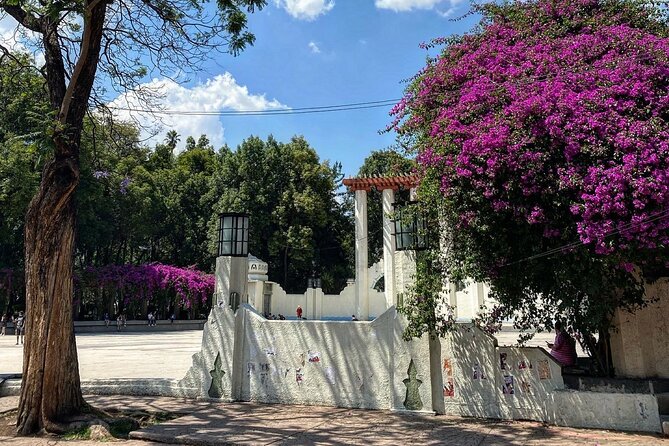
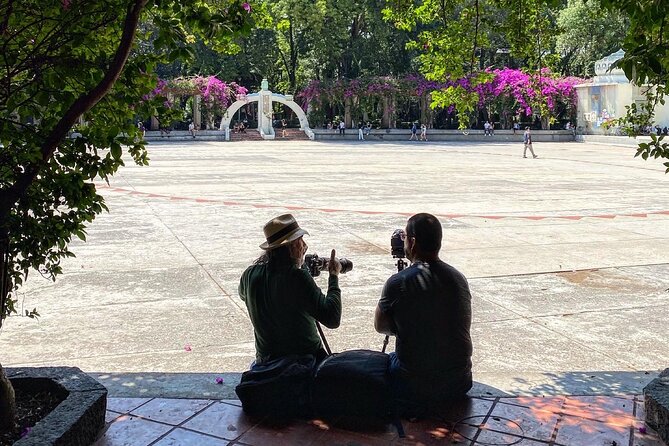
Your first real taste of Condesa-style city life is Parque México. You’ll move through lush paths and look at its Art Deco design, which is the perfect opening act. Parks here are not just green space. They’re social space, and they set the tone for how the surrounding streets were planned.
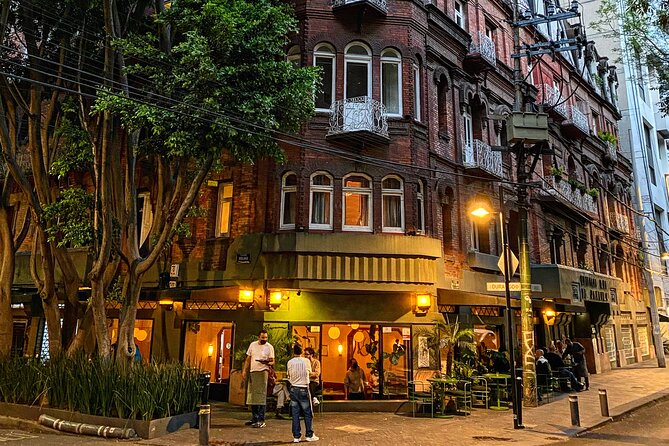
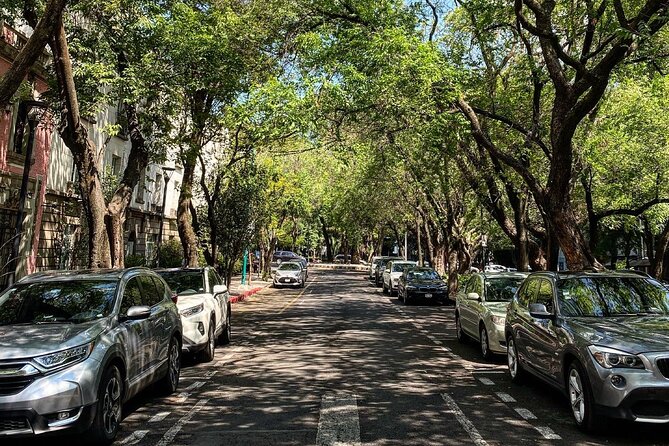
Next comes Ámsterdam, a charming tree-lined street that circles what used to be a horse race track. That detail matters, because the street layout is part of the design story. The elliptical feel and the Art Deco architecture make it easy to understand why Condesa developed its signature look.
You’ll also be able to spot how greenery and buildings work together. It’s the kind of contrast you might miss if you were simply passing through on your own.
Quick consideration
If you dislike walking in warm weather, aim to hydrate early and keep snacks handy. This route spends a lot of time outside, even though it’s structured with short stops.
Parque España to Condesa DF: sculptures, viewpoints, and a smarter way to look at architecture
After the Ámsterdam loop, you shift into Parque España for a calmer stroll. This stop is about pace and details. You’ll look at sculptures and historic monuments, and the park setting makes the stories land more easily than if they were delivered on a busy sidewalk.
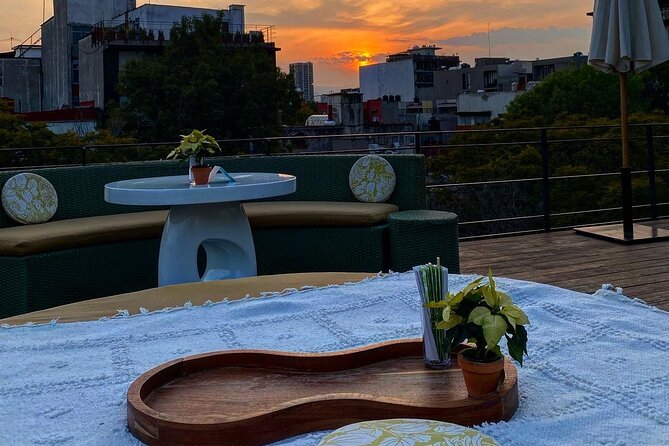
Then you’ll head toward Condesa DF, where modern and colonial influences mix in a boutique-hotel setting. The star here is the rooftop. You get views over Condesa that feel like the neighborhood was built for walking routes and long looks, not just quick photo stops.
This is a good reminder of a theme in the whole tour: you’re not only seeing buildings, you’re learning how people experience them from street level and from above.
- Teotihuacan, Guadalupe Shrine & Tlatelolco Day Tour with Lunch★ 5.0 · 11,603 reviews
- Xochimilco, Coyoacan and Frida Kahlo with Optional Lunch★ 4.5 · 7,320 reviews
- Balloon flight + Breakfast in cave + Pyramids + Pick up CDMX.★ 5.0 · 6,335 reviews
- Teotihuacan pyramids morning or afternoon without tourist traps★ 5.0 · 6,186 reviews
- Teotihuacan Early Access Guided Tour with optional Lunch★ 4.5 · 6,138 reviews
- Balloon flight + pick up in CDMX + Breakfast in Cave + Pyramids★ 5.0 · 5,651 reviews
- Balloon Flight + Cave Breakfast + Pick Up from CDMX or We Fly★ 5.0 · 4,410 reviews
Fuente de Cibeles to Guillermo Tovar de Teresa: culture that connects Mexico and Spain
Next up is Fuente de Cibeles, a replica of Madrid’s famous fountain. The value here is the cultural context. It’s a small, easy stop that helps you understand how Mexico City borrows visual language across borders, then makes it its own.
From there, you’ll visit Casa Museo Guillermo Tovar de Teresa. This is where the afternoon adds a deeper cultural layer. The house is preserved and filled with art and antiques, and Ricardo uses it to connect you to the life of one of Mexico’s prominent art historians.
Even if you are not an art-history superfan, the setting still works. A preserved home gives you a sense of how people collected, displayed, and lived with culture. That makes the neighborhood stories feel less like facts and more like lived realities.
UNAM book mansion to Sagrada Familia: literature culture and neo-Gothic drama
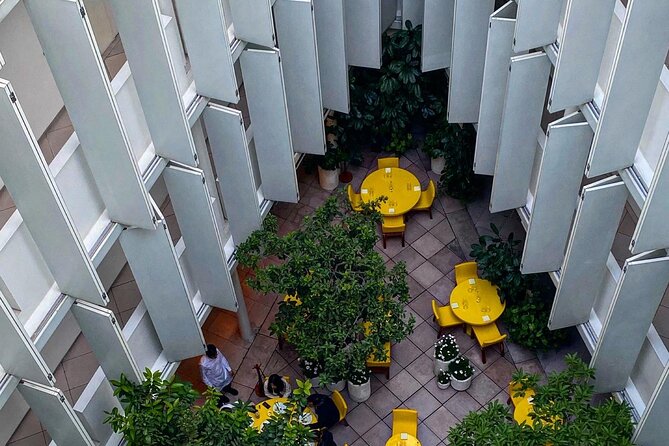
One of the most interesting stops is Casa Universitaria del Libro UNAM. You’ll spend time admiring the architecture of the historic mansion and you can see temporary expositions.
The reason this stop is worth your attention is simple: it’s a cultural hinge point between architecture and ideas. You get a sense that Roma Norte is not only about old buildings, it’s also about where books, education, and public culture show up in physical spaces.
Then you’ll head to Parroquia de la Sagrada Familia, with its neo-Gothic style. The guide will explain its historical significance as one of the older churches in Roma Norte. In practice, the church is a visual jolt after the book-mansion vibe, and the contrast helps you remember the timeline of styles across the route.
Plaza Río de Janeiro and Edificio Río de Janeiro: the David replica and the building that tells a story
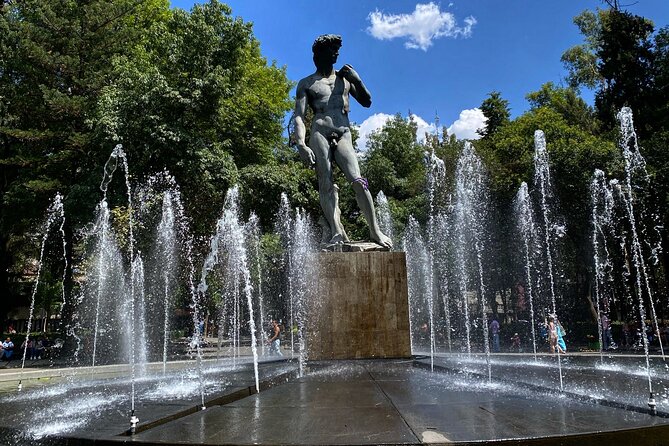
You’ll pause at Plaza Río de Janeiro, which is known for a relaxed park-like feel. Look for the replica of Michelangelo’s David and also take in the buildings around the square. The surroundings matter here, because the plaza is a stage where the neighborhood’s design choices become obvious.
From the plaza, you’ll move to Edificio Río de Janeiro, where eclectic architecture becomes the point. Ricardo will share the building’s history as one of the iconic structures in the area. This is one of those stops where listening to the story helps you see why the building is memorable, instead of just thinking it looks interesting.
Casa Basalta, La Romita, and Pushkin Garden: smaller stops that feel local

Not every highlight here is a famous name. Casa Basalta is a great example of a stop that feels active. It’s an early 20th-century mansion now housing MAIA Contemporary art gallery, a meditation center, and restaurants. That combination makes it easy to understand why people like stopping here even without a formal ticket or plan.
Then you’ll explore La Romita, wandering through narrow streets and the Plaza de la Romita. Ricardo will explain origins tied to the pre-Hispanic village of Aztacalco and how the area evolved over time. For many people, this is where the neighborhood starts to feel like a real timeline instead of a style catalog.
You’ll also cross Pushkin Garden, named after the Russian poet. It’s short, but it’s a nice change of pace. When a tour uses a small park stop like this, it helps you reset your eyes for the next stretch of architecture.
Álvaro Obregón to Casa Prunes: Art Deco street energy and Art Nouveau beauty
Next is Avenida Álvaro Obregón, an iconic street lined with Art Deco architecture, trendy shops, and lively nightlife. For practical reasons, it’s also a strong route anchor. You see how the neighborhood’s design supports movement, commerce, and evening life.
Then you’ll reach Casa Prunes, an Art Nouveau mansion with an excellent restaurant and lots of little spots to notice. Mansions like this can be easy to skim if you’re not paying attention, but a guiding narrative helps you look at the structure and ornament more deliberately.
If you like when tours mix visuals with context, this is one of those sections that clicks.
Plaza Luis Cabrera to El Parián: fountains, squares, and a historic passage
You’ll slow down at Plaza Luis Cabrera, known for a large fountain and green spaces. It’s a good pause stop, and it shows how squares in this area are designed for hanging out rather than just passing through.
Next is El Parián, a historic passage dating back to 1926. It now houses local shops and restaurants, so it functions as a bridge between history and everyday life. This stop is especially useful if you like browsing because it’s easy to linger without feeling lost.
A smart tip for this kind of area: if you’re hungry later, keep track of what you see here. Ricardo often shares recommendations during the tour, and seeing the vibe in person helps you choose later with confidence.
Casa Lamm Centro de Cultura and Calle Orizaba: culture buildings and the street level of style
In Casa Lamm Centro de Cultura, you’ll look at a historic early 20th-century building now used as a cultural center. Even if you don’t go inside for long, the building itself shows you how the area kept culture in its physical form.
Then you’ll walk along Calle Orizaba, a historic street with early 20th-century architecture and a lively atmosphere. This is where you feel the neighborhood’s design patterns up close: the way streets are proportioned, the cadence of facades, and the balance between residential and street activity.
Huerto Roma Verde: the ending that makes the whole walk feel complete
The tour finishes at Huerto Roma Verde, an urban garden and community space known for sustainable practices and a lively atmosphere. This end point is more than a nice photo stop.
It gives your brain a final reset. You spent hours looking at built form, styles, and historic references. Now you land on a place where the neighborhood’s future looks like community use of space, not only preservation of buildings.
Also, ending with a garden reduces the “what now?” problem. Instead of you searching for the nearest exit, you leave in a place where people actually linger.
What you get for $59, and why it feels fair for this route
At $59 per person for about 4 hours 30 minutes (and in practice, often closer to 5 hours with breaks), you’re paying for guided storytelling, a curated route across two neighborhoods, and help noticing details you’d likely miss on your own.
A key value point: many stops are set up as admission-free experiences. That means your money goes mostly to the guiding, pacing, and interpretation, not a stack of paid entrances. For a walking tour packed with architecture, parks, and cultural sites, that’s a good balance.
The small-group cap (max 12) also matters for value. If the group were large, you’d lose time at each stop and you’d spend more energy trying to keep up. Instead, Ricardo’s style keeps the walk moving while still allowing context.
Finally, the tour’s route ends in a meaningful local space. That makes it feel like more than a list of places. You get a full arc from landmark streets and plazas to a neighborhood-scale community garden.
Who should book this Roma Norte and Condesa walk
This is a strong fit if you:
- Want a guided introduction to Roma Norte and Condesa without stressing over directions
- Care about architecture styles like Art Deco, Art Nouveau, and neo-Gothic
- Like parks and squares as part of your sightseeing, not just as breaks
- Prefer a small group setting where conversation is possible
You might want to skip or choose a different format if:
- You have limited tolerance for long walks, since the route is substantial
- You want a tour with lots of extended indoor time at each stop, because this is built for moving and seeing patterns across neighborhoods
Should you book this walking tour?
If you are arriving in Mexico City and want a smart afternoon that teaches you how Roma Norte and Condesa fit together, I think this is a good booking. The route is dense with architecture, and the guide approach keeps it from feeling like a lecture.
The decision hinges on one thing: can you comfortably do a long walking tour with breaks? If yes, then $59 is a reasonable price for the guidance, pacing, and neighborhood context you get across parks, churches, mansions, squares, and cultural spaces.
If you want a neighborhood walk that feels both practical and story-driven, book it. If you want a short, low-effort stroll, choose something else.
FAQ
What is the price of the Epic Condesa and Roma Norte Walking Tour?
The price is $59.00 per person.
How long is the tour?
It runs about 4 hours 30 minutes.
Is the tour offered in English?
Yes. The tour is offered in English.
What is the group size?
The tour has a maximum of 12 travelers.
Where does the tour start and end?
It starts at Churrería El Moro, Av Michoacán 27, Hipódromo, Cuauhtémoc, and ends at Huerto Roma Verde, Jalapa 234, Roma Sur, Cuauhtémoc.
What is the cancellation policy?
You can cancel for a full refund up to 24 hours before the experience start time.
Further walking circuits we have reviewed in Mexico City

Keep comparing guided outings across Mexico City
Not quite it? More Mexico City tours from our review pile



Walking Tours in one list.
 ★ 5.0Historic Downtown Walking TourFrom $261,289 reviews
 ★ 5.0Playa del Carmen Walking Food TourFrom $841,274 reviews
 ★ 4.8Mexico City: Historic Downtown Walking TourFrom $261,039 reviews
 ★ 5.0Walking Tour of the Historic Center of Mexico City870 reviews
 ★ 5.0Puerto Vallarta’s Best Canopy Zipline + Jorullo Bridge walk!From $58817 reviews
 ★ 5.0Historical and Cultural Walking Tour of San Miguel de AllendeFrom $34641 reviews
 ★ 5.0Tacos and Tequila Walking Tour with Taste of MiguelFrom $89583 reviews
 ★ 5.0Historical and Cultural Walking Tour of San José del Cabo576 reviews
Where else it sits