
Reviewed · CHICHEN ITZA GUIDED VISITS
Chichen Itza: Self-Guided Tour with Audio Narration & Map
Chichén Itzá feels less rushed with GPS audio. This self-guided tour uses a phone map and location-triggered narration so you can pace yourself through El Castillo, the ball court, and the observatory without joining a tight group.
I especially like that the tour works offline once you download it, and the stories play hands-free as you walk, with audio plus images and text at each stop.
One consideration: it is not your Chichén Itzá admission ticket, so you still need to buy park entry separately and plan around the site’s hours.
In This Review
- Key points before you go
- Offline GPS, location-triggered audio, and a map that keeps you moving
- Price and value: $9.99 plus the park entry ticket
- Walk the route in 2 to 3 hours, with time for photos and shade
- Starting at the Handicraft Market: get your bearings fast
- El Castillo and the Grand Ball Court: the stops you cannot miss
- Tzompantli and the Eagles and Jaguars Platform: ceremonial details you can spot
- El Caracol and Chichén Itzá’s Maya-Toltec thread
- Warriors Temple, Red House, and the Ossuary names that stick
- Las Monjas and La iglesia: where the audio helps you notice carvings
- Small setup tips so the app actually works on your day
- Final call: who should book this Chichén Itzá audio tour, and who should skip it?
- FAQ
- How long does the Chichén Itzá self-guided tour take?
- Is the Chichén Itzá entrance ticket included?
- Does the audio tour work offline with GPS?
- What language is the tour in?
- How do I start the audio once I arrive?
- What happens if I have to download the app before my visit?
- Is there a guide meeting me at the start?
- What devices are recommended for GPS navigation?
- What are the opening hours for Chichén Itzá in this period?
- What is the cancellation window?
Key points before you go
- Offline GPS that works without data, once you download the tour with good Wi-Fi
- Hands-free audio that starts when you reach each point, so you can keep walking
- A recommended route that helps you hit the essentials in a logical order
- Stop-by-stop context for major sights like El Castillo and El Caracol
- Budget-friendly format that can replace a costly private guide
- Lifetime access with no expiry, so you can reuse the audio later
Offline GPS, location-triggered audio, and a map that keeps you moving
This is the kind of Chichén Itzá tour that actually fits how most people travel: you want to look up, take a photo, read a little, then move on, without waiting for anyone else. The app uses GPS to trigger the next audio story based on where you are, and the map plus instructions help you stay on the route.
The big practical win is that you do not need cellular data during the visit. Download the tour while you have strong Wi-Fi or cellular, then let the app run offline with GPS alone. That matters at major ruins where signal can be spotty, and it also means you can focus on what is in front of you instead of managing your phone.
The experience is hands-free, but you still control it. You can pause, resume, and skip what you do not care about, which is useful if the crowd shifts where you want to stand or if you want extra time on a single structure.
A few more Chichen Itza runs in Chichen Itza we have written up
- Chichén Itzá Skip-the-Line Entrance Ticket
★ 4.0 · 343 reviews - Private Guide Service in the Archaeological Zone of Chichen Itza
★ 5.0 · 151 reviews - Chichen Itza: Self-Guided Tour with Audio Narration & Map
★ 4.5 · 72 reviews - Mayan Experience in Chichen Itza
★ 5.0 · 53 reviews - Private Tour in Chichen Itza Official History Guide
★ 5.0 · 36 reviews
Price and value: $9.99 plus the park entry ticket
At $9.99 per person, the audio tour itself is a low-cost way to get real explanation at major monuments. The trade-off is simple: the $9.99 is for the guided narration and map, not for entry to Chichén Itzá.
So your real budget is “audio tour cost plus admission.” If you were thinking about hiring a private guide just to understand what you are looking at, this package can be a smarter spend. Even if you do not love every detail, the app is designed to cover all the essentials efficiently, so you do not feel like you missed the main story.
Also, you get lifetime access with no expiry. That makes the value stronger if you return to Mexico later or if you want to refresh the context before another trip.
Walk the route in 2 to 3 hours, with time for photos and shade
The walking is real. You are looking at roughly 2 miles for the tour experience, with 37 or more audio stories, and most people finish in about 1 to 2 hours if they follow the flow and keep moving. In practice, I recommend planning a 2 to 3 hour window, because Chichén Itzá is the kind of place where you will stop for photos, shade breaks, and quick souvenir detours.
The route is laid out to cover the key monuments in a logical order, so you are not zig-zagging across the site. You will also notice that some stops list admission as free and others as not included, which lines up with the idea that you start in areas outside the core ruins, then move into parts where park entry matters.
If you are with someone, consider sharing. There is a tip that couples can share one tour by splitting headphones, which can cut cost without losing the “you both hear it” effect.
Starting at the Handicraft Market: get your bearings fast
You begin at 97751 Chichén-Itzá, Yucatán, Mexico, and the tour ends back at the starting point. No one meets you at the start, so you will want to arrive ready to download and set up before you start walking.
The first stop is the Handicraft Market area. This is a helpful warm-up because it gets you into the rhythm of the app, and you are not immediately thrown into the biggest structures. The audio frames the area as land tied to the Mayans, with relic-like details and mysteries you will learn more about as you go.
Two useful things here:
- You can settle your phone settings and test your headphones.
- You can let the app guide you into the main route without stress.
El Castillo and the Grand Ball Court: the stops you cannot miss
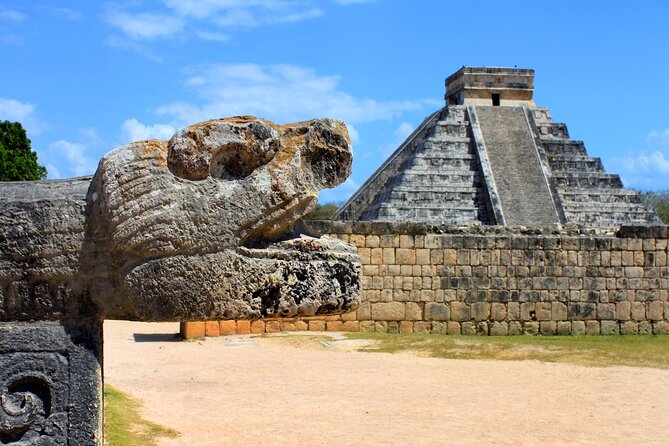
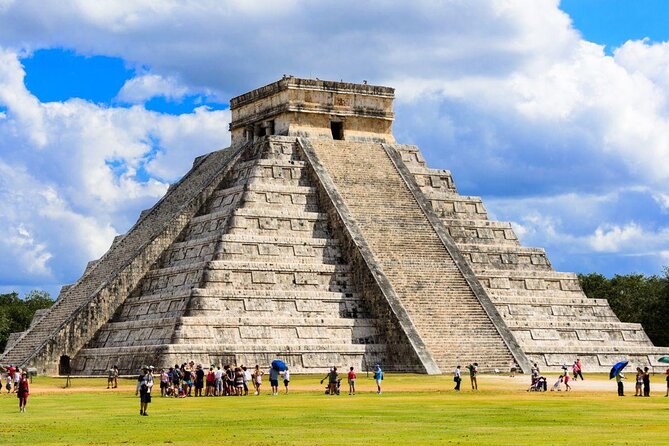
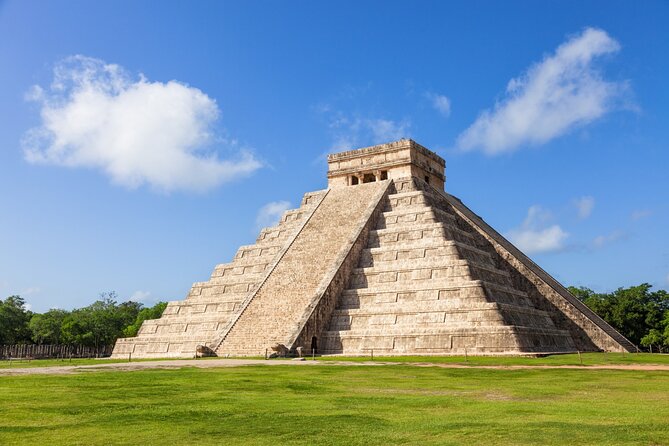
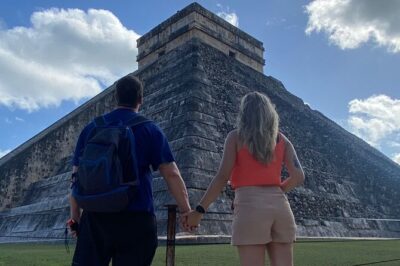
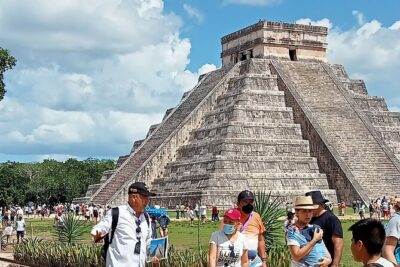
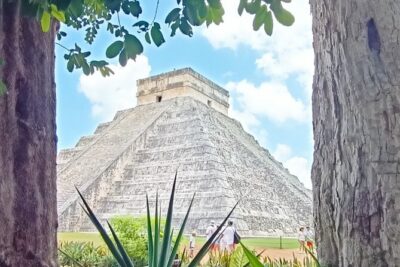
El Castillo is the obvious headline, and the audio treats it that way. The narration explains what it is called and why it matters, including that it honors the snake deity Kukulkan. When you stand in front of it, the audio also points you toward what the architecture reveals about Mayan civilization.
If you only have time for one big “aha” structure, this is it. The building is famous for a reason, and the app helps you look past the postcard angle so you understand what you are actually seeing.
Next is the Gran Juego de Pelota, the Great Ball Game area. The story focuses on the fact that the field connects to Mayan culture, and it mentions six sculpted reliefs running along the walls. The audio also suggests looking closely because scenes can show ball players.
Practical tip: keep your headphones in, even when you are moving between stops. GPS-triggered audio may start as you are approaching, and if you take one earbud out, you can miss the first part of the explanation.
More guide-led bookings from our Chichen Itza shortlist
- Chichen Itza : Walking Tour with Expert Guide and Skip-the-Line Access!★ 5.0 · 30 reviews
Tzompantli and the Eagles and Jaguars Platform: ceremonial details you can spot
The tour then leans into the darker, more symbolic monuments, starting with Tzompantli. You will hear that it literally means skull rack, and that it relates to sacrificial victims and the display of skulls. The description also points out the walls with imagery such as skulls, snakes, and eagles, plus warriors carrying human heads.
If you tend to skim at ruins, this is where the audio is especially helpful. These elements can look “just decorative” until someone tells you what to look for.
After that comes the Eagles & Jaguars Platform. This stop focuses on function and setting: it has a square stage shape with stairways on each side, and it likely served ceremonial purposes like dance, ritual, or public speeches. The story also notes that it was not crowned with a temple, which helps you understand why the space feels like a viewing platform instead of a building you expect to enter.
This part of the route rewards slower looking. You can pause and replay the audio for these stops if you want to pin down what the carvings or architecture are telling you.
El Caracol and Chichén Itzá’s Maya-Toltec thread
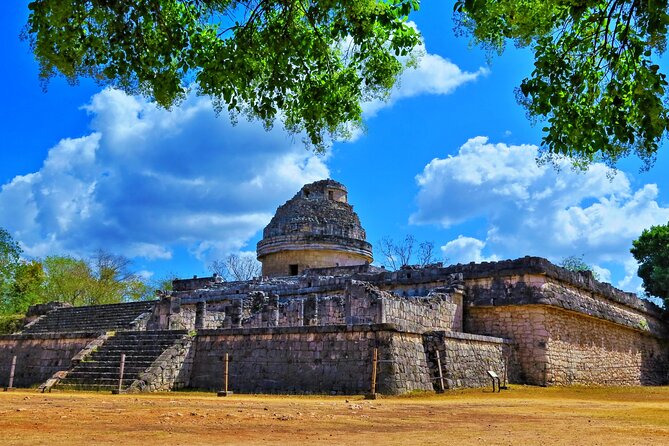
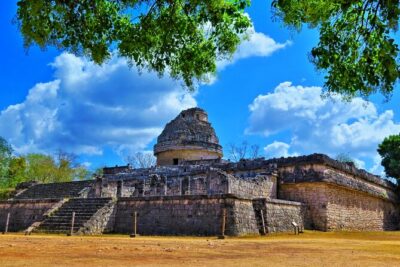
El Caracol is one of the most interesting stops because it shifts the focus from monuments to observation. The audio describes it as an observatory, and it explains how Mayans watched the stars and inferred things about the future based on the movement of planets.
That scientific angle changes the mood of the visit. You stop thinking only about stone and start thinking about time, sky, and planning, which is a different way to connect to the site.
Then the tour zooms back out with a broader “Chichen Itza Yucatan” stop. Here the audio summarizes the site as a major sacred center with nearly 1,000 years of history, and it highlights the mix of Maya and Toltec influence. The narration specifically mentions how Maya construction techniques combined with elements from central Mexico, helping explain why Chichén Itzá looks like more than one culture left its mark.
The stop also references surviving buildings you are seeing right now, including the Warriors’ Temple, El Castillo, and El Caracol. It works like a bridge between the big photo structures and the smaller details you might otherwise miss.
Warriors Temple, Red House, and the Ossuary names that stick
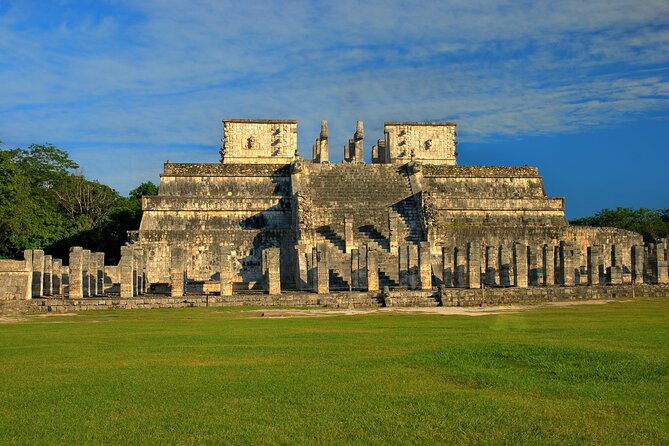
The Temple of the Warriors is described in a way that makes it easier to interpret at street level. The audio points out the three thick tiers with a small temple at the top, plus about 200 columns carved with Toltec warriors. That “count-like” detail gives your brain something concrete to hold onto while you scan the façade.
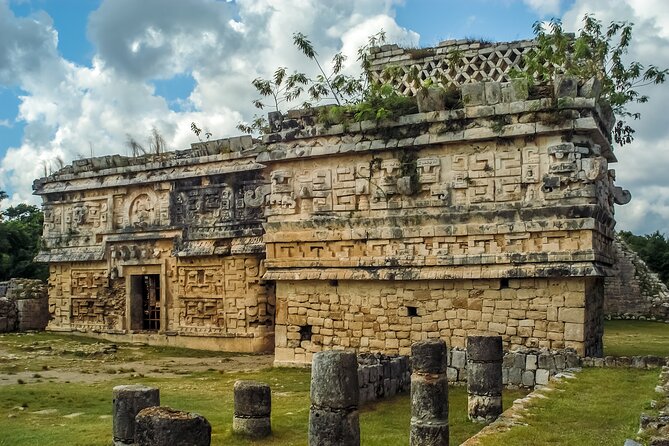
Next is the Red House, also called the House of Little Holes. The audio says the top latticework creates a little-hole look, and it includes the Mayan name Chichanchob, which is given as possibly meaning small holes. Even if the building is not as famous as El Castillo, this kind of detail is exactly what makes the audio tour feel like more than directions.
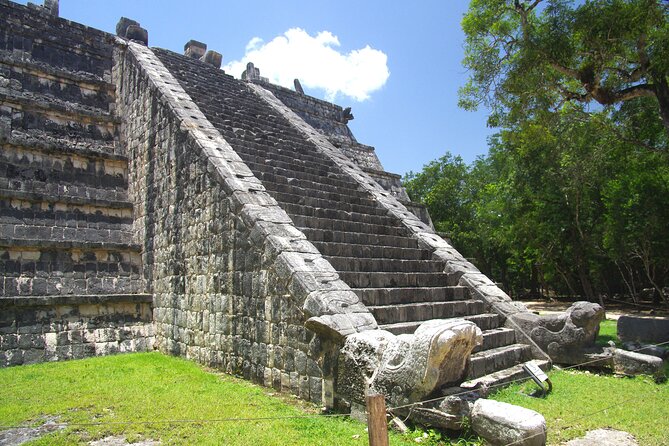
Then you reach the Ossuary area. The narration explains that the pyramid gets its name from human remains uncovered by archaeologists, and that beneath the pyramid there is a cavern with seven tombs believed to belong to members of Mayan high society.
The tour also includes an additional Ossuary-related stop under the name El Osario, noting bones found on site and that it is also known as the High Priest’s Grave. If you like repetition because it gives you better context, this part will make sense fast. If you do not, you can always skip ahead when you feel you have the gist.
Las Monjas and La iglesia: where the audio helps you notice carvings
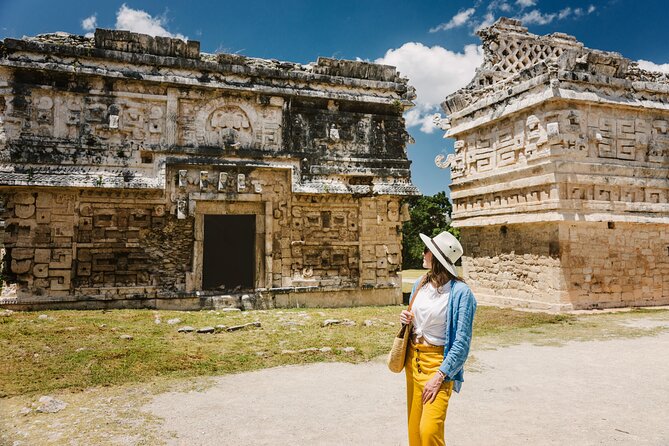
Las Monjas, also called the Nunnery, is a major structure in the overall complex. The audio describes it as one of the largest buildings at Chichén Itzá and highlights its archaeological significance because of texts inscribed on the walls. It even gives a specific name tied to those texts: Kakupakal.
La iglesia is one of the most photographed buildings, and the audio steers you toward what to look for in the exterior. The narration explains that the exterior decoration covers the building, and it points out masks of Chac on the upper stories. It also mentions that among the group of Chacs you can see small animal figures such as an armadillo, crab, snail, and tortoise.
This is a perfect example of why a self-guided audio tour is useful. Some details are hard to spot in a quick walk-by. With the audio cue, you know what to search for, and you can spend an extra minute without feeling like you are wandering.
Small setup tips so the app actually works on your day
A self-guided tour lives or dies by setup, so I treat setup like part of the experience.
Here is what you should do:
- After you book, you receive an email and text with setup instructions and a password. You will need to enter that password in the app.
- Download the separate Action’s Tour Guide App while you are in strong Wi-Fi or cellular. After that, it works offline.
- Once onsite, open the Action’s audio app and start the tour. Since there is no guide meeting you, the first thing you do should be launching the correct tour version and then walking to the first story point.
Headphones are strongly recommended for best results. The tour is designed so audio plays based on location, so you want both sound and attention on the narration. If you forget and you miss the audio start, you might have to search slightly to match the story to what you are seeing.
Two practical “real-world” notes from people using this kind of GPS audio:
- Sometimes the audio can start just before you reach the exact spot, so keep your earbuds in until you see the monument.
- If you run into a login or code screen issue on your phone, closing the app and reopening can fix it.
Also plan for battery life. There is a simple lesson here: GPS and audio eat power. Bring a portable charger if you are using a phone for navigation all day.
Finally, if the map seems a little off, stick to the tour route at a steady walking pace. That route is built for how the audio triggers work.
Final call: who should book this Chichén Itzá audio tour, and who should skip it?
Book it if you want good value, you prefer your own pace, and you like the idea of learning as you walk through iconic spots like El Castillo, the ball court, El Caracol, and Las Monjas. The biggest win is that you get a guide-like narrative without the full cost of a private guide, and you can pause, replay, and take breaks when the sun gets intense.
Skip it if you need a guaranteed human, step-by-step explanation with real-time questions. This is self-guided, and there is no one waiting at the start point to troubleshoot on the spot. Also note that the tour is offered in English, and you should not assume multiple language options beyond that.
If you are deciding last-minute, use this rule: if you are comfortable with downloading an app before you go and you will bring headphones, this is a smart way to understand Chichén Itzá without paying guide-level prices.
FAQ
How long does the Chichén Itzá self-guided tour take?
The experience is listed at about 2 to 3 hours. The audio route is described as taking around 1 to 2 hours depending on pace.
Is the Chichén Itzá entrance ticket included?
No. The tour is not a ticket for entry to Chichén Itzá, and you need to buy park admission separately.
Does the audio tour work offline with GPS?
Yes. After you download the tour, it works offline using GPS alone, so you do not need data roaming.
What language is the tour in?
The tour is offered in English.
How do I start the audio once I arrive?
Open the Action’s Tour Guide App once you are onsite. Go to the starting point for story 1, and the audio should begin automatically based on your location.
What happens if I have to download the app before my visit?
You will get setup instructions and a password by email and text. You MUST download the tour while you have strong Wi-Fi or cellular, and it will work offline after that.
Is there a guide meeting me at the start?
No. It is a self-guided tour, and the activity ends back at the meeting point after you finish.
What devices are recommended for GPS navigation?
An iPhone running iOS 15 or later, an Android device running version 9 or later, or an iPad or tablet with GPS and cellular connectivity are recommended.
What are the opening hours for Chichén Itzá in this period?
The listed hours are Monday through Sunday from 8:00 AM to 5:00 PM.
What is the cancellation window?
Free cancellation is available up to 24 hours in advance for a full refund. If you cancel less than 24 hours before the experience’s start time, the amount paid is not refunded.
The rest of our guide-led bookings in Chichen Itza
Keep comparing guided outings across Chichen Itza
More Chichen Itza runs on the Chichen Itza shortlist

Not quite it? More Chichen Itza tours from our review pile

Chichen Itza Guided Visits in one list.
 ★ 5.0Chichen Itza, Cenote, and Valladolid TourFrom $4524,293 reviews
 ★ 4.5Chichen Itza, Cenote & Valladolid Tour with Tequila and LunchFrom $3415,789 reviews
 ★ 4.6Cancun: Chichen Itza, Cenote & Valladolid Tour with LunchFrom $496,722 reviews
 ★ 5.0Early morning Chichen Itza Tour: Cenote and Tequila TastingFrom $266,657 reviews
 ★ 4.5Chichen Itza Early Access All Inclusive: Hotel Pick up & All FeesFrom $1654,123 reviews
 ★ 5.0Chichen Itza Gastronomic, Valladolid and Cenote ExtremoFrom $292,558 reviews
 ★ 5.0Chichen Itza, Cenote and Valladolid Small Group Day TripFrom $2142,104 reviews
 ★ 5.0VIP Chichen Itza Private TourFrom $2851,782 reviews
Where else it sits