Reviewed · MEXICO
Two reef discovery dives with professional instructor (no experience necessary)
Scuba starts in a pool, not the ocean. I love the max four-person groups and how instructors like Coral keep things calm and step-by-step, so you feel ready when you hit the reef at up to 40 feet (12 meters). One catch to plan for, hotel pickup is not included, so you will likely need your own ride to Tank-Ha.
This is an all-day introduction that moves from a controlled pool practice session to two separate coral reef outings from a boat. The pace is built for first-timers, with lots of hands-on coaching and time underwater that usually lands in the 40 to 60 minute range per outing.
You also need to be medically fit for scuba, and there is a medical eligibility check link (scubamedical.com) sent after you sign up. If you are nervous in open water, know that your instructor will work with you, including staying close until you get comfortable.
In This Review
- Key things that make this beginners’ reef course click
- Pool-first scuba skills: why this setup helps real beginners
- Morning flow: briefing, gear fitting, and heading to the pool
- What you actually practice in the pool (the stuff that pays off later)
- The lunch break and the shift from pool to reef boat
- Two reef outings on separate coral reefs, max 40 feet
- Wildlife expectations: what you can look for right now
- Price and value: why $150 can be a great deal for beginners
- Logistics that matter: meeting point, no hotel pickup, and time planning
- Safety and medical check: the part you should not skip
- Who should book this and who should reconsider
- Practical tips that make your day smoother
- Should you book this first-timer reef course?
- FAQ
- Do I need scuba experience to join?
- How many reef outings are included?
- What is the maximum depth?
- How long is the experience?
- Is hotel pickup included in the price?
- How big are the groups?
- What scuba gear is included?
- Is the tour offered in English?
- Where can I check medical eligibility for scuba?
- What happens if weather is poor, or if I need to cancel?
Key things that make this beginners’ reef course click
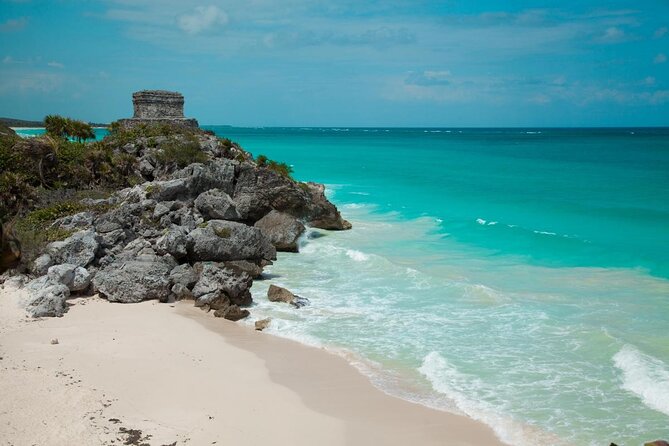
- Small-group attention: capped at four people, which means you are not just a number
- Pool-first skill building: you learn equipment basics before you ever go in the ocean
- Two reef experiences: two outings on two coral reefs in one day
- Gear handled for you: mask, fins, tank, jacket, and weights are included
- Clear limits: maximum depth of 40 feet (12 meters)
- Sea life you can realistically hope to see: turtles, moray eels, and lots of tropical fish are common possibilities
Pool-first scuba skills: why this setup helps real beginners
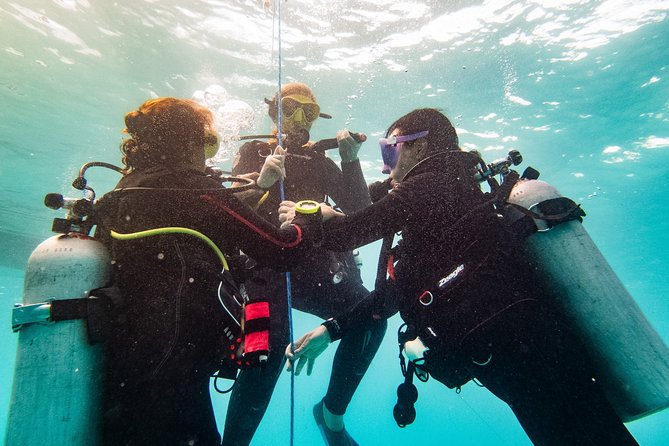
The smartest part of this experience is the order of operations. You learn the fundamentals in a pool first, where you can breathe, practice control, and build confidence without waves or depth pressure adding extra stress. That matters because your brain uses less effort on fear and more on skill.
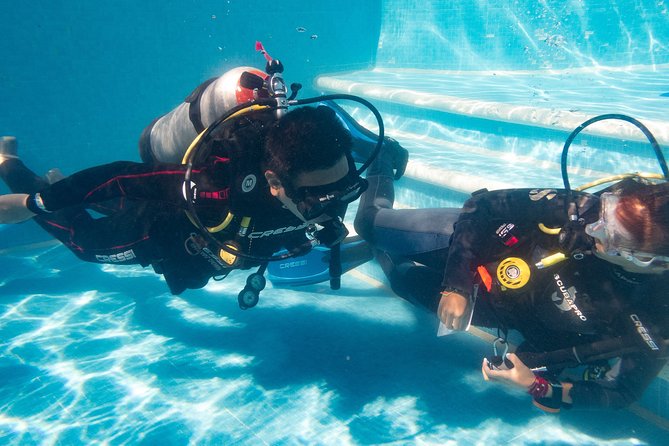
In the pool, you will work through basic scuba exercises with an instructor watching closely. The goal is simple: get your body and gear to feel normal before you head to open water. I like that this is not just a quick demo. It is hands-on practice.
And it is not theory only. You will handle the equipment, understand how it works, and get coached on what to do if something feels off. This is why many people feel comfortable enough to actually enjoy the second half of the day.
Still weighing it up? Here are other tours across Playa del Carmen we have written up in the same detail.
- From Playa del Carmen ATV Adventure with Ziplines, Cenote
★ 5.0 · 2,041 reviews - Half-Day Sea Turtle and Cenote Snorkeling Tour from Cancun & Riviera Maya
★ 5.0 · 2,039 reviews - VIP Chichen Itza Private Tour
★ 5.0 · 1,782 reviews - Playa del Carmen Buggy Tour with Cenote Swim and Mayan Village Visit
★ 5.0 · 1,747 reviews - Playa del Carmen Walking Food Tour
★ 5.0 · 1,274 reviews
Morning flow: briefing, gear fitting, and heading to the pool
Your day starts with a full briefing led by an SDI instructor. This is where they go over what you need to know for the day, how the equipment fits, and what you will be doing next. You also receive required eLearning materials as part of the package, so you are not walking in completely cold.
After the briefing, you prepare your scuba equipment. That setup time is not just busywork. Getting your mask, fins, and buoyancy gear sorted early helps you move through the pool session faster and with fewer distractions.
Then you head to the pool for the skill practice. The benefit here is practical: you get to repeat the basics until they click. That is the difference between feeling ready and feeling like you are trying to learn scuba and being surprised by the ocean at the same time.
What you actually practice in the pool (the stuff that pays off later)
The pool session is built around exercises that help you control your buoyancy and movement. You will practice how to use the gear, how to breathe and manage your breathing rhythm, and how to handle common beginner moments that can feel confusing at first.
Expect instructors to take it step-by-step. Several guide names come up often, including Coral, Alma, Julian, Paul, and Alonzo. The consistent theme across those instructors is patient, thorough coaching, especially for first-timers who feel awkward or unsure in the water.
One good sign is that the group size is capped at four. That makes it much easier for your instructor to stay close and adjust details for your body and comfort level.
The lunch break and the shift from pool to reef boat
After the morning practice, you get a short break to eat lunch. There are nearby stores you can use for lunch, so you can keep it simple and grab something quick.
Then you switch gears from training mode to exploration mode. At that point you go to the boat and complete two reef outings on two different coral reefs.
It is also worth knowing that the itinerary is weather dependent. If conditions are rough, plans can change. On at least one occasion, an open-water first-timer decided not to go below the surface during the first outing and tried again on the second one. That kind of flexibility is important because nerves and sea conditions can interact fast.
Two reef outings on separate coral reefs, max 40 feet
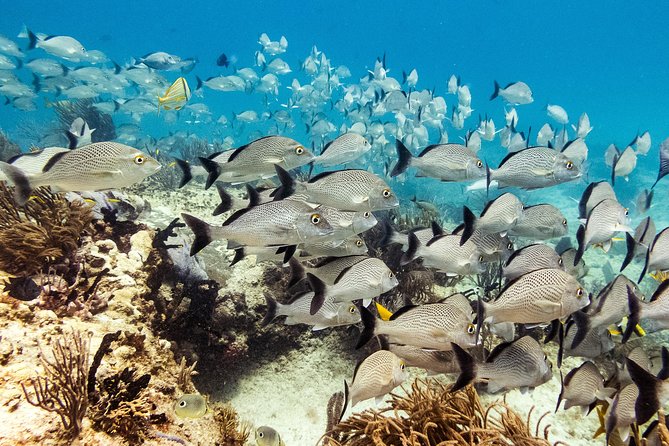
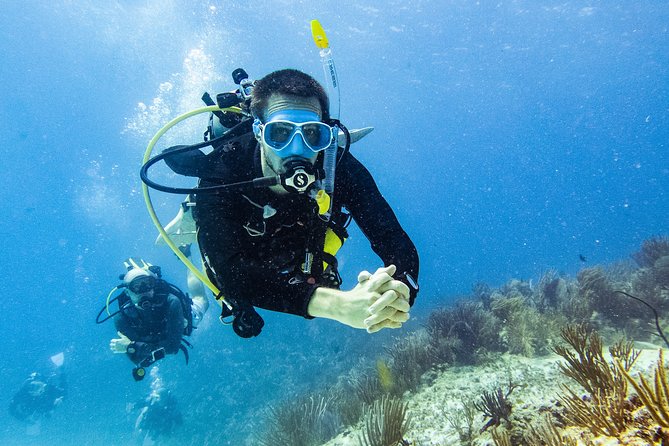
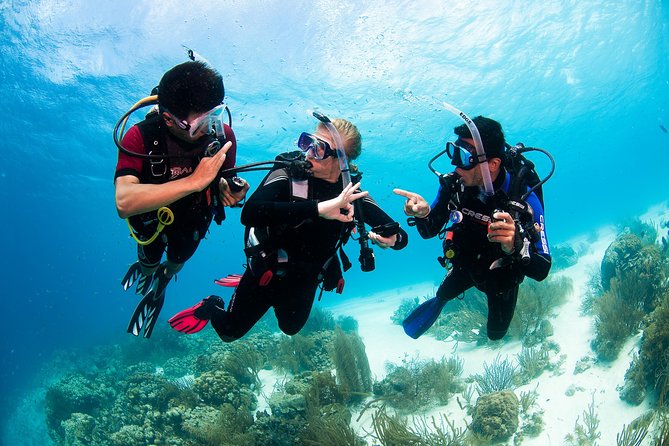
Once you are in the ocean, you complete two reef outings on two different coral reefs. Each outing typically lasts 40 to 60 minutes depending on your skill level and how comfortable you feel.
The maximum depth is 12 meters or 40 feet. That limit is not random. For beginners, it keeps the experience within a manageable range while still giving you time to see coral structure and fish behavior up close.
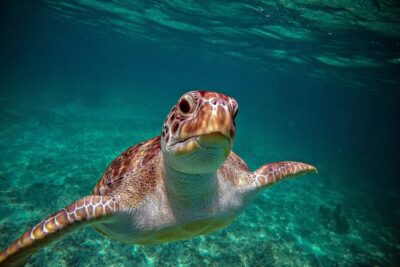
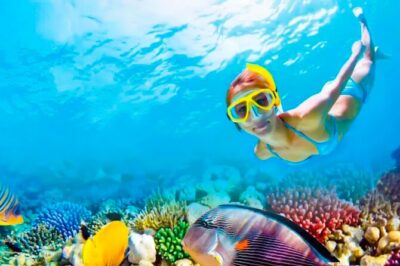
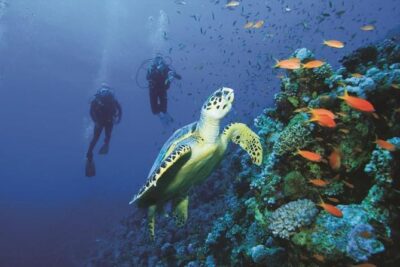
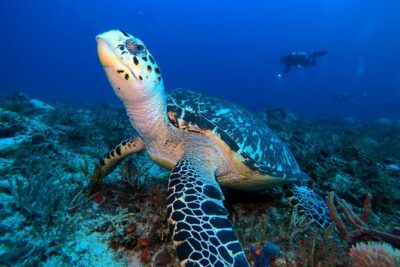
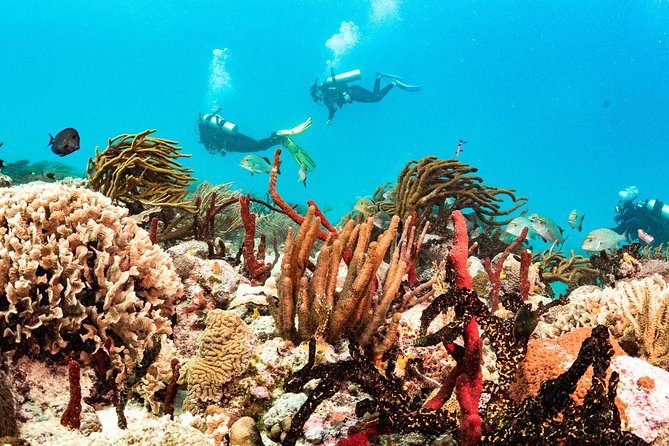
During those outings, you are likely to see a huge range of tropical fish and beautiful coral. People also mention the extra special surprises that sometimes show up, like graceful turtles and impressive moray eels.
You are not out there alone either. Your instructor stays with you and provides real-time guidance. If equalizing pressure is tough, you may get help and reassurance. One practical tip that shows up in coaching is to blow a little harder than you think during equalizing, and to keep at it rather than forcing panic.
- From Playa del Carmen ATV Adventure with Ziplines, Cenote★ 5.0 · 2,041 reviews
- VIP Chichen Itza Private Tour★ 5.0 · 1,782 reviews
- Playa del Carmen Buggy Tour with Cenote Swim and Mayan Village Visit★ 5.0 · 1,747 reviews
- Playa del Carmen Walking Food Tour★ 5.0 · 1,274 reviews
- Jungle Buggy Tour from Playa del Carmen Including Cenote Swim★ 5.0 · 1,253 reviews
- Hidden Cenote Swim: Snorkeling, Sea Turtles and Beachside Lunch★ 5.0 · 1,222 reviews
- Full Day Tulum Ruins Tour Cenote and Swimming with Sea Turtles★ 5.0 · 1,171 reviews
Wildlife expectations: what you can look for right now
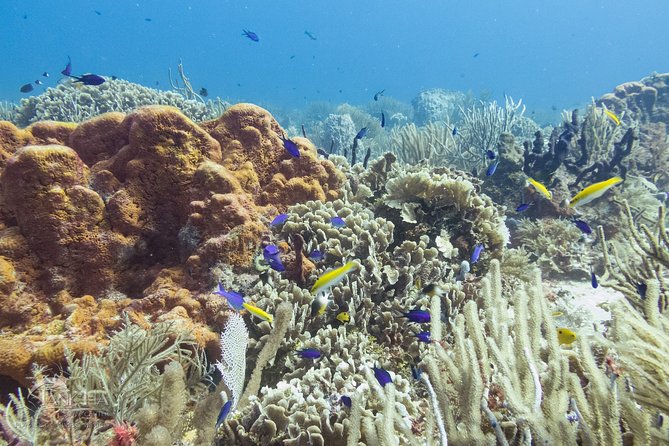
The reef is not a zoo display, but it is active. Here is what you can reasonably keep an eye out for based on typical sightings tied to this experience:
- Turtles: often spotted moving calmly along reef edges
- Moray eels: sometimes seen in caves or hiding spots in coral
- A range of tropical fish: schools and single fish near coral
- Rays: stingrays and even eagle rays have been reported
- Other surprises: parrotfish and occasional sightings like barracuda can happen, while no-shark sightings are also reported
Do not treat this as a guarantee list. Think of it as your mental checklist. If you show up focused and relaxed, you will notice more, and you will remember it longer.
Price and value: why $150 can be a great deal for beginners
At $150 per person, you are paying for a complete beginner package: pool instruction, two reef outings, and all the scuba gear. Gear alone can cost a chunk of money in many tourist setups, and beginner training time is where the value really lives.
You also get bottled water from reusable bottles in reusable plastic cups. Pool entrance fees are included too. On top of that, the program includes required eLearning materials, so you are not stuck guessing before you get in the water.
Two things make the price feel fair. First, the group cap at four people means your instructor can actually teach you, not just supervise. Second, you get two reef outings, which gives you a second chance to relax and enjoy once the first open-water moments are behind you.
If you are comparing costs, do not just compare the headline price. Compare what you get: instruction time plus two outings plus equipment plus pool fees.
Logistics that matter: meeting point, no hotel pickup, and time planning
This is a 9:00 am start and about an 8-hour day. You meet at Tank-Ha (Avenida 1 Manzana y 24 entre Calle 22 Norte, Centro, 77710 Playa del Carmen, Q.R., Mexico). You end back at the same meeting point.
Hotel pickup is not included in the activity cost. The operator says you can contact them in advance to arrange transportation and learn the round-trip price. From their base, they handle transportation to and from the boats and water sites, so your only real job is getting yourself to the dive center area for the start.
Plan for the day to feel full. You are doing instruction, then eating, then spending time on the water twice. Wear something you can get wet, and bring a small plan for where your phone, wallet, and important items will go during the morning.
Safety and medical check: the part you should not skip
You must be medically fit for scuba. That is not optional. If you have any medical concerns, get your questions answered before the day so you do not lose time at the last minute.
They direct you to a medical eligibility check at scubamedical.com, and they send the link once you sign up. Do not wait until you arrive in Playa del Carmen to sort this out. If you get flagged, you will want to know early so you can make alternate plans.
Also, keep a moderate physical fitness level. You do not need to be a fitness model, but you should be comfortable with being in and out of equipment and moving calmly in the water.
Who should book this and who should reconsider
This experience is perfect for you if:
- it is your first time trying scuba and you want pool coaching
- you want a small group capped at four
- you want a structured way to handle nerves and equipment questions
- you want to see real coral and fish without needing certification first
You might reconsider or go in with extra caution if:
- you are not medically fit for scuba
- you know you panic in water and cannot commit to doing the pool training seriously
- you are hoping for a zero-effort day, because equalizing and gear familiarity do require attention
A big plus is that instructors appear focused on comfort and patience. If you have ever tried something new and felt overwhelmed, this style of instruction is exactly what you want.
Practical tips that make your day smoother
- Plan to equalize early and often: if you feel pressure build, ask for coaching and follow their technique.
- Bring an underwater camera if you can: one common tip from people who did this was that having a camera makes the memory last.
- Pack for comfort: bring a change of clothes for after, since you will be wet by the time you return.
- Eat something before you go: a strong breakfast helps your comfort level through the pool work.
- Expect nerves sometimes: even people who succeed often feel shaky at first. The best move is to work with your instructor rather than try to force it alone.
Should you book this first-timer reef course?
If you have been curious about scuba but you do not want to gamble on learning everything at sea, this is a smart choice. The mix of pool training, a small group cap, and two separate reef outings gives you real value for a one-day introduction.
Book it if you want structure and close coaching. Pass or delay if you cannot meet the medical requirements or you know you will not be able to do the pool practice seriously.
Bottom line: for first-timers in Playa del Carmen, this is one of the clearest routes from learning basics to seeing coral and fish, without rushing you through it.
FAQ
Do I need scuba experience to join?
No. This is designed for first-timers and includes pool training with a professional instructor.
How many reef outings are included?
You will do two reef outings on two different coral reefs.
What is the maximum depth?
The maximum depth is 12 meters, or 40 feet.
How long is the experience?
It runs about 8 hours.
Is hotel pickup included in the price?
No. Hotel pickup is not included. You can contact the operator to arrange transportation and ask the cost for round-trip service.
How big are the groups?
The experience has a maximum of 4 travelers.
What scuba gear is included?
Gear is included, including mask, fins, tank, jacket, and weights.
Is the tour offered in English?
Yes, it is offered in English.
Where can I check medical eligibility for scuba?
They provide a medical eligibility check link at scubamedical.com, and they send the link to you after you sign up.
What happens if weather is poor, or if I need to cancel?
The activity requires good weather. If it is canceled due to poor weather, you will be offered a different date or a full refund. Free cancellation is available up to 24 hours before the start time for a full refund. Less than 24 hours before does not qualify for a refund.