
Reviewed · SAN MIGUEL DE ALLENDE TOURS
Recorrido Histórico a Pie: Descubre y Explora San Miguel (ES/EN)
San Miguel tells its story on foot. This 2-hour walk is a tight circuit through churches, courtyards, and local life in San Miguel de Allende, with an English-speaking guide who explains why each place matters. I love that the stops hit both the big-name sights and the quieter corners, plus you get context through short videos and photos for the parts you cannot always see up close. One thing to consider: some church and convent access can change day to day, so you might not always go inside every building.
This is also good value for first-time visitors. At $32 per person, you’re paying for a guided route through multiple landmarks, not a pile of museum tickets, and most entries are listed as free. The pace is easy for most people, but since it is a walking tour, wear comfortable shoes and plan on a bit of standing and stairs at churches.
In This Review
- Key points before you go
- Price and Logistics: What $32 Gets You in San Miguel de Allende
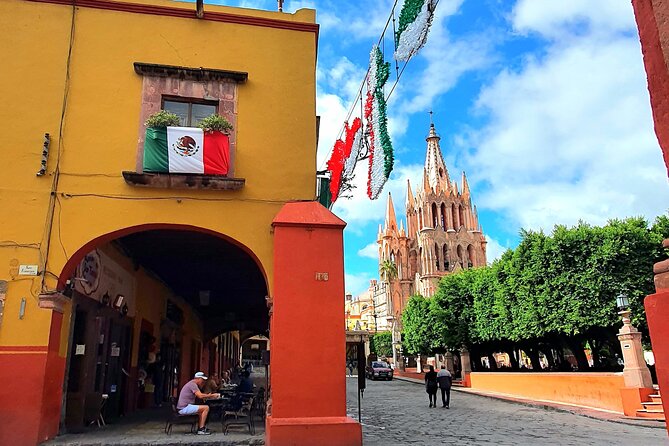
- Entering San Miguel’s Past at Parroquia de San Miguel Arcángel
- Ignacio Allende Outside the House: Independence Context Without the Time Sink
- Casa del Mayorazgo de Canal: How Elite Life Worked in a Smaller City
- Bellas Artes and the Convento Cloister: From 1755 to the Siqueiros Mural
- The Inmaculada Concepción Convent: Why Access Can Change
- A Top-10 Mexico Hotel Stop: Ceramics, Tiles, Courtyards, and a View
- Park Benito Juárez and the Water Break You Actually Appreciate
- The Chorro, Lavaderos, Casa de la Cultura, and Old Haciendas: Where Daily Work Became Heritage
- San Francisco de Asís: Closing With Architecture and a Congregation Story
- What to Expect From the Guide and Small-Group Style
- Who This Tour Is Best For (and Who Might Want a Different Plan)
- Should You Book This San Miguel Walking History Tour?
- FAQ
- How long is the walking tour?
- What is the meeting point?
- Is the tour offered in English?
- Is admission included for the places you visit?
- How big is the group?
- What happens if weather is poor?
Key points before you go
- Small group, max 10 people for a calmer pace and easier questions
- Start at Parroquia de San Miguel Arcángel, then walk straight into the city’s core
- Bellas Artes and the Convento complex connect colonial architecture to later art education
- David Alfaro Siqueiros mural is part of the art-school stop
- Fruit-infused water break helps you stay comfortable mid-route
- Multiple congregation-focused churches, ending with San Francisco de Asís
Price and Logistics: What $32 Gets You in San Miguel de Allende
For $32 per person, this tour is really about two things: a guided orientation and a history thread you can remember. You are not paying for long museum hours or a long day. Instead, you get a focused loop of stops where the guide ties architecture and local traditions to what the city became over time.
The practical side is decent. It is a small-group walk (up to 10 travelers), it runs about 2 hours, and it uses a mobile ticket. The tour is offered in English, and service animals are allowed. You also start and end back at the same meeting spot, the Parroquia de San Miguel Arcángel in the Zona Centro area, so you do not have to figure out a second pickup point.
One more thing to plan for: the experience notes good weather as a requirement. If weather is poor, you will be offered a different date or a full refund.
San Miguel walks in San Miguel de Allende we have also put through the notes
- Immersive Cañada de La Virgen Pyramid Tour
★ 5.0 · 789 reviews - Historical and Cultural Walking Tour of San Miguel de Allende
★ 5.0 · 641 reviews - Original Downtown Food Tour with Taste of San Miguel
★ 5.0 · 598 reviews - Evening Food Tour with Taste of San Miguel
★ 5.0 · 318 reviews - From Mexico City: San Miguel de Allende Day Trip
★ 4.4 · 301 reviews
Entering San Miguel’s Past at Parroquia de San Miguel Arcángel
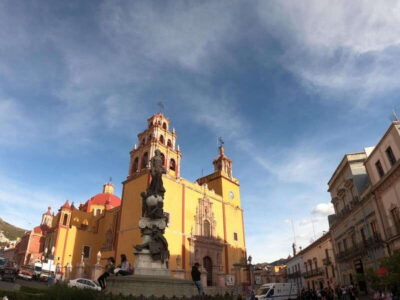
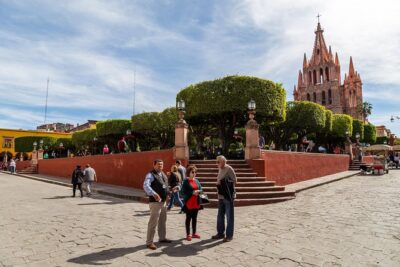
You begin at the Parroquia de San Miguel Arcángel, right in the Zona Centro core. This first stop sets the tone for everything else on the route. Rather than rushing into facts with no framework, you get a story start through images and videos, covering old San Miguel, modern San Miguel, and why the city mattered in the 16th century.
This opening matters because it gives you the “why” behind what you are about to see. When you later notice colors, changes in the way buildings were used, and references to church foundations and crypts, you’ll have the context to connect dots instead of collecting disconnected photos.
Time here is about 20 minutes, and admission is listed as free. That balance is useful on a short tour: you learn enough to travel deeper on your own afterward, without losing the walk’s momentum.
Ignacio Allende Outside the House: Independence Context Without the Time Sink
Next comes the Ignacio Allende House (Casa de Ignacio Allende). The key detail is that you only visit the exterior. That might sound limiting, but it is actually a smart use of time on a 2-hour tour. The guide explains the independence story, who Ignacio Allende was, and how that connects to the name of the city and other important houses nearby.
This stop is short, about 10 minutes, so you get the big picture quickly. It is also a good reminder that you can learn a lot even when you cannot enter every building. On a city like San Miguel, doors close for all kinds of reasons, so learning from what you can see from the street keeps the tour running.
Casa del Mayorazgo de Canal: How Elite Life Worked in a Smaller City
The route then heads to Casa del Mayorazgo de Canal, one of San Miguel’s important houses from the 18th century. Here, the access depends on the day. It can be open, and it is closed on Mondays, so if you are traveling on a Monday, be ready for possible adjustment.
When it is open, the plan is to see the first floor and hear how noble families managed life in San Miguel, including how it worked when the city was important enough to have status, but the “house size” still needed practical planning.
This is one of those stops where you start to understand that San Miguel was never just about scenery. It was also about power, wealth, and how everyday life looked for people at the top.
Bellas Artes and the Convento Cloister: From 1755 to the Siqueiros Mural
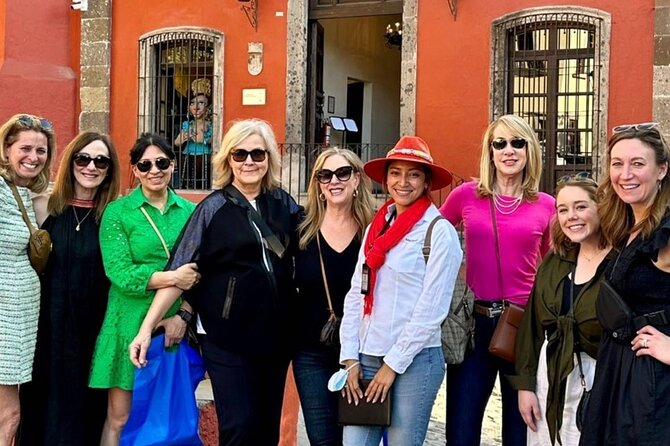
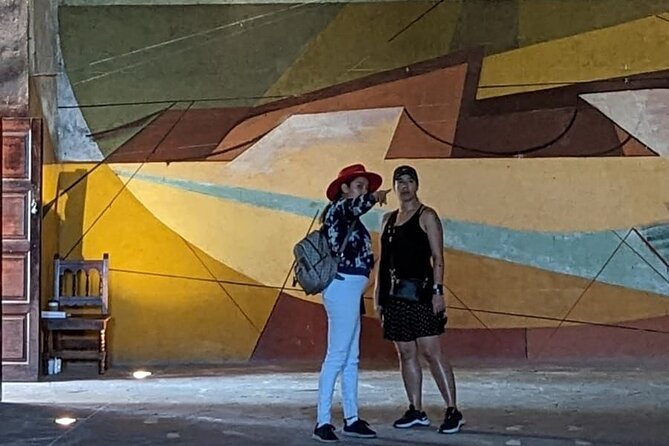
A major highlight is Bellas Artes, described as an old cloister of the Convento de la Inmaculada Concepción, originally built in 1755, then later converted into an art school in the 1920s. This is the kind of location change that makes a short walking tour feel richer, because you see how buildings outlive their original purpose.
You also get a specific art payoff: a mural by David Alfaro Siqueiros is part of what you will see as part of the school connection. That matters because it anchors the site in Mexican modern art, not only colonial architecture.
This stop runs about 20 minutes and is marked as free admission. On a day when you might be tempted to only chase photos, this gives you a visual and historical “bridge,” so you leave with more than angles for your camera roll.
- Tacos and Tequila Walking Tour with Taste of Miguel★ 5.0 · 583 reviews
- Half-Day Horseback Riding Adventure★ 5.0 · 417 reviews
- Private San Miguel de Allende Walking Tour★ 5.0 · 297 reviews
- Half Day Excursion – Horseback Riding Adventure in SMA★ 5.0 · 297 reviews
- Historical & Cultural Walking Tour of San Miguel de Allende★ 4.8 · 225 reviews
- Canada de la Virgen Archaeological Site Tour★ 5.0 · 193 reviews
- Half Day Trail Riding in San Miguel de Allende★ 5.0 · 156 reviews
The Inmaculada Concepción Convent: Why Access Can Change
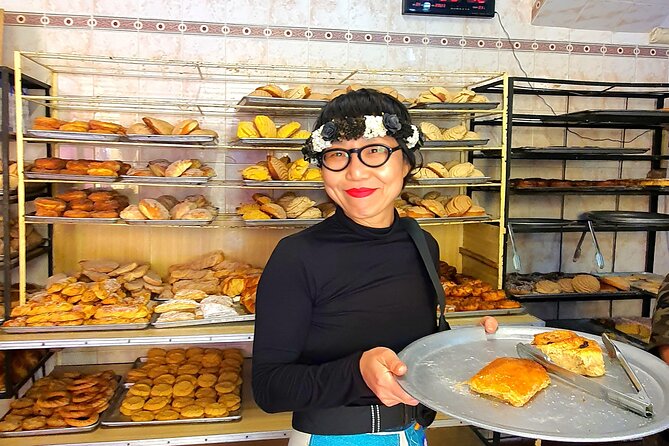
After Bellas Artes, the tour moves toward the Convento de la Inmaculada Concepción. Here, there is an important real-world detail: visits depend on the schedule and whether the convent is open. The notes also say that the nuns can have private services and the convent can close without prior notice.
What that means for you: you should treat this stop as a “visit if it is open” moment, not a guarantee. When you can access it, the guide explains its history, architecture, and the foundation of the congregation. It is also a strong counterbalance to the art-school story, because you see the same broader religious thread from different angles.
This stop is about 10 minutes. Even if access is limited, the guide’s framing helps you understand what you are looking at rather than just passing a beautiful facade.
A Top-10 Mexico Hotel Stop: Ceramics, Tiles, Courtyards, and a View
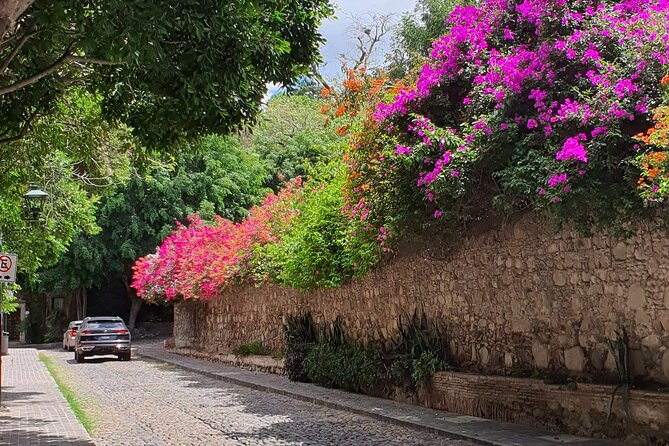
One of the more memorable parts of the route is a visit to one of the 10 best hotels of Mexico (that is how it is described). The stop includes artesanos indígenas working on ceramics and azulejos, plus access to the old convent setting, a beautiful patio, and a historic hacienda feel.
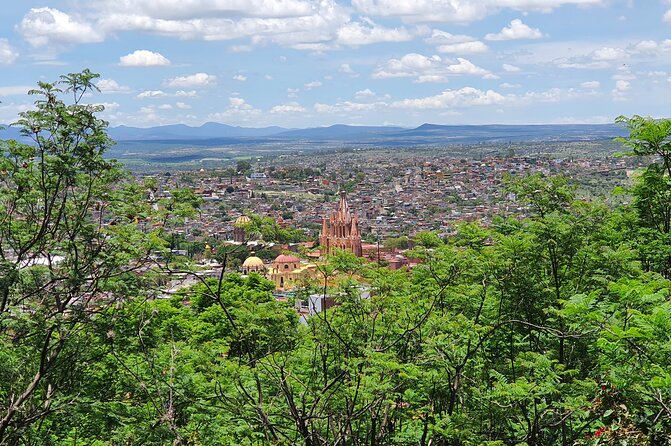
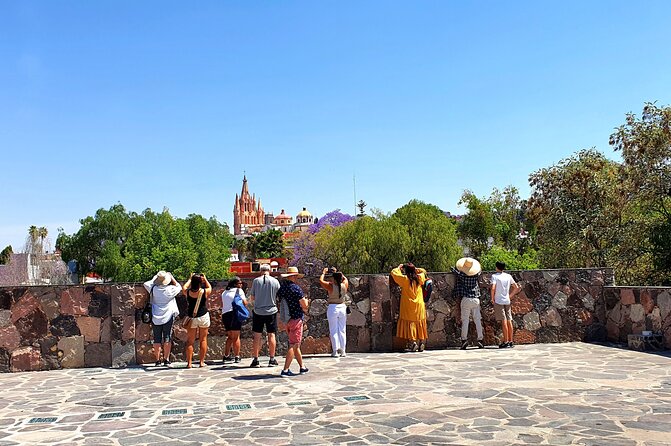
You also get what San Miguel is famous for: an impressive panoramic vista of the city. This is one of the places where the tour earns its keep even for travelers who feel they already know the postcard view. The guide’s story helps you understand why that landscape looks the way it does, and why the city’s layout influences what you see from specific points.
Time is about 10 minutes, and the format suggests it is designed to give you a taste without turning your 2-hour walk into a long break. If you want to buy a small souvenir later, this is often a better time to notice the craft style, because you understand it in context instead of just browsing.
Park Benito Juárez and the Water Break You Actually Appreciate
Before you reach the later stretch, you get a practical pause. There is a bathroom break and a tasting of water infused with fruits. In a city with lots of stone, stairs, and sightseeing heat, that small refresh can change how enjoyable the second half feels.
Then you move to Parque Benito Juárez. This part of the tour is more about living San Miguel than monuments. Depending on the date, you might catch local artists exhibiting work, crafts markets, and festive activities like music, flower festivals, or even weddings and parades. If there is no major event running, the park still delivers, with nature sounds and a spot to reset your legs.
This stop is about 10 minutes. It is short by design, but it helps you remember that San Miguel is not only a set of church fronts. People meet here, sell things here, celebrate here, and do regular life here.
The Chorro, Lavaderos, Casa de la Cultura, and Old Haciendas: Where Daily Work Became Heritage
After the park, the tour heads to the Chorro and the Lavaderos, plus the Casa de la Cultura and older hacienda sites. This is where the guide’s job really shows. The guide explains why these places still matter to sanmiguelenses, which is the key phrase you should listen for. It is easy to treat these as pretty backdrops. The guide reframes them as functional spaces tied to water, work, and community rhythms.
You will likely sit for a moment on benches during this section. That is helpful, because it is the kind of stop where you want to look around at street details, not only up at buildings.
The time is about 10 minutes here, which means you get orientation rather than a slow, detailed tour of each site. Still, this stretch is one of the best ways to understand how San Miguel’s everyday systems shaped its architecture.
San Francisco de Asís: Closing With Architecture and a Congregation Story
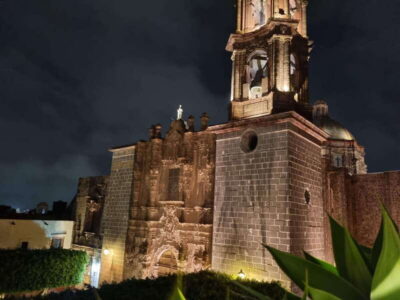
The last stop is the church of San Francisco de Asís. This ending matters because it ties the route together around religious community and architecture. The guide explores the importance of the congregation in San Miguel, its foundation, and the temple architecture.
It is again about 10 minutes, marked as free admission. But at this point in the walk, you are not starting from zero. You already learned how churches and convents shaped the city’s growth, how buildings shifted roles, and why the city’s spiritual institutions are not separate from its social and civic identity.
By the time you finish here, you should feel like you can read the city a little better. You will notice details faster on your own, and you will know what to ask about if you join another tour or start visiting on your own.
What to Expect From the Guide and Small-Group Style
This tour shines when your guide brings the city to life. Multiple guide names show up for this experience, including Marimar and Luis. People mention guides that use photos and short videos to add context, which makes the first church stop and the history connections easier to follow.
If your guide is Marimar, you can expect a lot of story energy and a deep factual approach. If your guide is Luis, some people have reported that he speaks multiple languages, including Spanish, English, and French.
Even with great guides, you should know the tour style is history-forward. That can be fantastic if you like dates, founding stories, and why buildings look the way they do. If you prefer lighter city orientation, you can still get a lot by asking for quick practical suggestions, like where to wander next after the tour.
Who This Tour Is Best For (and Who Might Want a Different Plan)
You’ll love this tour if you are:
- visiting San Miguel for the first time and want quick orientation
- interested in churches, convents, and how those institutions shaped the city
- the type of traveler who enjoys a story thread you can carry to later visits
- traveling in a small group and want easier questions versus a crowd
You might consider another option if:
- you want a longer walk with more time inside buildings, not brief exterior views and short stops
- you dislike history-heavy narration and want more time for free roaming
- you are traveling on a day when a specific access point might close, like on Mondays for Casa del Mayorazgo de Canal, or when convent access changes
Should You Book This San Miguel Walking History Tour?
Yes, I think you should book this tour if you want a smart first step in San Miguel. It is affordable for what you get, it is short enough to fit into any schedule, and it covers a mix of major sights plus places you could easily walk past without understanding why they matter.
Here is my decision checklist:
- Book it if you want churches plus local-life context in one loop.
- Bring comfortable shoes and expect standing and stairs.
- Keep your phone handy in case there are day-of updates, because tight routes can shift in how guides coordinate.
If you like to learn early and then explore freely later, this is a strong start. You’ll leave with a clearer mental map and better questions for everything else you plan in San Miguel de Allende.
FAQ
How long is the walking tour?
It runs about 2 hours.
What is the meeting point?
You start at the Parroquia de San Miguel Arcángel, Principal S/N, Zona Centro, Centro, 37700 San Miguel de Allende, Gto., Mexico.
Is the tour offered in English?
Yes, it is offered in English.
Is admission included for the places you visit?
The listed admissions for stops are free. Access can still depend on hours, especially for convent-related sites.
How big is the group?
The tour has a maximum of 10 travelers.
What happens if weather is poor?
The experience requires good weather. If it is canceled due to poor weather, you will be offered a different date or a full refund.
Further San Miguel walks we have reviewed in San Miguel de Allende
Not quite it? More San Miguel de Allende tours from our review pile



San Miguel de Allende Tours in one list.
 ★ 5.0Immersive Cañada de La Virgen Pyramid Tour789 reviews
 ★ 5.0Historical and Cultural Walking Tour of San Miguel de AllendeFrom $34641 reviews
 ★ 5.0Original Downtown Food Tour with Taste of San MiguelFrom $68598 reviews
 ★ 4.5San Miguel de Allende Tour from Mexico CityFrom $119407 reviews
 ★ 5.0Evening Food Tour with Taste of San MiguelFrom $99318 reviews
 ★ 4.4From Mexico City: San Miguel de Allende Day TripFrom $73301 reviews
 ★ 5.0Private San Miguel de Allende Walking TourFrom $80297 reviews
 ★ 4.8Historical & Cultural Walking Tour of San Miguel de AllendeFrom $33225 reviews
Where else it sits