
Reviewed · GUANAJUATO & QUERETARO
Queretaro: colonial architecture and history
Queretaro history comes with good walking shoes. You get a tight, story-driven route through the city’s most important landmarks, built for people who want meaning, not just photos. I love how the guide ties sites together with clear context, and you’ll likely leave with a much better feel for how Queretaro fits into Mexico’s bigger timeline.
My other big like is the sweep of stops, from a famous aqueduct to major convents and churches. The one thing to consider is pacing: it’s a 3 to 4 hour walking experience with a moderate fitness expectation, and parts are best handled at a slow, steady clip.
In This Review
- Key highlights you should care about
- Why Queretaro’s colonial buildings feel personal
- Start and finish in the center of old-town life
- The aqueduct stop that explains Queretaro’s origins
- Stop 1: El Acueducto De Queretaro
- Heroes in stone: Queretaro’s cemetery of impact
- Stop 2: Panteon de los Queretanos Ilustres
- Santa Cruz de los Milagros: legend and Franciscan chapters
- Stop 3: Templo y ex-convento de la Santa Cruz de los Milagros
- Plaza de Armas: where the city’s story turns public
- Stop 4: Plaza de Armas
- Guadalupe’s sanctuary and the national religious thread
- Stop 5: Santuario de La Congregacion de Nuestra Senora de Guadalupe
- San Francisco de Asis: convent walls that kept changing with the country
- Stop 6: Templo y Exconvento de San Francisco de Asis de Queretaro
- Santa Clara convent corner: hospital past, female convent firsts
- Stop 7: Convento de Santa Clara
- The value of $50 for a focused morning
- What kind of traveler will love this most
- How to get the most out of your time
- Should you book this Queretaro walking history tour?
- FAQ
- How long is the tour?
- How much does it cost?
- Is the tour in English?
- Where does the tour start and end?
- Do I need to buy tickets for the stops?
- How big are the groups?
- Do they use a mobile ticket?
- Are service animals allowed?
- What is the cancellation window?
Key highlights you should care about
- A story route through Queretaro’s founding and growth, not a random list of buildings
- Free admission at every listed stop, so your time goes to learning, not ticket math
- Major Franciscan and convent sites on the same walk, which makes the religious and social history easier to grasp
- Small group size (max 6), so questions and conversation feel possible
- English tour with a guide who can connect local events to national and even global moments
Why Queretaro’s colonial buildings feel personal
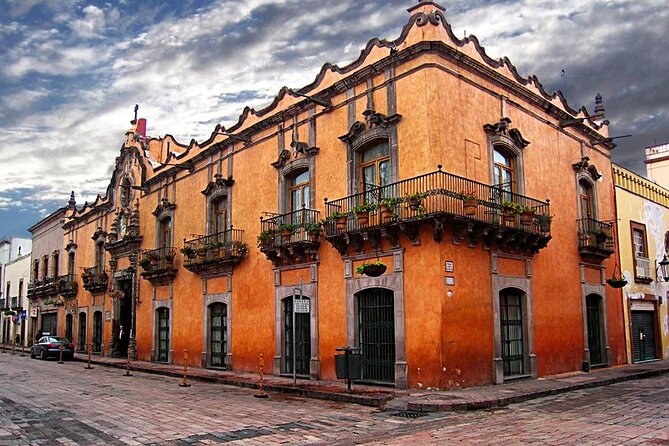
Queretaro can look like a postcard of calm plazas and church towers. This experience nudges you to see the human story behind them: people building, arguing, surviving, and changing course as Mexico’s chapters unfolded. Instead of only admiring stonework, you’ll hear why certain places mattered when the city was still fighting to define itself.
What makes the tour especially useful is the way the stops build on each other. The aqueduct isn’t just infrastructure, it’s proof of early ambition. The convents aren’t just pretty, they show how religion, education, and care were stitched into daily life.
If you like history that connects cause and effect, you’re in the right place. And if you just want quick sightseeing, this can feel a bit heavy on the story side, though the pace is designed to keep it moving.
Still deciding? These Bajio colonial trips in San Miguel de Allende are reviewed too
- Guanajuato City Shared Tour from San Miguel de Allende
★ 5.0 · 73 reviews - Private Tour in Guanajuato Capital Leaving San Miguel Allende
★ 4.5 · 63 reviews - Private Guanajuato City Tour From San Miguel
★ 5.0 · 58 reviews - Tour to the Tolantongo Caves, starting from Querétaro
★ 5.0 · 34 reviews - Sierra Gorda Tour in 1 day with starting from Querétaro
★ 5.0 · 33 reviews
Start and finish in the center of old-town life
The tour meets at Mirador de los Arcos, at Ejército Republicano 47 in La Santa Cruz, La Pastora. Start time is 9:00 am, and you’ll typically cover about 3 to 4 hours depending on the group and questions.
You end at the Museo de la Ciudad (the former Capuchin’s Convent) on Calle Vicente Guerrero Nte. 27 in the Centro. That matters because you finish in a spot where you can keep wandering, grab a meal, or take a taxi back to your hotel without needing a full rethink of your day.
Group size is up to 6 travelers, which is a big quality-of-life detail. Smaller groups tend to mean less rushing and more chances to ask follow-ups.
The aqueduct stop that explains Queretaro’s origins
Stop 1: El Acueducto De Queretaro
This is where you get the city’s “why it started” story. The aqueduct is tied to the foundation of the city, and the tour also shares the love story behind its construction. That mix works well because it gives you both stakes and emotion.
You get about 15 minutes here, and that short window is deliberate. It’s enough time to understand what the aqueduct represented and why it became a landmark, without turning the morning into one long stop.
One practical tip: if you’re hoping for lots of architectural detail, this is more of a “meaning and context” stop than a deep technical one. Still, it’s a smart first stop because it sets the tone for everything that follows.
Heroes in stone: Queretaro’s cemetery of impact
Still deciding? These history walks in San Miguel de Allende are reviewed too
- Historical and Cultural Walking Tour of San Miguel de Allende★ 5.0 · 641 reviews
- Historical & Cultural Walking Tour of San Miguel de Allende★ 4.8 · 225 reviews
Stop 2: Panteon de los Queretanos Ilustres
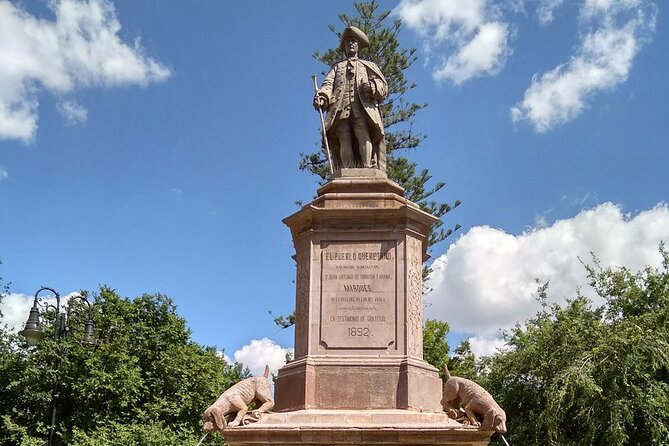
Next comes a place that changes how you think about history. The Panteon de los Queretanos Ilustres focuses on important people buried there and the actions they took that influenced Mexico’s history. It’s not meant to be gloomy. It’s meant to show how individuals shaped events.
You’ll spend about 15 minutes here. That’s long enough for the key names and themes, short enough to keep energy up for the climb and the next major religious site.
If you care about “who mattered,” this is a high-value stop. Cemeteries can feel like background scenery, but here the emphasis is on cause and consequence, not just memorials.
Santa Cruz de los Milagros: legend and Franciscan chapters
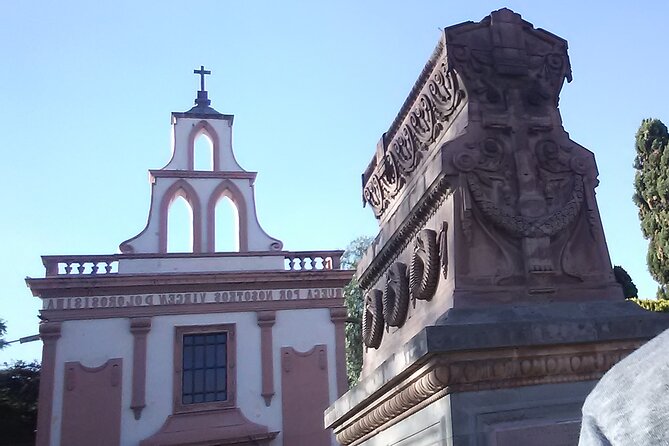
Stop 3: Templo y ex-convento de la Santa Cruz de los Milagros
This is the hilltop stop, and it helps the tour feel like it’s ascending through time. Queretaro is described as being “founded for the second time” at the top of this hill, and you’ll learn legends plus national historical moments connected to the Franciscan convent.
You get around 40 minutes at this stop, which signals that the guide expects you to slow down a little. It’s one of the best places on the route to connect geography with history: the setting and the story reinforce each other.
A small consideration: being a hilltop, this stop can feel more demanding if you’re already tired. Still, the extra time helps because you won’t feel chased along.
Plaza de Armas: where the city’s story turns public
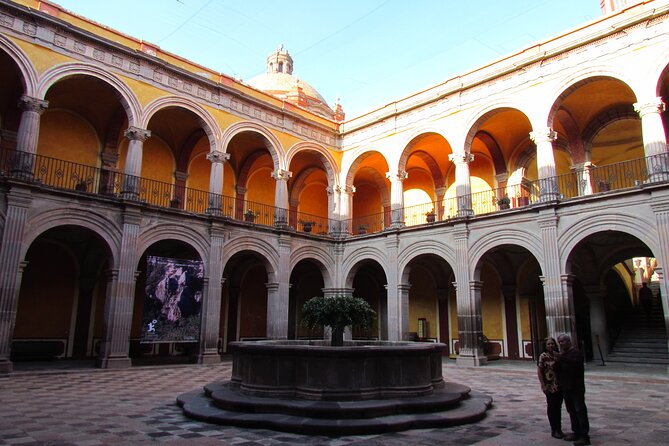
Stop 4: Plaza de Armas
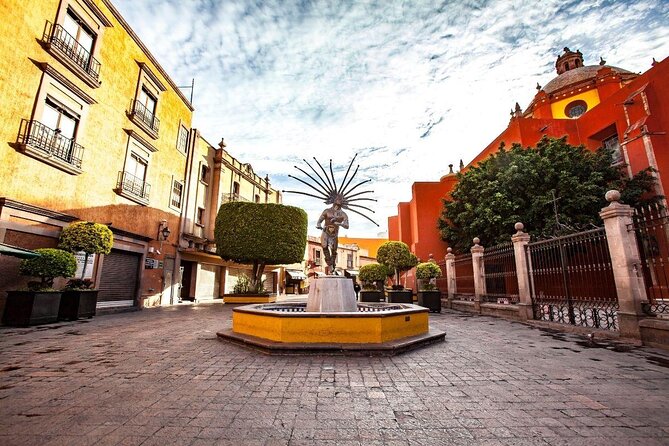
After the hilltop, you shift into the city’s social heartbeat. Plaza de Armas is presented as a picturesque main square, with additional historical tales and neo-classical architectural examples. This stop acts like a “reset button” after the convent context, putting everything back into public life.
You’ll have about 35 minutes here. That’s enough time to understand the square’s role and to look around without treating it like a quick photo stop.
What I like about placing a major plaza mid-tour is that it reminds you these buildings weren’t isolated. They shaped how people gathered, governed, and celebrated, and the tour keeps that bigger picture in view.
Guadalupe’s sanctuary and the national religious thread
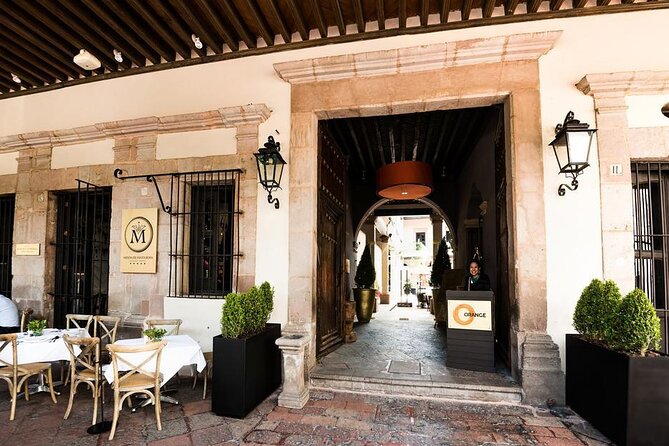
Stop 5: Santuario de La Congregacion de Nuestra Senora de Guadalupe
Next is a church stop focused on the Virgin of Guadalupe, and why she matters in Mexico’s religious and cultural history. You’ll also hear about the temple’s builder, which adds a “local agency” layer to a figure people often treat as only symbolic.
This one is about 15 minutes. That’s fine because the goal is to give you the main ideas and help you place the sanctuary within the broader narrative of Mexico’s identity.
If you’re sensitive to lots of faith-based storytelling, you’ll still likely appreciate this stop because it connects religion to history and community, not just doctrine.
San Francisco de Asis: convent walls that kept changing with the country
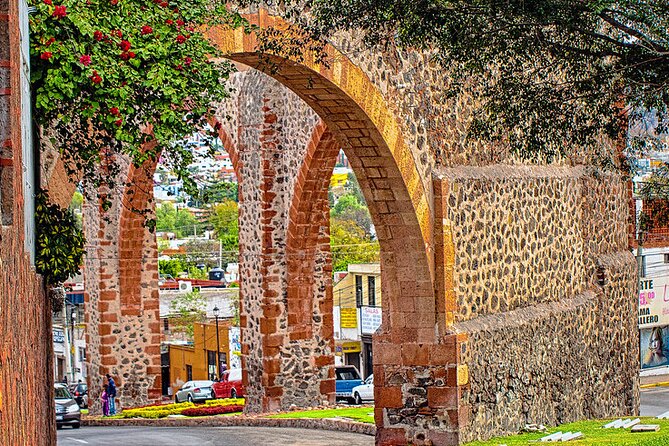
Stop 6: Templo y Exconvento de San Francisco de Asis de Queretaro
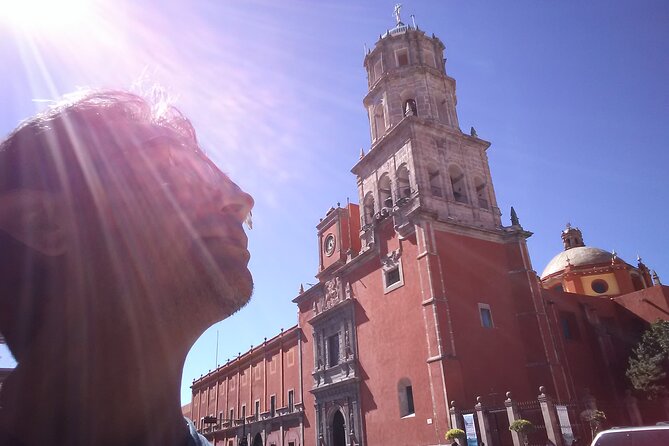
This is a key site for understanding how buildings evolve when history does. From inside the ancient premises of the convent, you’ll appreciate the transformations of the building through major national historical moments. The tour also points out the spot connected to the ancient “inner-land road,” which links the convent to movement, trade, and routes.
You get 15 minutes at this stop. Again, it’s not trying to replace a museum visit. It’s teaching you how to read what you’re seeing, especially when architecture has layers from different eras.
This is also one of the stops where I’d expect lots of questions. If you like to compare what you see against what you’ve learned, you’ll be able to.
Santa Clara convent corner: hospital past, female convent firsts
Stop 7: Convento de Santa Clara
The tour finishes this section at Convento de Santa Clara, described as the first and largest female convent in the city. You’ll also learn how the complex ties to the city’s hospital, plus you’ll notice a Neo-Classical fountain and an example of Baroque private house architecture in the same area.
You’ll spend about 20 minutes here. That time supports the idea of “one corner, many stories,” which is exactly what makes Queretaro interesting. You see how social roles, care, and aesthetics all occupied the same physical space.
If you’re photographing, this is a good place to slow down. Even in a shorter visit, the mix of styles gives you plenty to notice.
The value of $50 for a focused morning
At $50 per person and roughly 3 to 4 hours, this is priced in the sweet spot for a historical walk that actually tries to connect dots. The biggest value boost is that the listed stops show free admission tickets for each site. So you’re not paying extra on top of the tour just to get in the doors.
The small group size helps too. With a max of 6 travelers, the guide can adjust to your pace and questions more easily than in a bigger crowd.
One more value point: you leave at the Museo de la Ciudad in Centro. That makes it easier to keep learning or simply take a break and continue on your own schedule.
English is offered, and that matters if you want the story delivered clearly without translating it in your head while you’re also walking.
What kind of traveler will love this most
This tour fits best if you’re the type who likes history that has a point. You’ll probably enjoy it if you care about how architecture relates to people, religion, and national events. The route also works well if you’re trying to get oriented fast, since the stops cover key themes in a compact timeframe.
It also suits couples and solo travelers who want a guided morning without committing to a full-day schedule. Families can go, but keep expectations realistic. The tour is described as walking with moderate fitness needs, and it’s built for people who can listen for a few hours while moving.
If you want strictly technical architecture commentary, one review raised that as a mismatch. Here, architecture gets attention, but the stronger focus is historical storytelling and how sites connect to Mexico’s journey.
How to get the most out of your time
Wear shoes that handle old streets without complaint. Bring a water bottle, especially if the morning feels warm. You’ll cover multiple major landmarks, and a steady pace beats sprinting for photos.
Also, come with one small question for each stop. For example, ask yourself what role each site played at a turning point in the story. If you do that, the route clicks into place and the time feels faster.
Finally, if architecture is your main goal, ask for what you want early. You’ll get more satisfying answers when the guide knows your priorities from the start.
Should you book this Queretaro walking history tour?
I’d book it if you want a high-impact orientation to Queretaro that goes beyond surface sightseeing. The strongest reason to choose it is the way the tour links major places, from an aqueduct and heroes’ cemetery to convents and Guadalupe, into one understandable chain.
Skip it only if you want mostly architectural deep analysis with minimal historical storytelling. In this tour, the story is the engine, and the buildings are the evidence.
If you’re on a first visit and you have half a day to invest, this is a smart way to make the city start making sense.
FAQ
How long is the tour?
It runs for about 3 to 4 hours.
How much does it cost?
The price is $50.00 per person.
Is the tour in English?
Yes, it is offered in English.
Where does the tour start and end?
It starts at Mirador de los Arcos at Ejército Republicano 47, La Santa Cruz, La Pastora, and ends at the Museo de la Ciudad in Centro (Calle Vicente Guerrero Nte. 27).
Do I need to buy tickets for the stops?
The listed stops include free admission ticket for each location on the route.
How big are the groups?
The tour has a maximum of 6 travelers.
Do they use a mobile ticket?
Yes, it includes a mobile ticket.
Are service animals allowed?
Yes, service animals are allowed.
What is the cancellation window?
You can cancel up to 24 hours in advance for a full refund. If you cancel less than 24 hours before the start time, the amount paid is not refunded.
Other history walks we have been through in San Miguel de Allende
Other Bajio colonial trips we have been through in San Miguel de Allende
Not quite it? More San Miguel de Allende tours from our review pile




Guanajuato & Queretaro in one list.
 ★ 5.0Private walking tour in Guanajuato (available from 1 person)From $56355 reviews
 ★ 5.03-Hour Guided Walking Tour of GuanajuatoFrom $48280 reviews
 ★ 4.7Querétaro: City Tour in a Classic Ford T VehicleFrom $17229 reviews
 ★ 5.0ATVs through the mountains and city of GuanajuatoFrom $300109 reviews
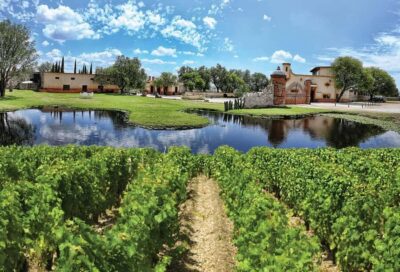 ★ 4.8Santiago de Querétaro: Pueblos Mágicos Cheese and Wine RouteFrom $7596 reviews
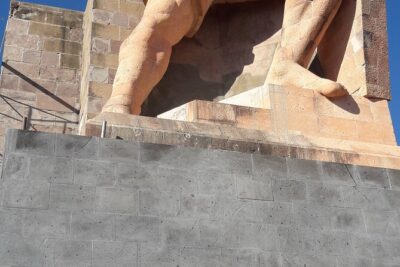 ★ 5.0Guanajuato City Shared Tour from San Miguel de AllendeFrom $11073 reviews
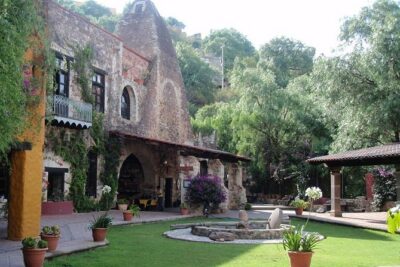 ★ 4.5Private Tour in Guanajuato Capital Leaving San Miguel AllendeFrom $28563 reviews
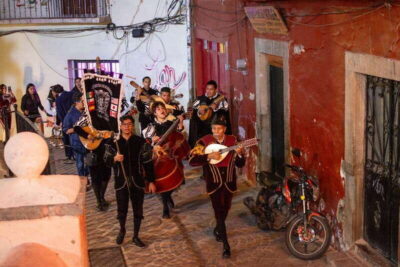 ★ 4.8Guanajuato: Night Walk with the EstudiantinaFrom $863 reviews
Where else it sits