
Reviewed · REEF DIVING & PADI COURSES
PADI Discover Scuba Diving
First-time scuba can be calm and guided. In Costa Maya, the PADI Discover Scuba format gives you patient coaching (think instructors like Sebastian Sea Bass and Brenda) so you get real skill practice before you head to the coral garden, with a small group keeping eyes on you. One note, if sea conditions turn rough, the boat ride and underwater timing can feel more intense than you expect.
You’ll spend about 3 hours 45 minutes total, starting at Huachinango and ending back there. Equipment and bottled water are included, and you’ll do a shallow skills section where you can stand, then a short boat ride (about 10 minutes) to the reef area.
This is built for beginners, but it is still scuba. If you have certain medical history or need frequent blood pressure control, you should check first, and there’s also a 12-hour rule after the activity before ascending above 300 meters (1,000 feet).
In This Review
- Key Things to Know Before You Go
- Costa Maya and the Short Course That Gets You Under
- Theory First: Physiology and the Scuba Basics
- Confined Water Skills: Where Confidence Gets Built
- The Quick Boat Ride Out to the Coral Garden
- Descent and Depth Limits: The 40-Foot Safety Ceiling
- Underwater Time: What 43 Minutes Feels Like
- Equipment and Bottled Water: Included, and That Matters
- Instructor Attention and Small Groups: The Real Luxury
- English Instruction: How to Make Sure You Get Every Step
- Price and Value: Is $100 a Smart Buy?
- Getting From Costa Maya Port to the Meeting Point
- Weather and Sea Conditions: When the Plan Changes
- Who Should Book This, and Who Should Think Twice
- The 12-Hour Rule After: Don’t Skip This
- Should You Book Mar Adentro’s PADI Discover Scuba Program?
- FAQ
- What is included in the PADI Discover Scuba program in Costa Maya?
- How deep do you go, and how long is the underwater part?
- Do you practice skills before going to the reef?
- Is the program offered in English, and how big are the groups?
- Are there medical conditions I should discuss with a doctor?
- What age is the minimum to participate?
Key Things to Know Before You Go
- You practice in shallow, stand-up water first so your brain catches up before anything deeper happens.
- Max depth is 40 feet, and you start the descent around 25 feet along the mooring line for smoother control.
- Average underwater time is about 43 minutes, depending on your air use.
- Small groups (max 16) mean you get more frequent checking from your instructor team.
- English instruction is offered, but if you’re counting on perfect English, it helps to confirm expectations ahead of time.
- Reef setup includes a coral garden location, typically reached by a quick boat ride.
Costa Maya and the Short Course That Gets You Under
Costa Maya is an easy place to try scuba without signing up for a long certification track. The PADI Discover Scuba format is designed to give you the essentials, then put you into the water with close supervision.
I like that the experience doesn’t treat you like a spectator. You get structured theory, then hands-on practice in shallow water where you can keep your footing and reset your confidence. After that, you go to a nearby coral garden site, staying inside safe limits for depth.
This setup tends to suit the real travel schedule too. You’re done in one half-day block, not stretched across multiple days, and you’re back at the meeting point afterward. For a lot of people, that means you can still keep an afternoon for beach time, food, or your cruise day plans.
More reef dives from our Costa Maya shortlist
- Two tanks local diving for certified divers, SCUBA gear included
★ 5.0 · 122 reviews - PADI Discover Scuba Diving
★ 5.0 · 99 reviews
Theory First: Physiology and the Scuba Basics
The program starts with a theory segment that covers two practical areas: the physiology of diving and an overview of the scuba unit. That may sound like classroom time, but it helps you understand what you’re feeling underwater, especially if you’re nervous about pressure changes.
Then you move into basic skills training in confined water. This is the part that makes the whole day feel manageable. Confined water here means shallow enough that you can stand up. So if something feels off, you’re not committed to being fully underwater while figuring it out.
A smart benefit of this approach is that it gives you a chance to learn breathing, equalization basics, and equipment use while your body is still in “tourist mode,” calm and upright. Once you’re comfortable, you’re ready to transition to the open-water session at the reef.
Confined Water Skills: Where Confidence Gets Built
In confined water, expect the basics to be broken down into steps. You’ll work on core skills required for safe, controlled breathing and buoyancy control, and you’ll get coached so you know what “good” feels like.
What I like is that this is not a sink-or-swim setup. The shallow format lets you try things, get corrected, and try again without turning the day into a stress test. It’s also a good way to learn how your ears respond, because ear discomfort is one of the most common first-timer issues.
From the kind of feedback the team is known for, you can also expect patience if you struggle at first. People have described instructors staying calm, coaching them through pressure changes, and helping them feel safe until they can follow the process confidently.
The Quick Boat Ride Out to the Coral Garden
After skills training, you take a short boat trip, about 10 minutes, to the coral garden dive area. On calm days, this is a simple transition. On rougher days, it can feel like the part that tests your nerves, because you’re leaving the shore and the water movement starts to matter.
This is where a little planning helps. If you tend to get seasick, consider your usual prevention. And if you’re traveling on a cruise schedule, remember that the activity follows local timing, not ship time.
Once you’re at the site, the descent is done along the mooring line to make things smoother. That line matters because it gives you a predictable path down, helping first-timers focus on breathing and staying oriented rather than fighting for control.
Descent and Depth Limits: The 40-Foot Safety Ceiling
You’ll have a maximum depth of 40 feet. The bottom starts around 25 feet, and the descent follows the mooring line. For you, that means the day is built around a gradual, controlled profile rather than a sudden drop.
This depth structure is part of why this program can feel approachable. You’re not aiming for the kind of depths that turn the day into advanced training. You’re getting the experience of being underwater while staying within limits designed for beginner comfort and safety.
It also affects your sense of time underwater. Your actual bottom time depends on your air consumption. The average underwater time is about 43 minutes, so your pacing and breathing habits shape the experience more than anything else.
More dive bookings from our Costa Maya shortlist
- Discovery Scuba Dive.★ 5.0 · 103 reviews
Underwater Time: What 43 Minutes Feels Like
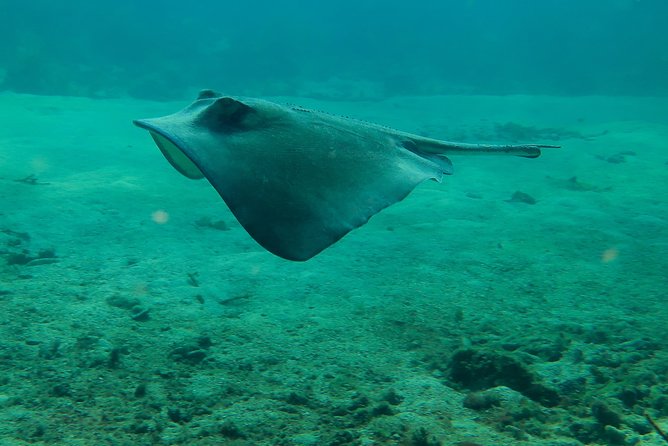
The main underwater portion is typically long enough to feel like a real experience, but short enough to stay focused and relaxed. Average time is about 43 minutes, though your instructor may adjust based on air and conditions.
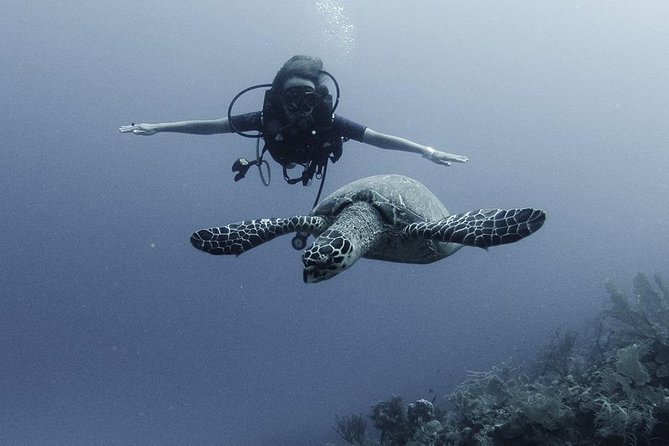
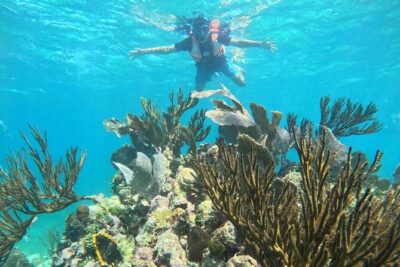
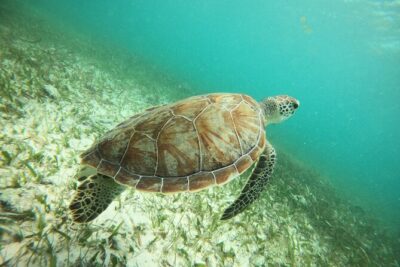
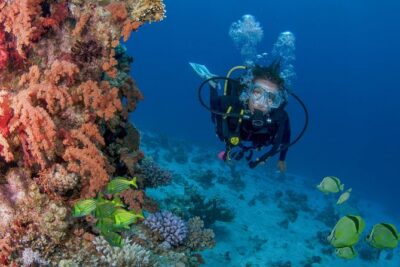
You can expect to see coral and lots of small reef life, plus larger highlights that show up in the area at times. People have reported schooling fish, stingrays, sea turtles, and even rays like large rays during their sessions.
One practical mindset: try not to overthink every movement. Instead, think of the session like a guided walk underwater. You’ll be close to the guide/instructor team, and your job is to breathe steadily, follow instructions, and enjoy what you’re seeing when you can.
If you’re nervous, it helps to know that instructors often stay close and give hands-on reassurance. Many first-timers focus on control early, then relax quickly once they’re comfortable with breathing and buoyancy.
Equipment and Bottled Water: Included, and That Matters
Scuba equipment and bottled water are included. That is a real value point, because gear rentals and add-ons can quietly inflate a beginner scuba day elsewhere.
It also removes friction. You don’t need to figure out what to pack or whether you’re renting the right size for your body. The operator handles the setup, and you focus on learning.
From the way the team operates, you can also expect the staff to help with practical details. People have described the crew managing gear so they could stay calm and focus on the experience. If you show up with stress already running high, that kind of help is worth its weight in comfort.
And yes, you might get extra touches after you finish, like pineapple. Some people have mentioned fresh pineapple after the session, which is a simple way to end the day on a high note.
Instructor Attention and Small Groups: The Real Luxury
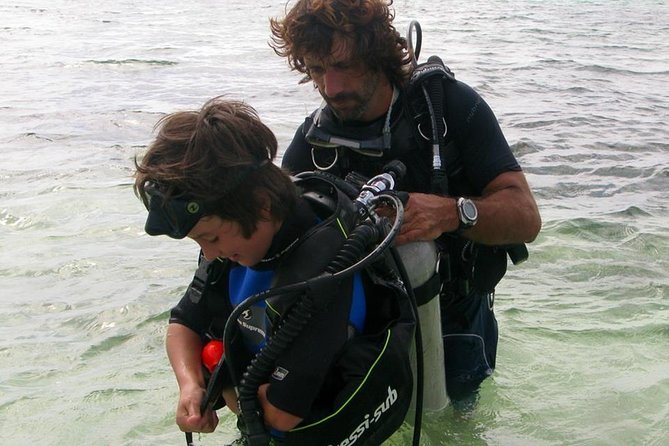
Small group size is a big deal here, because scuba is not a passive activity. It demands attention, and beginners need it most.
This program caps at 16 travelers, and people have described situations where the group was very small, even just a few divers. In that setup, the instructor can stay close, check in more often, and coach you in real time without feeling rushed.
Specific names come up often in feedback. Sebastian Sea Bass gets praised for staying close and patiently coaching nervous first-timers. Brenda shows up in multiple accounts for being attentive and calming. Rodrigo and Noah are also named for instruction and support, and Jesse is mentioned as someone who helped a diver manage panic and self-doubt.
Even if you don’t have those exact instructors, the pattern is clear: the emphasis is on patient teaching and safety-first guidance.
English Instruction: How to Make Sure You Get Every Step
The activity is offered in English, but language clarity can still vary by instructor and situation. One account described difficulty understanding instructions in English for non-Spanish speakers, with an instructor whose English was hard to follow.
So if you’re counting on instruction details being crystal clear, do two things:
- Confirm English support when you book.
- If you know you’ll need extra clarity, plan to ask questions right away during the theory and skills section.
This matters because you want to understand not only what to do, but why you’re doing it. Clear explanations make pressure changes and buoyancy feel less mysterious.
Price and Value: Is $100 a Smart Buy?
At $100 per person, the value is mostly in what you get for the money. You’re paying for a structured PADI Discover Scuba experience, including:
- Theory and skills coaching
- Confined water practice where you can stand
- A guided reef underwater session (with a depth limit of 40 feet)
- Scuba equipment
- Bottled water
In practical terms, the price is competitive because you’re not paying separately for guide support, equipment, and a “try scuba” day format. You also don’t have to commit to multiple days just to taste the sport.
The tradeoff is that it’s still weather dependent. If conditions are rough, you may feel more discomfort on the boat ride, and in some cases the day may not go fully as planned. Still, if you’re flexible and you pick a day you can adapt, you’re likely to feel like the price is fair for a first-time scuba milestone.
Getting From Costa Maya Port to the Meeting Point
The meeting point is Huachinango, 77976 Q.R., Mexico, and the activity ends back there. If you’re arriving from the Costa Maya port area, taxis are commonly used.
One helpful detail: taxi costs mentioned include about $5 per person per ride, while solo passengers may pay around $8. If you’re on a cruise and you want this to be stress-free, bring cash and plan time for a quick ride.
Also, note that the program runs on local time. If you’re juggling cruise schedules, keep your watch on local timing so you don’t end up sprinting to match the ship’s clock.
Weather and Sea Conditions: When the Plan Changes
This kind of coastal activity depends on good weather. On strong sea days, the boat ride can feel intimidating, and it can affect whether everyone finishes the underwater session.
One experience described rough waters making it difficult to complete the underwater portion. Another account praised the crew for being supportive and professional when conditions were less than ideal.
Here’s the practical take: if you’re prone to motion sickness or anxiety around boats, choose calmer days when possible. And if you’re traveling on a schedule, build in a little buffer so you’re not forced to make the day work no matter what the sea does.
The good news is that the safety-first approach tends to show up in how the team responds when conditions are not ideal.
Who Should Book This, and Who Should Think Twice
This experience is designed for most travelers, with a minimum age of 10. It’s ideal for:
- First-timers who want a real underwater experience without long certification time
- People who want to try scuba as a couple or family unit under close coaching
- Certified divers who want to refresh skills with a guided, structured format alongside a beginner
It may be less ideal if:
- You are sensitive to boat rides or get seasick easily
- You are counting on very specific language delivery and you’re worried about English comprehension
And it’s important to be honest about medical screening. You should check with your doctor if you have high blood pressure, angina, a history of chest surgery, had a collapsed lung (pneumothorax), seizures or epilepsy, fainting or blackouts, or heart disease or heart surgery.
Those items are not there to scare you. They’re there because scuba changes how your body experiences pressure, and the operator needs you to be medically cleared for that environment.
The 12-Hour Rule After: Don’t Skip This
After your session, you need a 12-hour period between the scuba experience and ascending above an altitude of 300 meters or 1,000 feet. If you’re flying the same day, or you plan a hike to higher elevation soon after, this is the rule that can make or break your trip timing.
If you’re on a cruise, it may not matter much during the trip day, but if you have plans afterward, you’ll want to line up the schedule so you’re not rushing up in elevation before the window passes.
Should You Book Mar Adentro’s PADI Discover Scuba Program?
If you want your first underwater experience to feel taught, not chaotic, this is a strong pick. The combination of shallow skills practice, a controlled descent along the mooring line, and a guided coral garden session within a 40-foot limit is exactly what beginners need.
Book it if:
- You want value at $100 with equipment and coaching included
- You want small-group attention
- You like the idea of learning theory and then trying skills immediately
Skip it or reconsider if:
- You have medical conditions that your doctor says are not scuba-safe for pressure changes
- You’re set on a specific day and you cannot tolerate weather-related changes
- You’re worried you won’t understand English instruction and you can’t confirm support in advance
If you do book, go in with one goal: breathe calmly, follow the instructor, and treat the whole day like training for confidence. That mindset is what turns a first-time underwater session into a story you’ll want to repeat.
FAQ
What is included in the PADI Discover Scuba program in Costa Maya?
The program includes use of scuba equipment and bottled water.
How deep do you go, and how long is the underwater part?
The maximum depth is 40 feet. The descent starts around 25 feet along the mooring line, and the average underwater time is about 43 minutes, depending on air consumption.
Do you practice skills before going to the reef?
Yes. You do theory first, then basic skills training in confined water where you can stand. After that, you take a short boat trip to the coral garden area for the guided underwater session.
Is the program offered in English, and how big are the groups?
The experience is offered in English. It has a maximum of 16 travelers.
Are there medical conditions I should discuss with a doctor?
Check with your doctor if you have high blood pressure, angina, or take medication for blood pressure. You should also check if you had a collapsed lung (pneumothorax), chest surgery, seizures or epilepsy, fainting or blackouts, or heart disease or heart surgery.
What age is the minimum to participate?
The minimum age is 10 years old.
The rest of our dive bookings in Costa Maya
The rest of our reef dives in Costa Maya
Not quite it? More Costa Maya tours from our review pile

Reef Diving & PADI Courses in one list.
 ★ 5.0Discover Scuba Diving in Cozumel Paradise Reef686 reviews
 ★ 5.02-Tank Scuba Dive in Cabo San Lucas Reserve for Certified DiversFrom $138263 reviews
 ★ 5.0Discover Scuba Diving & Beach Club with Transportation In Riviera MayaFrom $150239 reviews
 ★ 5.02 dives in Cenote Dos ojos Certified DiversFrom $200227 reviews
 ★ 5.0Private Dive Boat for Certified Divers – Cabo San LucasFrom $545210 reviews
 ★ 5.03-Tank Scuba in Marine Reserve and Corridor for Certified DiversFrom $210196 reviews
 ★ 5.02 Tank Dive – Certified Divers (Santa Maria Bay & Chileno Bay)From $140162 reviews
 ★ 4.5Learn to Scuba Dive in Cabo San Lucas with PADIFrom $129157 reviews
Where else it sits