
Reviewed · MARIETAS ISLANDS & LOS ARCOS
Holbox: Bioluminescence by Kayak and Stargazing.
Night water glows if conditions click.
This Holbox outing takes you out after dark on a kayak in calmer waters, then you get out to walk and later swim where the sea lights up with microscopic glow.
I like that the plan is simple and specific: paddle about 15 to 20 minutes to the Punta Mosquito sandbanks area (without entering the protected Punta Mosquito zone), then you spend your time where it matters. I also like the guide-led pacing, with instructions before you start and a focus on how to keep the water dark enough to see the effect. The one downside to consider is value: at $49 for about 2 hours, it can feel pricier compared with longer tours that include extra perks like food and drinks.
In This Review
- Key things that make this Holbox bioluminescence tour work
- From Holbox hotel to the water: pickup, Las Nubes, and the night mood
- Kayaking to the Punta Mosquito sandbanks, and why they skip the protected zone
- When the glow shows up: plankton intensity, seasons, and real expectations
- The sandbar moment: blue-green footprints and a very photogenic walk
- Swimming where your body lights up: color changes and how to make it better
- Stargazing on top of the sea glow: how clear sky changes the whole feeling
- Price and timing: is $49 worth two hours of glow?
- Who this Holbox night kayak experience suits best
- What to bring, and what to leave behind so you can actually see it
- Should you book this bioluminescence kayak and stargazing tour?
- FAQ
- When is the bioluminescence usually strongest on Holbox?
- Do you kayak all the way to Punta Mosquito?
- What should I bring for the tour?
- Is hotel pickup included?
- Can I use flash photography at night?
- Is this tour suitable for kids or people with mobility issues?
Key things that make this Holbox bioluminescence tour work
- Hotel pickup and an all-terrain transfer right when darkness makes the road a little tricky.
- Paddle time is purposeful (about 15 to 20 minutes) to reach the sandbank area fast.
- You walk on the sandbar first, so your footprints start to glow blue-green.
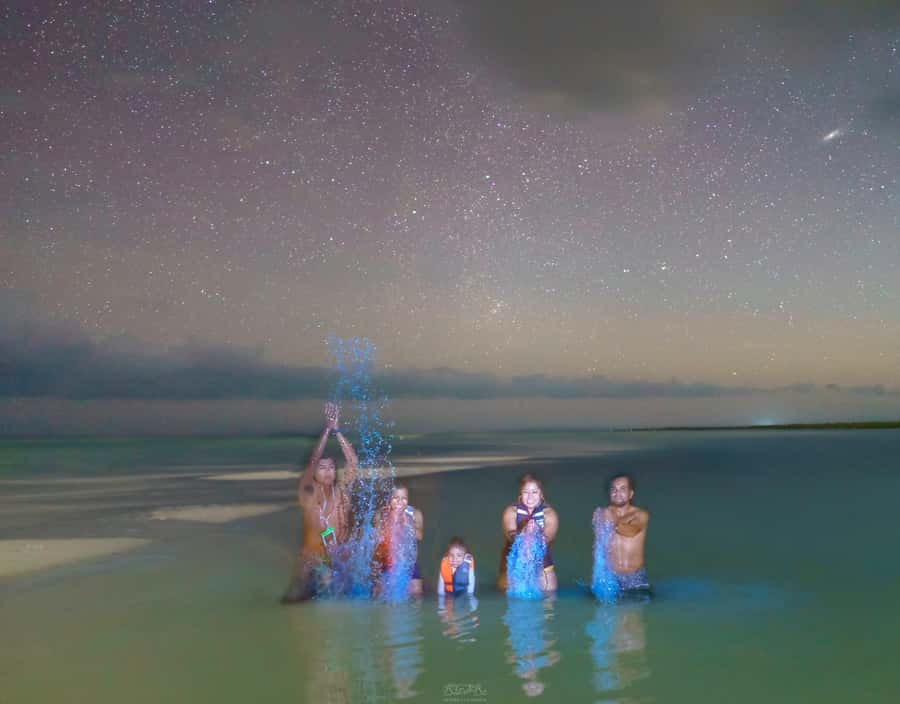
- You swim where movement lights you up with colors that can be green, white, or blue.
- They push away from light pollution to improve your chances of seeing the glow.
- A live guide explains what you are seeing, including what affects intensity by season.
From Holbox hotel to the water: pickup, Las Nubes, and the night mood
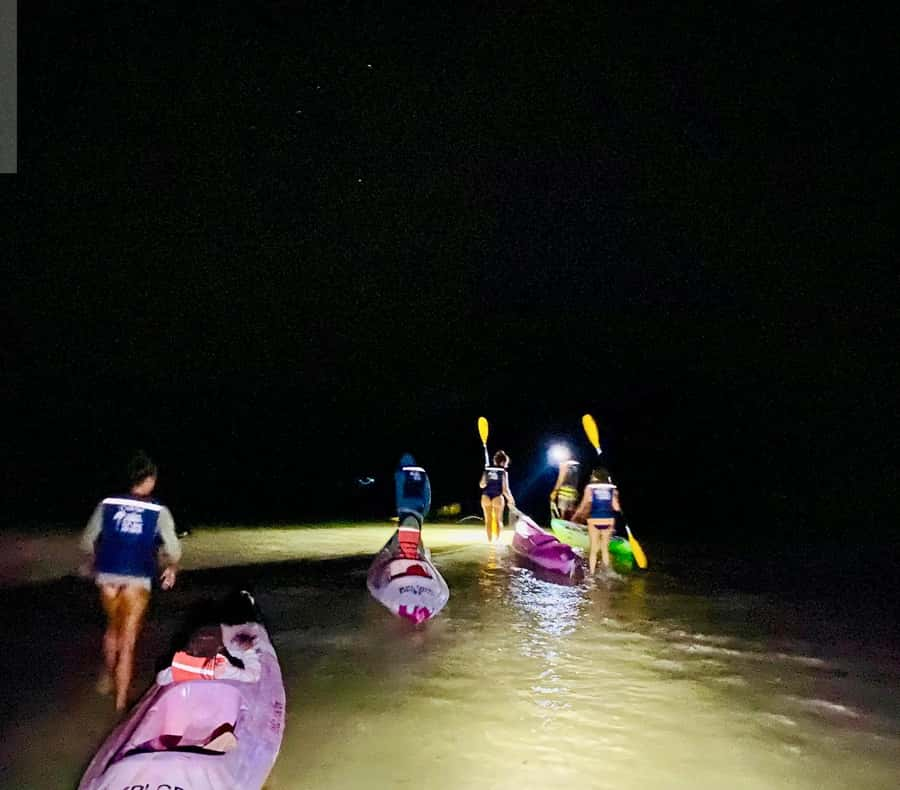
The experience starts with pickup from your hotel area. If road conditions allow it, you’re taken by all-terrain vehicle to the last hotel zone near Las Nubes, then you switch to the kayak phase. The transfer part may feel like a “means to an end,” but in Holbox nights it matters, because you need to get far enough from town light fast.
Expect a pickup window that starts around 15 minutes before the agreed time. If you are not already at reception, you can end up losing time, and taxis do not wait long once they arrive. I’d plan to be ready early, especially if you are sharing the pickup with others.
Once you’re at the start point, the crew gives instructions before you paddle. Even if you’ve kayaked before, the bioluminescence angle changes things: you want a smooth, steady approach because the glow responds to movement. This is not a race, it’s a slow-motion night mission.
Still deciding? These Marietas and Los Arcos boats in Holbox are reviewed too
- Holbox: Bioluminescence by Kayak and Stargazing.
★ 4.6 · 95 reviews
Kayaking to the Punta Mosquito sandbanks, and why they skip the protected zone
This trip is built around a specific stretch of water called the Punta Mosquito sandbanks. A key detail is that you do not go all the way to Punta Mosquito itself, because it is protected and access is prohibited. Instead, you head to the sandbanks area, which lets you get the effect without crossing boundaries.
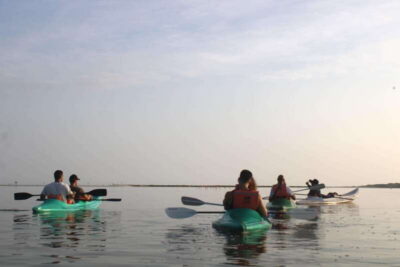
You paddle for roughly 15 to 20 minutes, usually toward the sandbank area known for glow potential. The guide also moves you as far as possible from light pollution, within safe navigation limits. That choice is big for what you see next, because even a small spill of artificial light can make the glow look faint.
You’ll likely be in either a single or double kayak. If you are a pair, you may want to think about comfort and coordination, since double kayaks require more shared timing. If you want control and less coordination, a single kayak can feel easier, though it depends on availability.
The goal here is simple: get you into the right waters and keep you dark enough to actually see bioluminescence. The rest of the experience is built around your ability to notice how your actions affect the glow.
When the glow shows up: plankton intensity, seasons, and real expectations
Bioluminescence is a natural phenomenon, so it is not a guaranteed light show every single night. The intensity can vary based on plankton levels, water temperature, ocean currents, and other conditions you cannot control. Still, the tour gives you a clear sense of what is likely, which helps you set expectations.
During the May to September window, the glow is typically far stronger, often described as 70% to 100% intensity. Outside that season, visibility can drop to about 30% to 80% intensity. Translation: you might still see it in other months, but the effect can be more subtle, and you’ll want to keep your expectations realistic.
The crew looks for spots with the highest concentration of plankton. That search is part science, part experience, and part luck. Even when the glow is not at its strongest, good guides tend to focus on the moments when it pops, like at the sandbar edges or when your movement stirs the water.
One more thing I appreciate: they explain the phenomenon as you go, not as a lecture before you arrive. That makes it easier to watch instead of guessing. You end up paying attention to the cause-and-effect, not just waiting for magic to happen.
The sandbar moment: blue-green footprints and a very photogenic walk
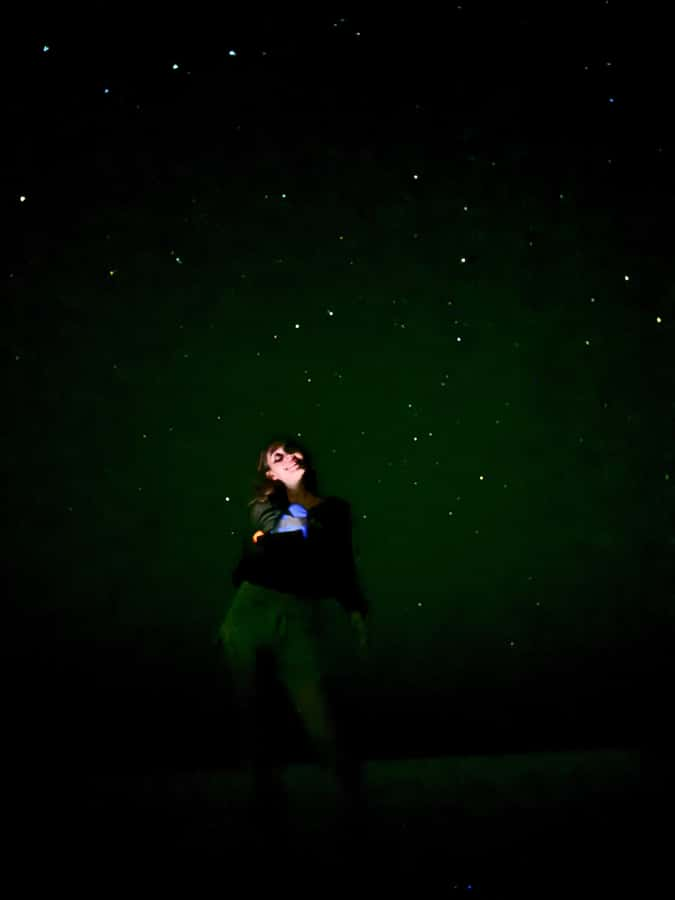
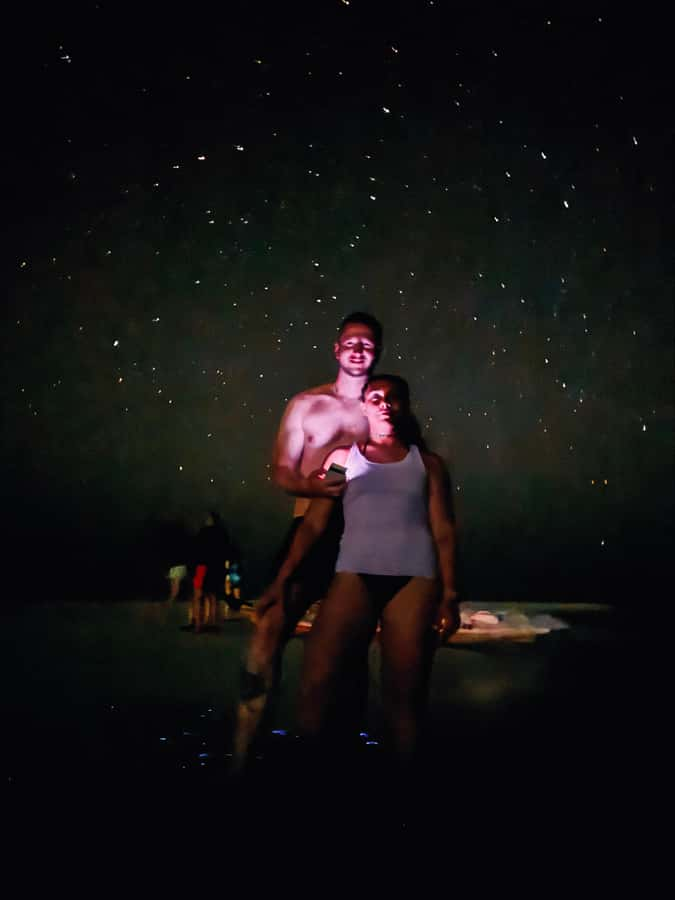
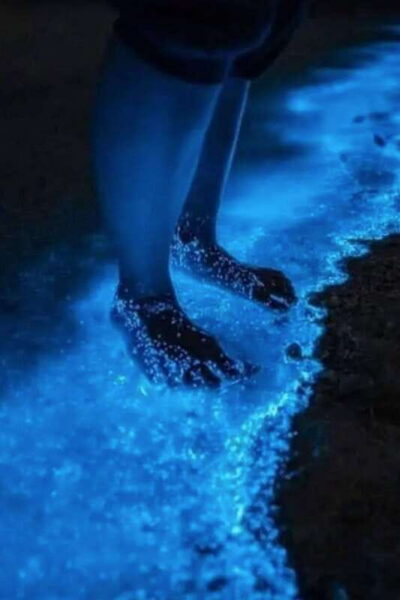
Once they find a high-plankton area, you get out of the kayaks and walk on the sandbanks. This is one of the best parts because the effect shows up in a way that’s easy to notice. Your footprints can light up with blue-green dots as you move across the sand, which makes the glow feel immediate and personal.
Walking on a sandbar in the sea is also a confidence builder. You can see the effect without having to jump straight into the water with your whole body. It’s a practical way to transition into swimming, especially if the night feels cooler or your comfort level is uncertain.
This is also where the guide’s instruction matters most. You want to move steadily and keep your attention on the glowing spots under your feet and around the sandbar. Flash photography is not allowed, which helps keep the night dark and protects your eyes.
If you’re hoping for dramatic glow in a wide open area, here is your best shot during the first land phase. It is small, bright, and directly connected to your steps, so it’s easier to register even if the overall night glow is moderate.
Swimming where your body lights up: color changes and how to make it better
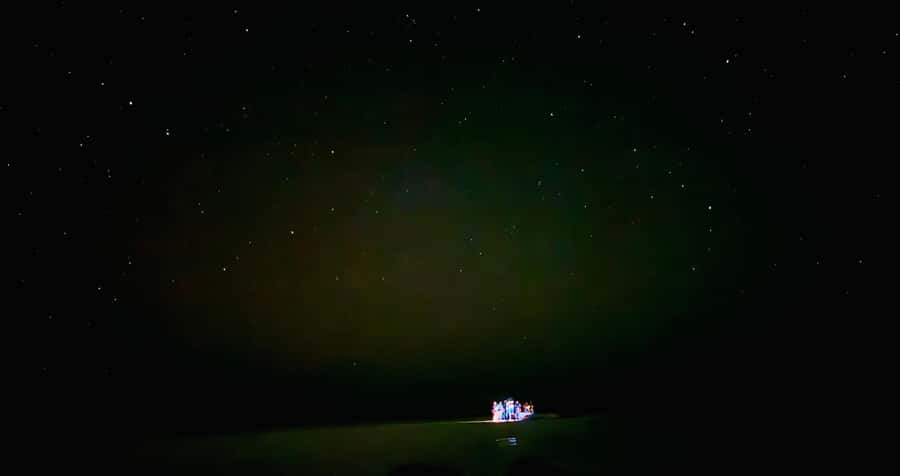
After the sandbar walk, you go further into the sea to a reasonable depth so you can swim. The idea is that with every movement your body can light up with millions of luminescent microorganisms. This is the part that feels the most interactive, because your motion becomes the trigger.
You can see three different color tones, typically described as green, white, or blue. The specific color is unpredictable, which means you should not count on one shade. If you see one color first, you might still get another later depending on the water and the way it’s stirred.
I like that the tour is built around simple behavior: move, stir the water, notice the glow, then adjust. If you are cautious at first, start with gentle movements and let your eyes adapt. If you are too fast, the glow can look chaotic, like random sparks instead of a clear effect.
Because you are swimming in the dark, your choice of gear matters too. Water shoes help with footing and protect you while you wade. A change of clothes and a towel save you from the post-swim chill, especially if you plan to head back to dinner after.
The guide explains the natural phenomenon and the nature reserve aspect while you’re out there. Even if you don’t retain every detail, understanding the why behind the glow helps you watch better. You stop thinking of it as random light and start thinking of it as a response to disturbance in the ecosystem.
Other Holbox escapes around Holbox worth putting side by side
- Holbox: Yum Balam Reserve Classic Boat Tour★ 4.7 · 470 reviews
- Holbox: Guided Sunrise/Sunset Kayak Tour by Mangrove Reserve★ 4.5 · 127 reviews
- Holbox: Mangrove Sunset Kayak Tour★ 4.6 · 79 reviews
- Group horseback ride on Holbox Island, Quintana Roo★ 4.7 · 70 reviews
- Holbox: Punta Mosquitos, Yalahau, & Pasión Island Boat Tour★ 4.0 · 34 reviews
Stargazing on top of the sea glow: how clear sky changes the whole feeling
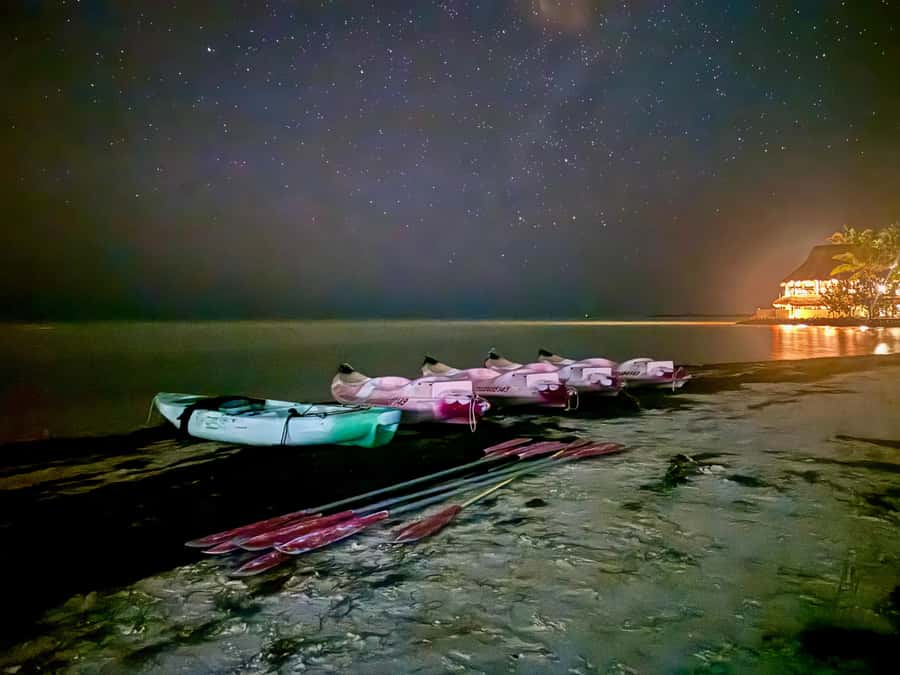
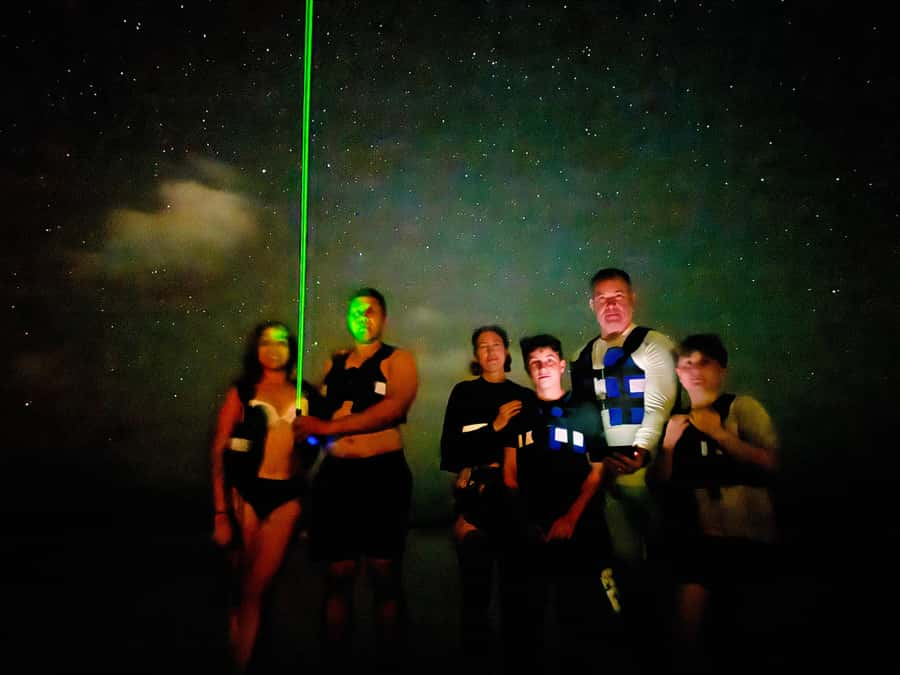
The name includes stargazing for a reason. After all, you’re in a place away from the strongest town lights, and your eyes are already adjusted to darkness from the kayak and swim. If the sky is clear, the stars can become a second show running alongside the water.
Even when the bioluminescence is only moderate, a clear sky makes the night feel complete. You’ll notice how the “black” of the sky changes the way the water glows, because your brain compares dark areas to brighter ones.
The timing is part of the effect. You’re moving through the night at a measured pace, so you are not just staring up for a single minute and then rushing away. The stargazing benefit is that the night atmosphere grows on you as you watch the sea, then look upward between movements.
This is also why flash photography is banned. Flashes can ruin your night vision for the stars and the water glow at the same time. If you want to capture something, take slow, low-light photos without flash, if allowed on your end, and keep it minimal so you don’t break the experience for yourself.
Price and timing: is $49 worth two hours of glow?
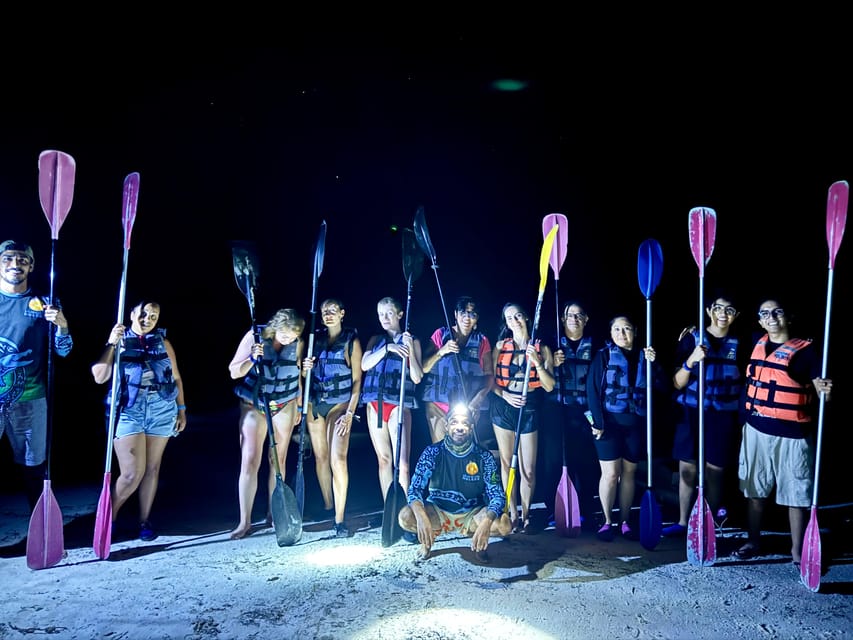
At $49 per person for about 2 hours, you are paying for a focused, guided night outing. That includes the transfer from your hotel (one-way), the kayak time with instructions, and a guided walk and swim in bioluminescent waters. The guide is the value engine here, because you’re not just going out, you’re learning and adapting on the fly.
Is it the cheapest bioluminescence option? It might not be. If you compare it to longer tours that include food and drinks, this can feel like you pay a similar price for less “extras.” That’s the trade.
But if you care more about the glow experience itself than added comfort, this format has strengths. You spend your time doing the key actions, kayaking, walking, and swimming, rather than touring around with long stops. For many people, that keeps the magic concentrated and helps you avoid fatigue.
My best advice is to match your expectations to the schedule. If you want a long evening with meals and multiple activities, look at longer options. If you want a well-targeted night where your movements trigger the light, this one can feel like a good deal.
Who this Holbox night kayak experience suits best
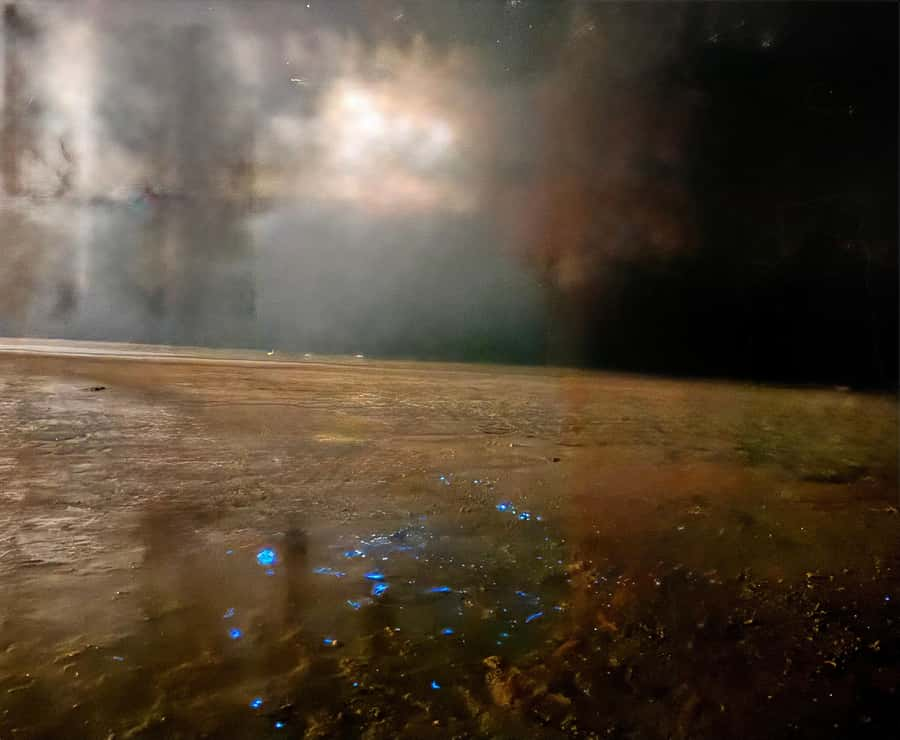
This works best for people who like calm water, can handle swimming at night, and enjoy learning through doing. If you’re comfortable in the ocean in low light, the payoff tends to feel personal fast, especially during the sandbar footprints and the swim phase.
It is not suitable for kids under 2, pregnant women, people with back problems, mobility impairments, wheelchair users, people with heart problems, people with epilepsy, or people over 75. People over 70 and those with recent surgeries are also not listed as suitable. If any of these apply to you, it’s worth choosing a different kind of Holbox evening.
For able-bodied adults who want a nature-focused night, the restrictions are actually a sign the operators are managing risk in a realistic environment. You’re in the water, the light is low, and you need everyone to follow instructions. If you like nature experiences that ask you to participate, not just observe, you’ll likely enjoy this.
What to bring, and what to leave behind so you can actually see it
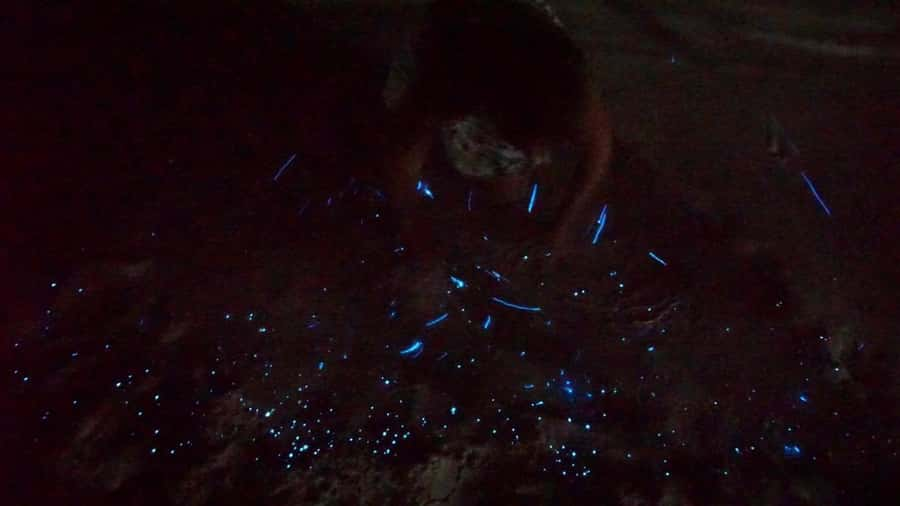
Pack for a wet, dark, active night. You’ll want swimwear right away, plus a change of clothes and a towel for after. Insect repellent is important, and the tour specifically notes biodegradable insect repellent. Mosquito repellent is not included, so bring your own and apply it before you get moving.
Water shoes are also a smart idea. The combination of wading and sand can be tricky if you’re barefoot or in regular sandals. Comfortable, closed protection helps you enjoy the moment instead of thinking about your feet.
From the rules side, some things can directly affect what you see. Flash photography is not allowed, and alcohol and drugs are not allowed either. Valuables are also called out as not permitted, so leave jewelry and anything precious at your accommodation.
There are other straightforward “no” items too: no pets, no large luggage, no drones, and avoid anything that could impair judgment like intoxication. The point is simple, keep the night safe and keep the viewing clear.
If you’re easily bothered by mosquitoes, start with repellent you trust, and remember that the glow phase depends on staying in place and moving carefully. You want to focus on the experience, not on constant swatting.
Should you book this bioluminescence kayak and stargazing tour?
If you want a guided night that focuses on real nature action, this is a strong choice. The structure is tight, you get kayak time, a sandbar walk where footprints glow, and a swim where your movement lights up the water. The guide role is central, and having an experienced communicator like Victor can make a big difference because you’ll know what to look for as conditions change.
Book it if you can swim comfortably in the dark, you’re prepared with the right gear, and you understand that bioluminescence intensity depends on season and conditions. I’d skip it if you fall into the listed non-suitable categories, if you are not comfortable with swimming at night, or if you need an outing with food and longer downtime.
If you want my rule of thumb: choose this when your priority is the glow experience itself, not extra add-ons.
FAQ
When is the bioluminescence usually strongest on Holbox?
The glow is typically most visible from May to September, often at about 70% to 100% intensity. In other months, visibility can vary and is often described as 30% to 80% intensity.
Do you kayak all the way to Punta Mosquito?
No. You paddle toward the famous Punta Mosquito sandbanks area, but you do not reach Punta Mosquito itself because it is a protected zone with no access.
What should I bring for the tour?
Bring swimwear, a change of clothes, a towel, insect repellent, and water shoes. The tour also recommends biodegradable insect repellent.
Is hotel pickup included?
Yes. Pickup is included as a one-way transfer from your hotel area, and the pickup time starts about 15 minutes before the agreed time.
Can I use flash photography at night?
No. Flash photography is not allowed during the experience.
Is this tour suitable for kids or people with mobility issues?
It is not suitable for children under 2 years old, wheelchair users, people with mobility impairments, and several other medical categories listed by the provider. If you have questions about your specific situation, compare your needs to their listed non-suitable conditions before booking.
Paddle trips still worth a look around Holbox
More Holbox escapes from our Holbox notebook

Other Marietas and Los Arcos boats we have been through in Holbox
Not quite it? More Holbox tours from our review pile
Marietas Islands & Los Arcos in one list.
 ★ 5.0Mega Yacht ALL INCLUSIVE Yelapa Waterfall & Snorkeling AdventureFrom $1172,515 reviews
 ★ 4.5Boat and Snorkel Tour to 5 Islands of Los ArcosFrom $481,176 reviews
 ★ 4.5Islas Marietas & BBQ lunch at MajahuitasFrom $991,130 reviews
 ★ 4.5Yelapa Waterfall, BBQ at Exclusive Majahuitas Beach & Open barFrom $99760 reviews
 ★ 4.5Las Caletas Beach & Adventure Park with buffet lunch and open barFrom $159755 reviews
 ★ 5.0Marietas Islands National Park: Full Day ALL INCLUSIVE TourFrom $110689 reviews
 ★ 4.5Bioluminescence Experience in Holbox378 reviews
 ★ 5.0Bioluminescence by kayak or SUP to Los Arcos Puerto VallartaFrom $101343 reviews
Where else it sits