Reviewed · MEXICO
Arrivals & Survival of Jews in Mexico from 1519
A good story hides in plain sight. This 3.5 hour walk threads together Mexico City’s religious power, Jewish survival, and modern coexistence, using sights you can actually stand in front of. I especially love how it connects the Spanish Inquisition setting to the later public Jewish landmarks, and how it ends at the Justo Sierra Synagogue with real architectural presence in view.
My other favorite part is the pacing and size. With a maximum of 10 people and a guide who can handle lots of questions, the tour tends to feel like a guided conversation, not a lecture. One possible drawback: the experience mixes Jewish history with broader Mexico City religious and political context, so if you want only synagogue history minute to minute, plan to do a bit of extra reading.
In This Review
- Key things to know before you go
- Aztec Ruins to Jewish Streets: how the story connects
- Librería Porrúa: the terrace intro and the big picture you need
- Catedral Metropolitana and the Chapel of the Souls: heresy, fear, and architecture
- Plaza de Santo Domingo: trade, hiding, and the Camino Real safety thread
- Antiguo Palacio de la Santa Inquisición: power up close, prison as a neighbor
- San Ildefonso: Rivera, Kahlo, and how politics shapes who gets refuge
- Plaza Loreto and the two old synagogues nearby
- Justo Sierra Synagogue: the decommissioned first Ashkenazi shul
- Price and value: is $99 worth 3.5 hours?
- Who this tour is for (and who might prefer something else)
- My booking call: should you do it?
- FAQ
- How long is the tour?
- Where does the tour start and where does it end?
- Is the tour offered in English?
- How big is the group?
- What kind of walking should I expect?
- Can I cancel for a full refund?
Key things to know before you go
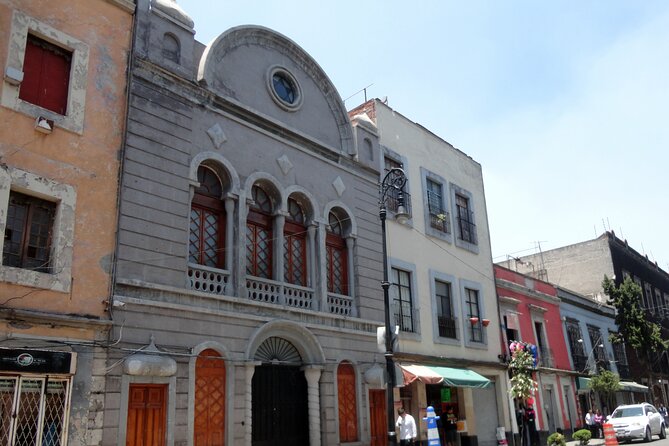
- First Sephardic and first Ashkenazi landmarks in Mexico City, plus a hands-on stop at the historic Justo Sierra Synagogue
- Inquisition-era clues you can see, including sites tied to heresy teachings and the fear of persecution
- Diego Rivera and Frida Kahlo connections, used to explain how Jewish threads show up in art and life
- Lev Davidovich Bronstein (Leon Trotsky) in Mexico, explained through the lens of anti-Fascist politics and refugee reception
- Small group feel (up to 10 people), with time to ask questions and get clear answers
- Moderate walking and a logical route that starts near República de Argentina and ends near Loreto Park
Aztec Ruins to Jewish Streets: how the story connects
Mexico City’s Centro Histórico looks like a pile of centuries on top of each other, and that is exactly what this tour leans on. The route starts at Librería Porrúa, where you begin with an overview chat from a terrace looking toward ruins associated with the Great Aztec Temple. That first vantage point matters, because it frames what follows: power, belief, and control have always shaped how the city looks.
From there, the guide moves the timeline forward with a clear theme, Jewish life in Mexico did not happen in a vacuum. You’re shown how policy and religion collide in public architecture, what “tolerance” looks like on the surface, and what survival looks like when the stakes are high. If your guide is Carlos, you’ll likely notice he tells the story with energy and personal care, not just dates and names.
You’ll also notice the tour’s rhythm. The day is not built around marathon distances. Instead, it uses short, meaningful stops where a detail you might otherwise miss becomes the point of the whole scene.
Still weighing it up? Here are other tours across Mexico City we have written up in the same detail.
- Teotihuacan, Guadalupe Shrine & Tlatelolco Day Tour with Lunch
★ 5.0 · 11,603 reviews - Xochimilco, Coyoacan and Frida Kahlo with Optional Lunch
★ 4.5 · 7,320 reviews - Balloon flight + Breakfast in cave + Pyramids + Pick up CDMX.
★ 5.0 · 6,335 reviews - Teotihuacan pyramids morning or afternoon without tourist traps
★ 5.0 · 6,186 reviews - Teotihuacan Early Access Guided Tour with optional Lunch
★ 4.5 · 6,138 reviews
Librería Porrúa: the terrace intro and the big picture you need
The tour begins at República de Argentina 15, at Librería Porrúa in the Centro Histórico area, starting at 10:00 am. You’ll get an intro chat from the terrace, and it sets expectations for what you’re about to read in stone and street corners.
This is where you want to get your bearings fast. The tour is essentially a guided visual timeline. Once you understand that, the rest lands better: you’re not just visiting places, you’re learning how to “decode” the city’s messages.
Practical tip: arrive a few minutes early. The meeting point is a bookstore area, so it’s a good moment to buy water or a small snack before you start walking.
Catedral Metropolitana and the Chapel of the Souls: heresy, fear, and architecture
Next comes the Catedral Metropolitana de la Ciudad de México area. You walk behind the cathedral to reach a viewpoint tied to the Chapel of the Souls, where the tour connects religious teachings to what was displayed publicly during colonial rule.
This part can feel heavy, and that is intentional. The guide points you toward the idea that colonial architecture was designed with exclusion in mind, including references connected to the Spanish Inquisition and the goal of keeping Jews away. Even if you do not know Spanish or church history, you can still follow the meaning by looking at where you’re standing and why the guide chose that angle.
What I like here is the way the tour explains how authority used art and space as messaging. You’re not just hearing about the Inquisition as a concept. You’re seeing how power tried to make its worldview permanent in the built environment.
A consideration: if you are sensitive to persecution themes, this is not a soft start. The tour addresses “teachings against heresy” and the Inquisition mindset. If that makes you uneasy, bring a steadier mindset and know you’re walking through history rather than shopping for Instagram views.
Plaza de Santo Domingo: trade, hiding, and the Camino Real safety thread
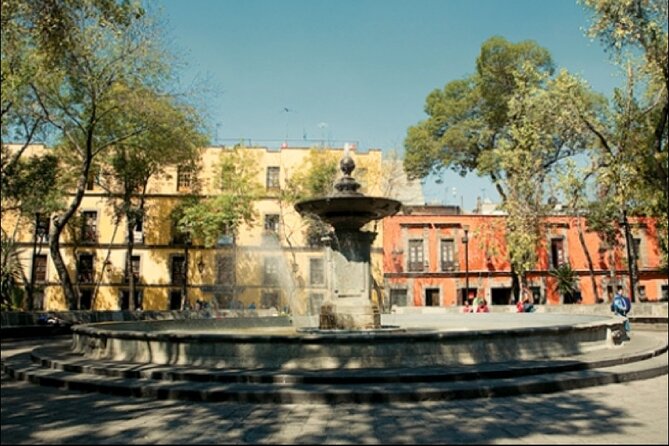
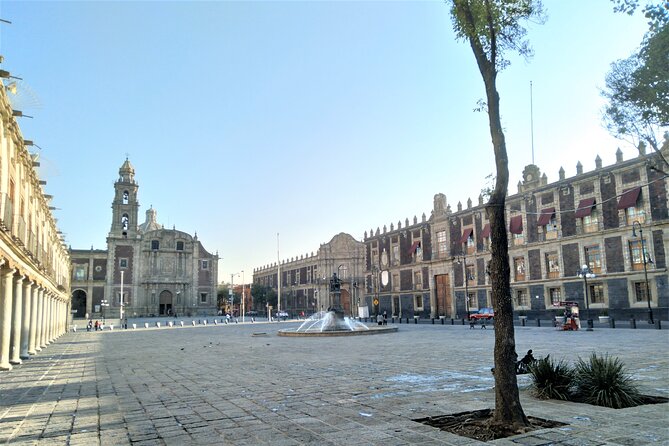
Plaza de Santo Domingo is the next key moment, and it shifts the story from theology to daily life. You visit the trading marketplace area associated with the 16th to 19th centuries, where Jews-in-Hiding had to come to trade while being watched.
That is a very different kind of history than you get from museum rooms. You’re in the setting of movement: commerce, street interaction, and the need to keep going. The guide also ties this plaza to the Palace of the Inquisition nearby, with talk about how anti-Semitic messages could be “read” in hidden or coded ways.
Then you hear about the Camino Real angle. El Camino Real is described as a route connected to Jewish traveling traders finding a safer path through the wider Spanish empire’s geography. Even if you don’t plan to take the Camino Real afterward, it’s a useful way to understand Jewish survival as something networked, not just isolated.
What makes this stop valuable for you: it explains why Jewish history in Mexico is not only about a temple or synagogue date. It’s also about work, movement, and the real-world compromises people had to make to stay alive.
Antiguo Palacio de la Santa Inquisición: power up close, prison as a neighbor
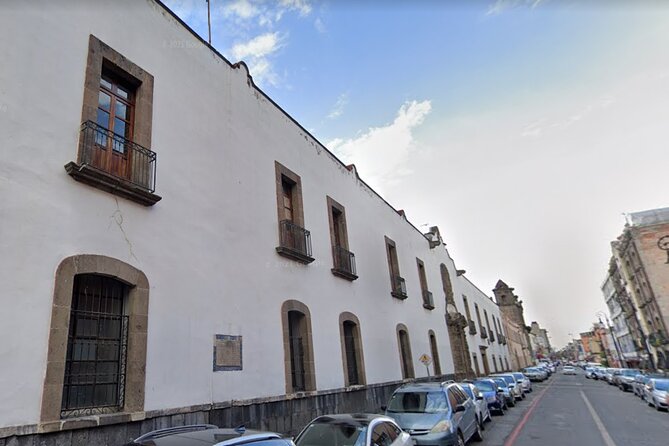
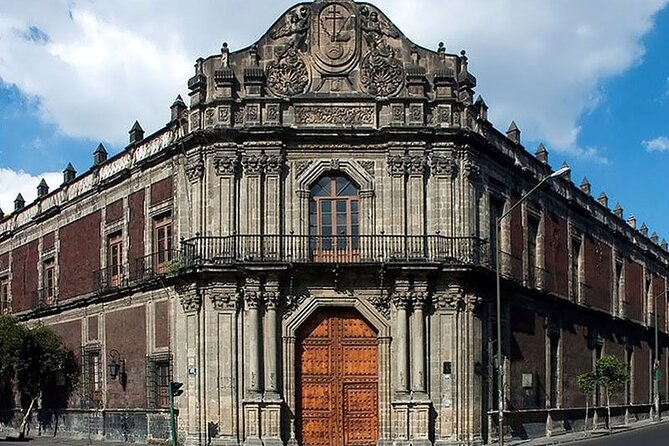
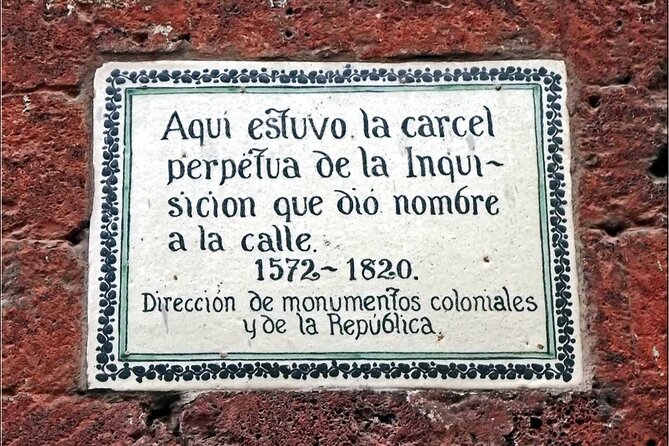
The tour passes the Antiguo Palacio de la Santa Inquisición, including the administrative building and the neighboring perpetual prison. This is the part where the story becomes blunt.
The guide’s focus is not just that people suffered, but how the Inquisition’s machinery sat in the same urban fabric where others tried to live normal lives. The site is right there, next to the Perpetual Prison in the route’s framing, which is exactly what makes it so unnerving. You see how punishment was not hidden away far outside the city. It was built close enough to define what “risk” meant.
In practical terms, this stop is also short, so you won’t be trapped in gloom for long stretches. But emotionally, it can still hit.
If you’re on a tight schedule in Mexico City, this is one of the moments where it helps to slow down. Let the guide finish the story, then take a few seconds to look around yourself. That small pause helps the site stick.
- Teotihuacan, Guadalupe Shrine & Tlatelolco Day Tour with Lunch★ 5.0 · 11,603 reviews
- Xochimilco, Coyoacan and Frida Kahlo with Optional Lunch★ 4.5 · 7,320 reviews
- Balloon flight + Breakfast in cave + Pyramids + Pick up CDMX.★ 5.0 · 6,335 reviews
- Teotihuacan pyramids morning or afternoon without tourist traps★ 5.0 · 6,186 reviews
- Teotihuacan Early Access Guided Tour with optional Lunch★ 4.5 · 6,138 reviews
- Balloon flight + pick up in CDMX + Breakfast in Cave + Pyramids★ 5.0 · 5,651 reviews
- Balloon Flight + Cave Breakfast + Pick Up from CDMX or We Fly★ 5.0 · 4,410 reviews
San Ildefonso: Rivera, Kahlo, and how politics shapes who gets refuge
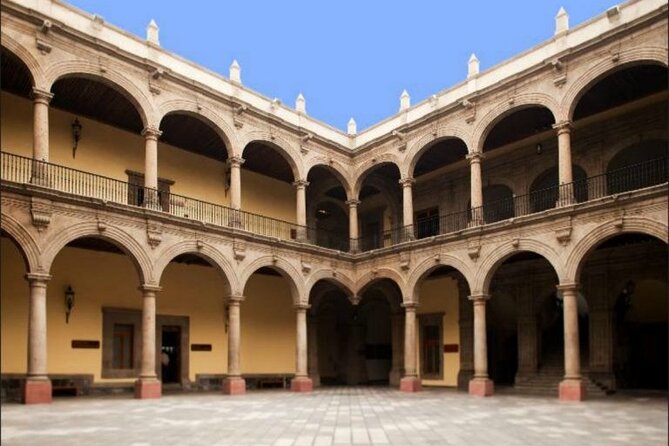
At Antiguo Colegio de San Ildefonso, you see the area where Diego Rivera and Frida Kahlo’s paths crossed, with the tour connecting them through the lens of Sephardic and Ashkenazim origins. The point is not to turn famous art into a trivia game. It’s to show that Jewish threads can appear indirectly in the culture a city produces.
Then the tour widens again into 20th century politics. You’ll hear how Mexico’s anti-Fascist movement is described as supporting the cancellation of an anti-Semitic national convention and how refugee reception is discussed in connection with Lev Davidovich Bronstein, known as Leon Trotsky.
This is a smart choice for you if you’re tired of only medieval or only synagogue-focused tours. The Jewish story in Mexico City is not only “what happened centuries ago.” It is also “what happened when modern politics pushed people across borders.”
Also, this stop tends to be a good breathing moment. You’re still in the historic center, but the themes become more human and more connected to the people you already know from art and politics.
Plaza Loreto and the two old synagogues nearby
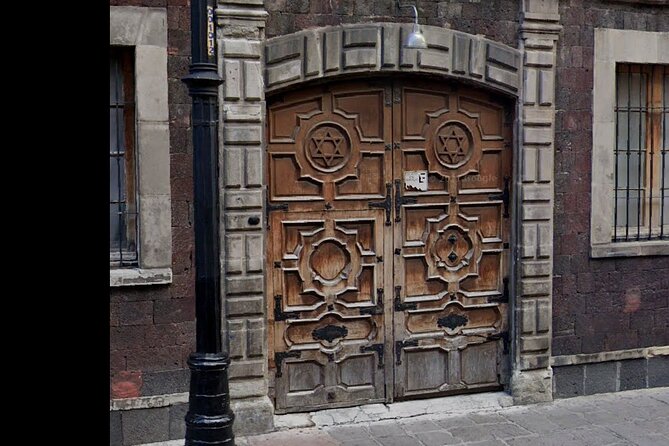
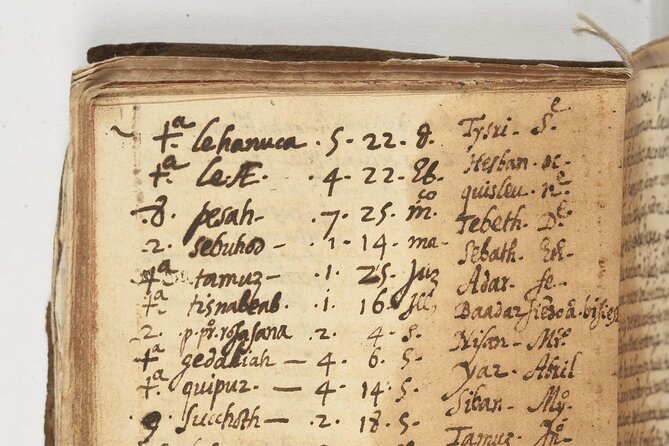
Then the route moves toward Plaza Loreto, where you pass by the first purpose-built synagogue in Mexico connected to Sephardic Mount Sinai, and the neighboring first Ashkenazim synagogue known as Nidjei Israel. Even when you are only passing these sites, it helps to see them in the right order, because the tour uses the geometry of the neighborhood to underline the idea of community presence.
If you’ve ever wondered what it means for a city to have a Jewish story that survived in public spaces, this part answers that. These are not portrayed as abstract symbols. They’re tied to streets and nearby landmarks where daily life and identity took form.
One small caution: the tour ends with a synagogue visit, so this section is also a transition. Dress for a comfortable walk, and keep your phone charged. You’ll likely want to use your camera here, because this is where you can make visual connections between what you just learned and what you’re seeing in front of you.
Justo Sierra Synagogue: the decommissioned first Ashkenazi shul
The last stretch is the Justo Sierra Synagogue, described as a decommissioned and first Ashkenazim shul in Mexico. This is the emotional payoff for a lot of people, because it anchors the whole timeline in a single place you can stand at and focus on.
This stop works best if you listen to what the guide says about why a synagogue like this matters even after it’s no longer functioning in the same way. Decommissioned does not mean irrelevant. It often means the building has become a historical witness, and that is exactly what you’re there to understand.
The tour experience ends right around Loreto Park on the Justo Sierra Street side. Practically, that is useful because you can keep exploring Centro Histórico afterward without feeling like you’re going backtrack-to-the-beginning.
Price and value: is $99 worth 3.5 hours?
At $99 per person for about 3 hours 30 minutes, this tour sits in a mid-range price bracket for guided history walks in Mexico City. The key question is value: what do you get for that money?
Here’s what you do get, based on how the experience is structured:
- A local guide and a route built for short stops, not long wasted stretches
- Entrance included or waived for some public and private places
- A small group size, up to 10 people, which matters for question time
- A route that covers major themes, Inquisition power, Jewish survival, and the city’s multicultural layering
From the reviews pattern, the strongest value driver is the guide experience. Many comments highlight that the guide is engaging, answers questions well, and keeps the story clear. That matters because Jewish history in Mexico can get complicated fast, and you want someone who can explain it without turning it into a blur of names.
Possible mismatch to watch: a few guests felt the balance leaned more toward Mexican religious and political context than a purely Jewish-only narrative. If you’re hoping for a synagogue-first history tour with less broader context, you might feel slightly under-satisfied. If you like the bigger picture, you’re likely to feel the opposite.
Who this tour is for (and who might prefer something else)
I think this tour fits best if you:
- Want Jewish history in Mexico City shown through real locations, not just a museum overview
- Like connecting art, politics, and everyday life into one story
- Prefer a small group with room for questions, especially in English
- Are comfortable handling difficult topics like persecution and the Inquisition
You might look elsewhere if you:
- Want only synagogue interiors and Jewish ritual history, with minimal colonial or Inquisition material
- Are hoping for a totally light, feel-good walk. This is historical and it can be emotionally intense
- Want a lot of long indoor time. This route is mostly walking through and around important sites
One more plus: the physical requirement is described as moderate fitness. The itinerary is short-stop paced, so it should feel manageable for many visitors who can handle city sidewalks.
My booking call: should you do it?
If you’re deciding between a generic Centro Histórico walk and something more focused, I’d point you to this one. It gives you a structured way to read the city’s religious history through Jewish survival, and it does it with a small-group format that tends to make the story stick.
Book it if you want both meaning and good wayfinding: you’ll see the Inquisition context, understand why certain architecture was part of an exclusion system, then end at a historic synagogue site that brings the story into focus. Also, the chance of getting a strong guide like Carlos is a real selling point.
Skip it only if your priority is narrow and literal. If you want nonstop synagogue-focused content, less broader Mexico City religious and political context, you may prefer a different style of tour.
FAQ
How long is the tour?
It runs for about 3 hours 30 minutes.
Where does the tour start and where does it end?
It starts at República de Argentina 15, Centro Histórico de la Ciudad de México. It ends in front of Loreto Park on the Justo Sierra Street side, with the endpoint listed as Justo Sierra 71.
Is the tour offered in English?
Yes, it is offered in English.
How big is the group?
The tour has a maximum of 10 travelers.
What kind of walking should I expect?
The tour is designed for travelers with a moderate physical fitness level.
Can I cancel for a full refund?
Yes. You can cancel up to 24 hours in advance for a full refund.