
Reviewed · AKUMAL & PUERTO MORELOS REEF
Akumal: Dolphin Encounter
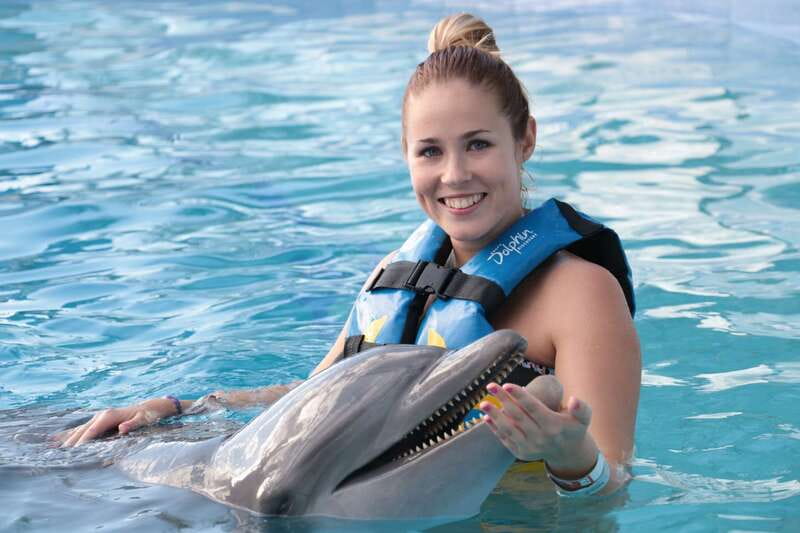
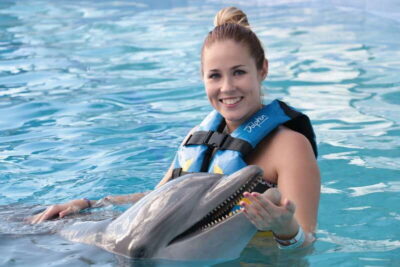
Dolphins, fins, and a handshake in Akumal. This Akumal experience is a 55-minute, family-friendly dolphin program in Quintana Roo, built around a short intro and a longer time in the water with trained guides. You’ll get hands-on moments like shaking fins and games in the turquoise shallows, plus a conservation-focused talk.
I love the way the program blends dolphin learning with real interaction, so you’re not just standing around. I also like that the staff (English and Spanish) keep it clear and structured, and one guide name that shows up in the field is Frida. One possible drawback to weigh up front: cameras are not allowed, and photos are not included, so the photo add-ons can become a costly part of the experience, with some people reporting steep fees for digital photo packages.
In This Review
- Quick Take: What Makes This Dolphin Encounter Worth Your Time
- Where Akumal Dolphin Encounters Fit in Quintana Roo
- The 55-Minute Plan: Intro, Locker Time, and Water Contact
- What Actually Happens in the Water: Games, Fins, and a Handshake
- Dolphin Conservation Talk: More Than a Smile-and-Wave
- The Photo Reality: No Cameras Means You Must Budget
- Price and Value Check for a $99, 55-Minute Encounter
- What to Bring (and What to Confirm) Before You Arrive
- Kids, Height Rules, and Pregnancy Considerations
- Language Support and What It Means for Families
- How to Think About the Dolphin Habitat Setting
- A Balanced Bottom Line: Who This Suits Best
- Should You Book Akumal: Dolphin Encounter?
- FAQ
- How long is the Akumal dolphin encounter?
- What’s included in the price?
- Is hotel pickup and drop-off included?
- Are photos included?
- Are cameras allowed during the encounter?
- What should I bring?
- What languages are the instructors?
- What is the height rule for children?
- Are there pregnancy restrictions?
- What is the cancellation policy?
Quick Take: What Makes This Dolphin Encounter Worth Your Time
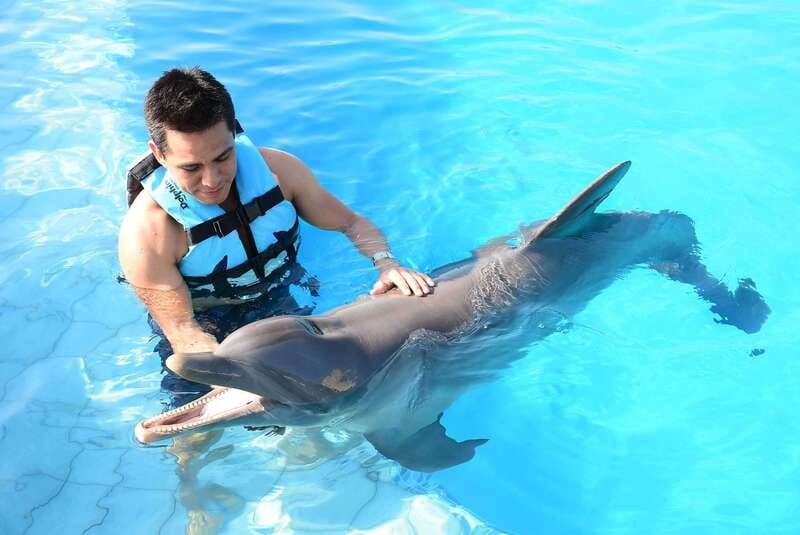
- 40 minutes in the water means you get more than a token splash, with hands-on interaction time built in.
- Fun games plus a dolphin handshake are the kinds of moments kids remember, and adults enjoy watching too.
- Conservation and behavior lessons are part of the program, not just a pre-show script.
- Trained staff in English or Spanish help you understand what you’re seeing, including guided cues on dolphin interactions.
- Lockers included keeps the stress low while you switch from beach gear to encounter gear.
- No cameras and photo sales on site means you should decide early if you want the official photos, then budget for it.
Where Akumal Dolphin Encounters Fit in Quintana Roo
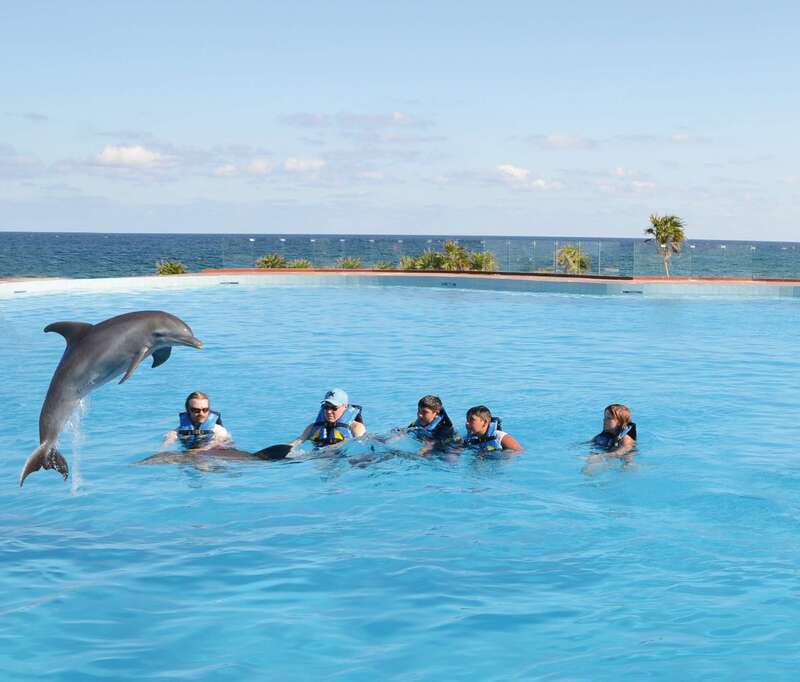
Akumal sits on Mexico’s Caribbean side in Quintana Roo, and it’s known for its easy beach access and marine life encounters. This dolphin encounter is designed to be a compact add-on to a beach day, usually offered in the morning and afternoon. The total time is 55 minutes, made of a 15-minute introduction and a 40-minute encounter.
What makes this setup practical is that it doesn’t swallow your whole day. If you’re building a trip around beach time, snorkeling options, or just relaxing, this kind of half-hour chunk of activity planning can fit better than longer tours.
Also, the experience positions itself as part of the “Mayan Riviera” area and ties the setting to a newer dolphin habitat. That matters because the environment influences how safe and controlled the interaction feels for both people and animals.
Other Akumal and Puerto Morelos reef trips in Akumal that earned a write-up
- Akumal: Dolphin Encounter
★ 4.4 · 56 reviews - From Tulum: Tulum, Cenote and Turtle Swim Tour at Akumal
★ 4.6 · 30 reviews
The 55-Minute Plan: Intro, Locker Time, and Water Contact
The schedule is straightforward. You get a 15-minute introduction, then a 40-minute dolphin encounter, and lockers are included. That intro time is not wasted time. It’s where you learn the basic rules for the water, what the dolphins will do during the session, and how the staff wants you to behave so the dolphins stay calm.
After that, you head into the encounter portion, which is where the “family-friendly” promise shows up. Expect structured interaction: guided games, and time for close contact moments. The program language is Spanish and English, so you can follow the safety and conservation talk without feeling lost.
One practical note: photos are not included, and cameras are listed as not allowed. That means you should treat the encounter as a memory you create in real life, not a photo project you can freely document. If you really want pictures, you’ll likely be relying on the provider’s photo service.
What Actually Happens in the Water: Games, Fins, and a Handshake
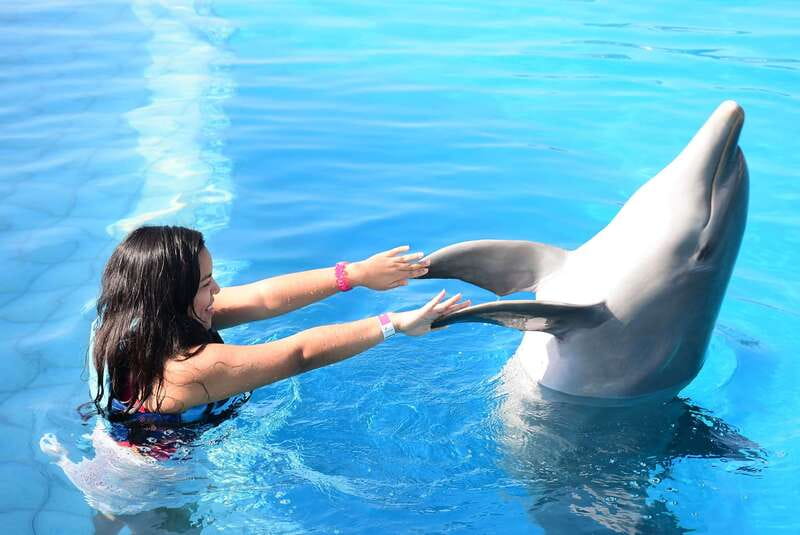
This is not a hands-off viewing. This program is built around interaction. The experience description highlights shaking fins, playing games, and learning while you’re in the water with dolphins. You also get a chance at the handshake moment, which is the kind of simple, physical interaction that feels magical for kids.
The program also promises an underwater world moment, where you’re around the dolphins as they move through the water. One of the more interesting parts is that the encounter includes dolphin behaviors and diet information from trained experts. So while you’re experiencing the fun, you’re also being guided to understand what you’re seeing.
The program references dolphins being born under human care, and it frames the habitat as a place with a purpose-built setup. For you, that’s the difference between a one-time spectacle and a structured encounter where someone is explaining the “why” behind the dolphin behavior you’re seeing in the moment.
Dolphin Conservation Talk: More Than a Smile-and-Wave
Dolphins are smart, social, and curious, but the experience adds value by pairing interaction with what they eat and how they live. The highlights specifically call out conservation, diet, and behaviors, taught by trained experts.
For many families, this is the part that makes the trip feel less like a theme-park stunt and more like a mini-lesson kids can carry home. It’s also where adults tend to get more out of the experience, because you’re learning how the dolphins are cared for and how that care connects to conservation thinking.
In a fast 55-minute visit, the staff has to keep explanations tight. Still, a clear presentation in Spanish or English helps a lot. One account mentioned Frida doing a great job as a guide, and that kind of clarity matters here, because the dolphins are moving and the staff is coordinating interactions on the fly.
The Photo Reality: No Cameras Means You Must Budget
This is where you should go in with your eyes open. Cameras are listed as not allowed, and photos are listed as not included. That combination basically pushes photo purchasing into the middle of the experience.
The positives are obvious: the team can capture moments cleanly without everyone holding devices in the water. The downside is also obvious: you may end up paying for what you cannot capture yourself.
Some people reported feeling the photo process was aggressively upsold. One write-up claimed additional charges for digital photos and mentioned a fee of 200€ for 12 digital photos. Another noted that they had to pay 240€ for photos to get them, and described the interaction as commercially driven because the session seemed to revolve around photo opportunities.
I can’t tell you how a photo package will work on your day, because details can change. But I can tell you how to protect yourself from sticker shock: decide before you go whether you want official photos, and if you do, set a clear budget so it doesn’t become an emotional decision mid-activity.
Price and Value Check for a $99, 55-Minute Encounter
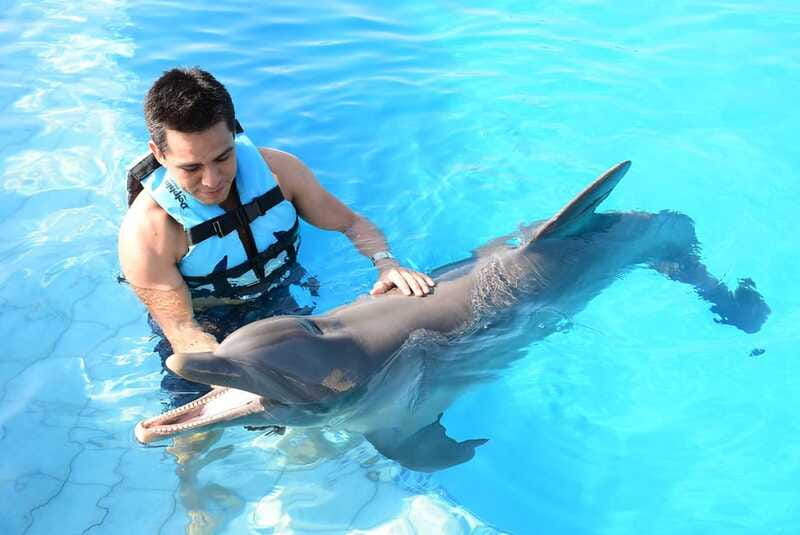
At $99 per person for a 55-minute experience, you’re paying for time in the water plus guided learning. The included pieces are the 15-minute intro, 40-minute encounter, and lockers. That’s a real chunk of supervised interaction, not just a quick moment near the dolphins.
But value is not just about what’s included. It’s also what’s not included. Photos are not included, hotel pickup and drop-off are not included, and towels are not included. If you need those add-ons, the effective price can climb.
Some accounts also flagged the idea that the interaction time felt short for the total cost, especially when photo fees stack on top. That doesn’t mean the program is bad. It does mean you should judge value based on your priorities:
- If your top priority is hands-on dolphin contact, this program’s structure supports that.
- If your top priority is saving money and self-documenting, you’ll have a harder time, because cameras are not allowed and towels and photos cost extra.
If you’re the type of traveler who likes to control spending, treat this like a “pay for the experience” activity, and then decide carefully on photos.
What to Bring (and What to Confirm) Before You Arrive
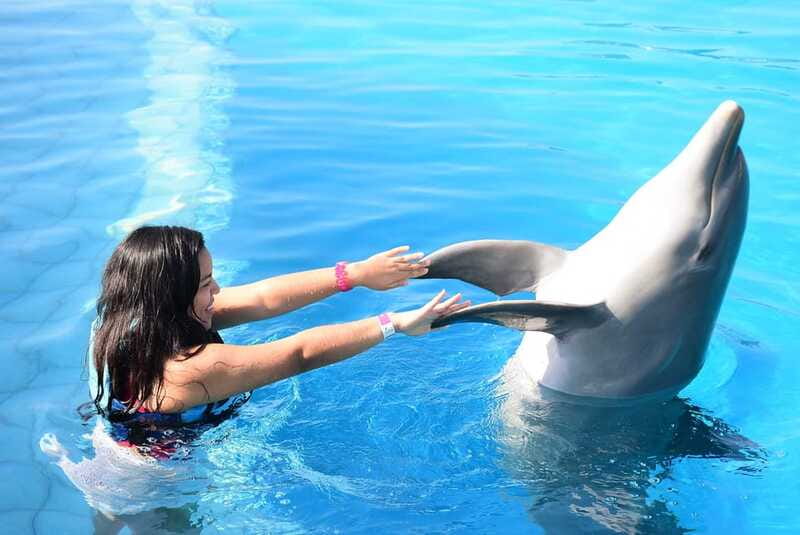
The “what to bring” list is simple: towel, biodegradable sunscreen, beachwear, and cash. Lockers are provided, but towels and other beach comforts are on you.
Here’s the tricky part. The information also lists sunscreen as not allowed. That is confusing given the “bring biodegradable sunscreen” instruction. To avoid a day-of headache, I suggest you confirm with the staff at check-in how sunscreen is handled. It may mean a specific type is restricted for the water, or that you should apply before arriving and not bring it into the encounter zone. The only safe move is to ask so you don’t get turned away.
Also, cameras are not allowed. That’s the biggest “bring” decision you’ll face. If you were planning to record video yourself, plan on not doing that.
Cash is also listed, which tells you to expect on-site purchases like extras. Photo packages are the most likely expense, but cash can also help with any incidentals you didn’t plan for.
Kids, Height Rules, and Pregnancy Considerations
This is a big one for families. Participation is tied to height and adult accompaniment.
- Children over 4.6 ft can participate alone in any dolphin programs by paying the adult rate.
- Children over 3.9 ft up to 4.6 ft can participate alone in the Encounter program.
- Children over 3.3 ft and up to 3.9 ft can participate in the Encounter program accompanied by a paying adult (1 adult per kid).
- Children under 3.3 ft are considered infants and will perform Encounter activities regardless of the program, as long as they fit the vest.
So the key practical question is not just age. It’s height. If you have kids close to the thresholds, measure at home and bring the right expectations.
Pregnancy rules also exist. Women with less than 5 months into their pregnancy can participate in the Encounter program only if accompanied by another adult and after signing a responsibility form.
These rules matter because they affect whether you’ll be able to participate as planned, and they affect how your family structures the day.
Language Support and What It Means for Families
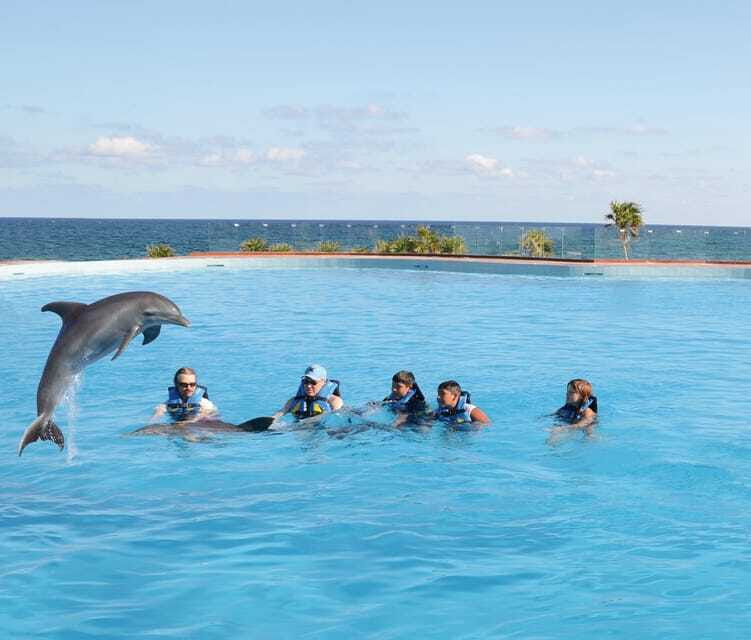
You get instructor support in Spanish and English. That’s helpful because dolphin programs rely on quick instructions while you’re in the water. Even small misunderstandings can make kids nervous or make the interaction feel chaotic.
If you want the learning component to land, language support helps you understand conservation, dolphin behaviors, and what the dolphins are doing during the encounter. It also makes the rules clearer, which is important when cameras are not allowed and when staff are coordinating safety and movement.
How to Think About the Dolphin Habitat Setting
The experience mentions a newest dolphin habitat in the Mayan Riviera area, and it emphasizes that the dolphins were born under human care. That framing suggests the facility is intended to manage dolphin welfare while allowing controlled human interaction.
From your perspective, the setting matters because it influences how organized the staff interaction is, how smoothly the encounter runs, and whether the program feels like guided contact rather than a free-for-all.
Also, the program highlights panoramic views around the habitat. That matters even if you mostly focus on the water. A pleasant setting makes the wait time and intro less stressful, especially for families juggling kids’ attention spans.
A Balanced Bottom Line: Who This Suits Best
This tour is best for people who want a structured, supervised dolphin interaction with an educational component and a short time commitment. It’s family-friendly by design, with games, handshake-style contact moments, and a conservation talk.
You should consider other options if:
- You want to photograph freely on your own, because cameras are not allowed.
- You dislike paying extra on-site, since photos are not included.
- You’re looking for a bargain. At $99 plus potential photo costs, it can add up quickly.
On the other hand, if you’re okay paying for the encounter and you value the hands-on part more than DIY photography, this program’s format makes sense.
Should You Book Akumal: Dolphin Encounter?
Book it if you want a short, guided, kid-friendly dolphin experience in Akumal, and you’re comfortable going into it knowing cameras are not allowed and photos are an extra. The included 40 minutes of water contact plus the conservation and behavior talk is a solid value structure for people who prioritize time with the dolphins over saving every dollar.
Skip it, or at least rethink photos, if you strongly care about controlling costs. Some written accounts describe photo add-ons as expensive and feel like the encounter pressure increases around photo sales.
If you do book, your best move is simple: set your photo budget before you get in the water, measure kids’ heights for the rules, and confirm the sunscreen situation at check-in so day-of surprises do not ruin your mood.
FAQ
How long is the Akumal dolphin encounter?
The experience lasts about 55 minutes total, including a 15-minute introduction and a 40-minute dolphin encounter.
What’s included in the price?
Included are the 15-minute introduction, the 40-minute dolphin encounter, and lockers.
Is hotel pickup and drop-off included?
No, hotel pickup and drop-off are not included.
Are photos included?
No, photos are not included.
Are cameras allowed during the encounter?
No. Cameras are listed as not allowed.
What should I bring?
Bring a towel, biodegradable sunscreen, beachwear, and cash.
What languages are the instructors?
Instructors provide information in Spanish and English.
What is the height rule for children?
Children over 4.6 ft can participate alone by paying the adult rate. Children over 3.9 ft up to 4.6 ft can participate alone in the Encounter program. Children over 3.3 ft and up to 3.9 ft need to be accompanied by a paying adult (1 adult per kid). Children under 3.3 ft are treated as infants and perform Encounter activities as long as they fit the vest.
Are there pregnancy restrictions?
Women with less than 5 months into pregnancy can participate only if accompanied by another adult and after signing a responsibility form.
What is the cancellation policy?
You can cancel up to 24 hours in advance for a full refund.
Akumal and Puerto Morelos reef trips still worth a look around Akumal
Not quite it? More Akumal tours from our review pile
Akumal & Puerto Morelos Reef in one list.
 ★ 5.0Tulum Ruins, Turtles in Akumal and Cenote tourFrom $1291,706 reviews
 ★ 5.0Private Tulum Ruins, Turtles in Akumal and Cenote AdventureFrom $375581 reviews
 ★ 5.0Small-Group Mesoamerican Barrier Reef Snorkeling in Puerto MorelosFrom $45500 reviews
 ★ 4.5Puerto Morelos Secret Sandbar Catamaran SailFrom $140396 reviews
 ★ 5.0Private Snorkeling with Sea Turtles in Akumal BeachFrom $65364 reviews
 ★ 5.0Snorkeling Guided Activity in Puerto Morelos MexicoFrom $42328 reviews
 ★ 4.6From Cancun: Tulum and Akumal Cenote and Turtle Swim TourFrom $104289 reviews
 ★ 5.0Full Day Tour to Tulum Cenote and Swim with Turtles in AkumalFrom $89277 reviews
Where else it sits