
Reviewed · EVENING EXPERIENCES
Night Snorkeling – Observation of octopus and other species
Night snorkeling flips the ocean from day mode to night mode. This Cozumel outing keeps things shallow and controlled (max 2.5 meters) while you watch octopus and squid hunting in the dark, not touching anything. I also love that guides keep you moving as a team and stay ready with video the whole time, but the main drawback is weather, since the tour needs calm enough conditions to run safely.
You meet at Money Bar Beach Club at 7:30 pm, in a tiny group (max 4 people). Plan on about 1 hour in the water, swimming steadily while you scan with your flashlight and follow the guide’s coaching, even if you are not a strong swimmer and want a life jacket.
In This Review
- Key Highlights You’ll Actually Care About
- Money Bar Beach Club At 7:30 PM, Then Straight Into Night Mode
- The Shallow Swim Zone: Why The “Two Basketball Courts” Area Works
- What You’ll See After Dark: Octopus, Squid, Eels, Rays, And More
- The Guide Experience: Lalo, Danny, Eduardo, Miranda, And The Rest Of The Team
- Equipment And Lights: What’s Included, What You Might Still Want
- Value Check: Is $77.67 Worth It?
- Safety Reality: Controlled Depth, Safe Distance, And A Team Search
- Who This Tour Fits Best (And Who Might Be Happier Elsewhere)
- Should You Book Night Snorkeling in Cozumel?
- FAQ
- Where does the tour start?
- How long is the night snorkeling experience?
- What is the group size?
- Do I need to swim well?
- How deep is the water?
- What gear is included?
- Are videos included?
- What is the price and language?
- What should I bring if I am getting to Cozumel from elsewhere?
- What happens if the tour is canceled due to weather?
Key Highlights You’ll Actually Care About
- Small group, max 4: easier pacing, more attention, less crowd chaos.
- Flashlights for everyone: you can actually see what the guide is pointing out.
- Shallow limit (2.5 meters): less stress, more time watching than worrying.
- No-contact philosophy: you observe nocturnal species at a safe distance.
- Videos and photo-style keepsakes: experience videos are included, and guides often film constantly.
- 1 hour of active swimming: it is not a sit-and-stare float, it is a real night snorkel.
Money Bar Beach Club At 7:30 PM, Then Straight Into Night Mode
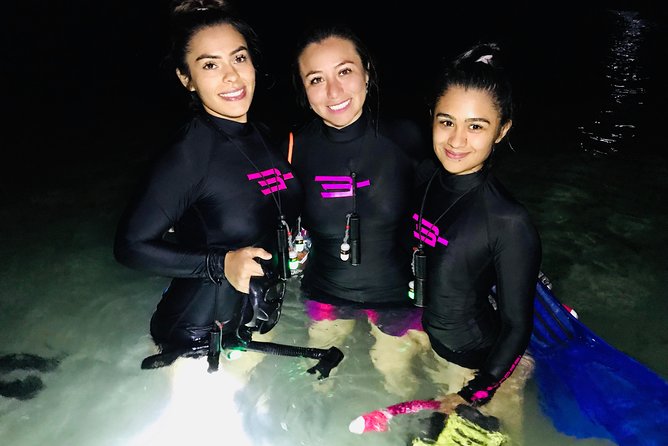
This tour is built for night timing. You start at 7:30 pm at Money Bar Beach Club on Cozumel’s coast, then the group transitions from land to water pretty quickly.
That early-evening start matters because night life changes as darkness settles. Once you are in the water, you are not just snorkeling in the dark, you are snorkeling when octopus and squid tend to be out hunting.
The group size also changes the vibe. With a maximum of 4 travelers, you get tighter coordination, which matters when you are moving in the dark and trying to stay together.
Other snorkel stops around Cozumel worth putting side by side
- ATV 4×4+Snorkeling+Beach Club+ Lunch+Sabores de Cozumel
★ 5.0 · 1,468 reviews - Cozumel Snorkeling Tour: Palancar, Columbia and El Cielo Reefs
★ 4.5 · 1,462 reviews - Private Jeep Excursion in Cozumel with Lunch and Snorkeling
★ 4.5 · 718 reviews - Cozumel Coral Reef Snorkeling by Glass Bottom Boat with Guide
★ 5.0 · 543 reviews - Jade Caverns Private Jeep Tour with Lunch and Snorkeling
★ 5.0 · 525 reviews
The Shallow Swim Zone: Why The “Two Basketball Courts” Area Works
Here’s the smartest part of this experience: it is designed around a small, safe area. You walk from shore to the water, then you snorkel around a zone no bigger than two basketball courts, with a maximum depth of 2.5 meters.
That does two things for you. First, it reduces the fear factor, because you are not dropping into deep water. Second, it keeps sightings more likely to happen close by, since you are not drifting far from the guide and the group.
You should also expect the “team” element to be real. Octopus are experts at camouflage, so the guide leads you on coordinated movement and searching patterns, rather than each person doing their own random swim route.
Even if you do not feel like a confident swimmer, the guide explains how to move in the water and how to communicate while you are out there. If you want extra support, a life jacket can be provided.
What You’ll See After Dark: Octopus, Squid, Eels, Rays, And More
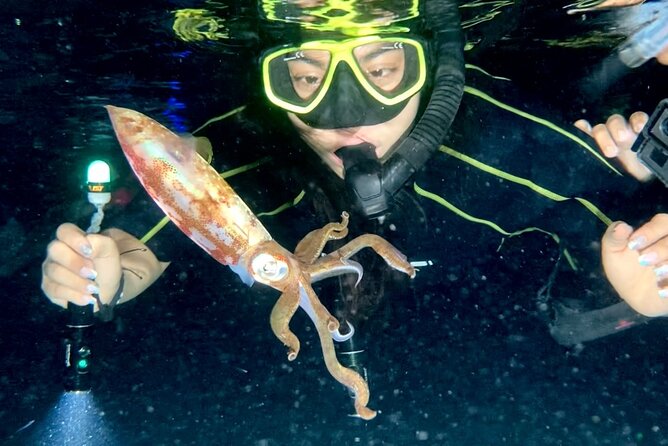
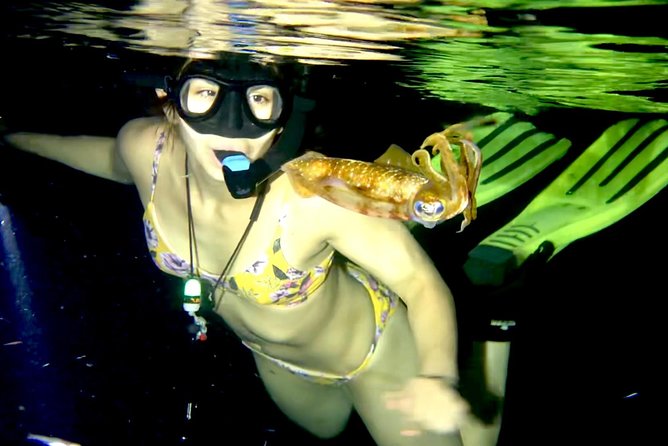
This is not a generic snorkeling trip. The focus is nocturnal wildlife, especially octopus and squid, in an area where these animals hunt at night.
Based on what guests consistently report, your odds of seeing multiple species are strong. You might spot octopus, squid, moray eels, stingrays, puffer fish, lobster, crabs, king crab, and starfish. Some nights also bring bioluminescence or fluorescence from plankton, plus things like nurse sharks or barracuda in the mix.
One of the most memorable details guests mention is how octopus can look like they are changing right in front of you, with shifting color and shape. That is the kind of wildlife moment that feels like a documentary, but in person and right under your mask.
Also note what you are not doing. The whole premise is observation only, no encouraging direct contact with animals. You are there to watch them behave naturally, from a safe distance.
The Guide Experience: Lalo, Danny, Eduardo, Miranda, And The Rest Of The Team
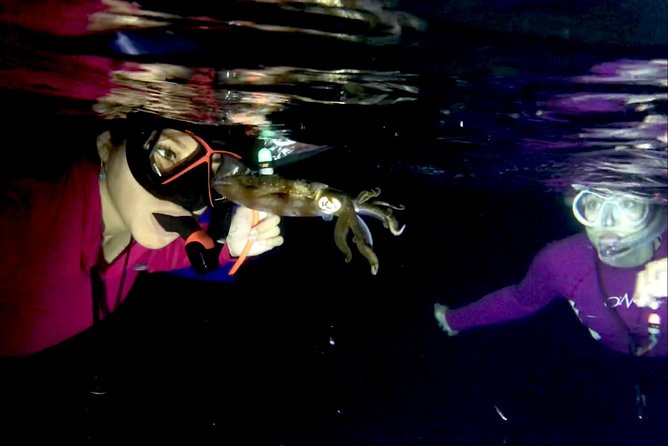
If you care about quality, pay attention to who leads you. Multiple guides come up in guest reports, including Lalo, Danny, Dany, Eduardo, and Miranda, and guests repeatedly describe them as attentive, patient, and clear.
What I like about this style of guiding is how practical it feels. The instructions are not just “don’t touch.” The guide is actively helping you move safely, stay oriented, and spot animals that are hard to see because of camouflage.
It also helps that guides keep their own equipment ready. Several guests note that the guides take video of the experience whenever possible, not just once or twice. If you are the person who usually forgets to capture the moment, this part can be a big win.
You also get a sense of reassurance from how guides run the swim. Even first-time night snorkelers describe feeling safe and comfortable, because the group stays controlled in a shallow area and the guide keeps checking the pace.
Equipment And Lights: What’s Included, What You Might Still Want
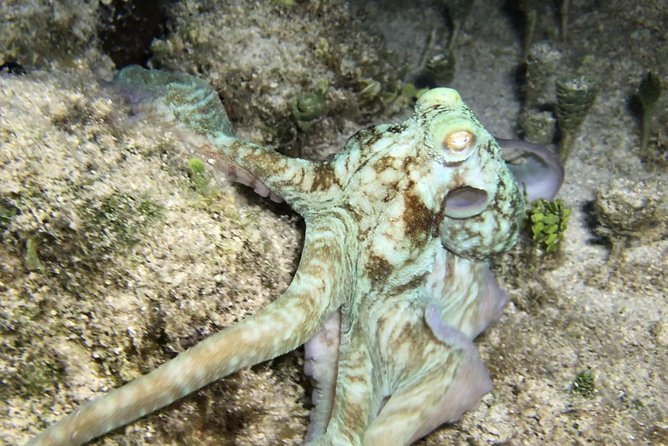
The tour includes snorkeling equipment, diving lamps, and experience videos. Everyone also gets a flashlight, which is essential for night observation.
Diving lamps matter because standard snorkel flashlights alone can create glare or limited coverage. With the extra light setup, your view of moving animals and subtle spotting improves.
You should still think about fit. One guest reported an equipment issue where a snorkel kept coming undone from the goggles, and it was not replaced right away during the problem. That does not mean your experience will match that story, but it does suggest you should take a minute at the start to adjust everything and test it before you head fully into the water.
If you already own gear that fits you perfectly, you might prefer using your own. The tour will give you what you need, but comfort matters a lot when you are breathing and swimming for about an hour.
A few more after-dark bookings in Cozumel we have written up
- Submarine Atlantis Cozumel Adventure by Day & Sunset★ 4.5 · 770 reviews
Value Check: Is $77.67 Worth It?
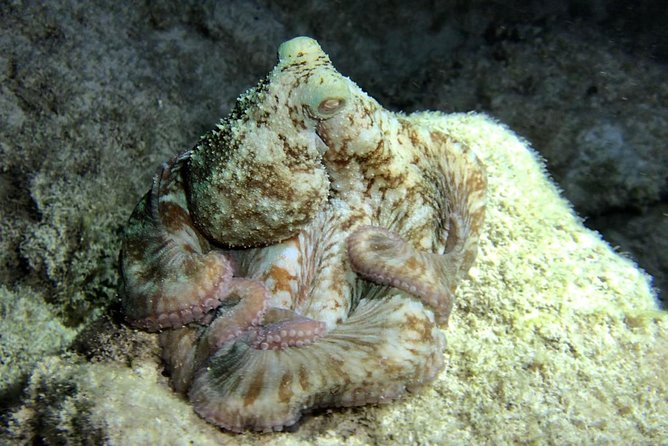
At $77.67 per person, this is not a bargain-style attraction. It is also not a high-end luxury price. For what you get, it is priced like a specialized, small-group wildlife experience.
Here’s where the value comes from:
- Small group (max 4), which usually costs more than big-group tours.
- Specialized night setup: flashlights, diving lamps, and a guided shallow search.
- Included take-home media: experience videos are part of the package.
- Time on the water: about 1 hour swimming actively, not just a quick dip.
Day snorkeling often costs less, but it gives you a smaller range of behaviors and fewer nocturnal sightings. Night snorkeling is a different world, and the animals you are likely to see are the whole point here.
If you are the type who likes wildlife moments you cannot replicate easily in daylight, this is a strong use of your time in Cozumel. If you only want a casual, low-effort swim and you hate being in the ocean at night, you may find it less fun than expected.
Safety Reality: Controlled Depth, Safe Distance, And A Team Search
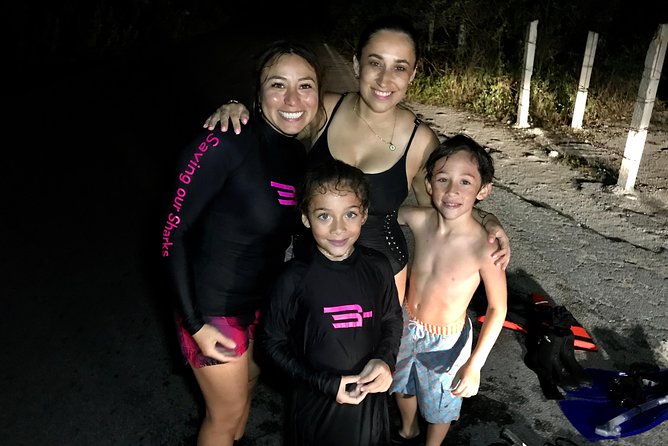
Safety is handled through design and rules. The depth cap is 2.5 meters, and the swim area stays limited to that small zone near shore. That means you are not dealing with open-ocean risk.
The guide also runs this as a team activity. Octopus camouflage, so spacing and scanning matter more than speed. You are taught how to move and how to communicate in the water, which reduces the chance of everyone drifting off or getting separated.
A big principle here is animal respect. You are not supposed to encourage contact with species, and you stay at a safe distance. This protects you and the wildlife.
One more safety note based on real-world conditions: the tour requires good weather. If conditions turn rough, the operator may cancel for safety. So build in flexibility if you can, and keep an eye on your schedule.
Who This Tour Fits Best (And Who Might Be Happier Elsewhere)
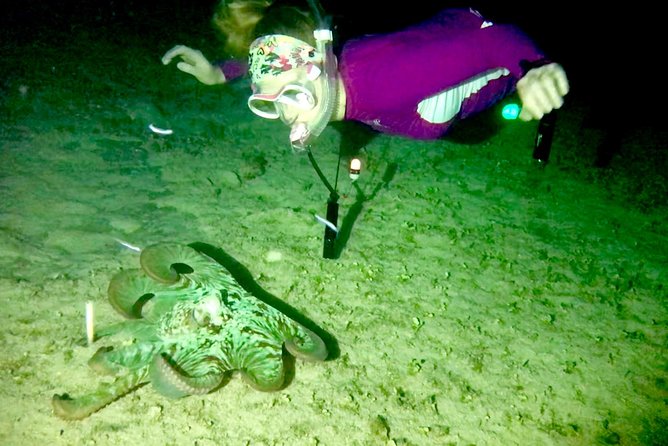
This works well if you:
- Want a true night ocean experience in Cozumel, not just “same snorkel, later.”
- Like wildlife spotting and can handle moving steadily for about an hour.
- Prefer smaller groups and clearer guidance.
The tour also states a moderate physical fitness level is expected. That does not mean you need to be an athlete, but you should be comfortable with water time, swimming motion, and staying coordinated in the dark.
It is especially good for:
- First-timers who still want to snorkel at night but need reassurance and coaching.
- Couples and small groups who would rather get attention than be one face in a crowd.
- Families, when kids can handle the water time and the group instructions.
If you hate swimming, panic in dark water, or want a completely low-effort tour, you might feel stressed even with a life jacket option. In that case, you may enjoy a calmer, daytime snorkeling outing more.
Should You Book Night Snorkeling in Cozumel?
I think you should book this if you want a night wildlife experience with tight control, a shallow depth, and real attention from the guide. The combination of flashlights, diving lamps, and the focused search for octopus and squid is what makes it memorable, and the small group helps you actually enjoy the moment instead of competing with other swimmers.
Before you go, make two smart choices. First, plan a time when weather is likely to cooperate, and accept that cancellations can happen if the sea is not safe. Second, adjust your gear carefully right at the start so nothing feels loose when you are out there in the dark.
If you are chasing one “wow” activity in Cozumel that feels different from the usual beach and daytime snorkeling routine, this is a very solid pick.
FAQ
Where does the tour start?
The tour starts at Money Bar Beach Club, Carr. Costera Sur Km 6.5-Sur, Zona Hotelera Nte., 77675 Cozumel, Q.R., Mexico at 7:30 pm.
How long is the night snorkeling experience?
It’s approximately 1 hour 30 minutes total.
What is the group size?
The tour has a maximum of 4 travelers.
Do I need to swim well?
You do not have to be a strong swimmer. The guide explains how to move in the water and how to communicate in the water, and a life jacket can be provided if you need one.
How deep is the water?
The maximum depth is listed as 2.5 meters.
What gear is included?
Snorkeling equipment is included, along with diving lamps. Each person also has a flashlight.
Are videos included?
Yes. Experience videos are included.
What is the price and language?
The price is $77.67 per person. The tour is offered in English.
What should I bring if I am getting to Cozumel from elsewhere?
The price does not include the ferry to Cozumel, taxi to the meeting point, or taxi back to your hotel, so you’ll need to arrange those on your own.
What happens if the tour is canceled due to weather?
The experience requires good weather. If canceled due to poor weather, you’ll be offered a different date or a full refund.
More after-dark bookings on the Cozumel shortlist

More snorkel stops from our Cozumel notebook


Not quite it? More Cozumel tours from our review pile



Evening Experiences in one list.
 ★ 4.5Xcaret Park Entry Tickets with Cultural Night Show IncludedFrom $1132,382 reviews
 ★ 5.0Los Cabos Luxury Sunset Sail with Light Appetizers and Open BarFrom $1092,267 reviews
 ★ 4.5Xcaret Park Day Trip, transportation and Cultural Night ShowFrom $1671,899 reviews
 ★ 4.5Rhythms of the night, Sunset Cruise, Candlelit Dinner & Alma Show1,667 reviews
 ★ 5.0Cabo San Lucas Sunset Cruise with Open Bar and SnacksFrom $681,610 reviews
 ★ 5.0Lucha Libre Tickets & Tacos & Beer & Mezcal – BEST NIGHT EVER!From $841,077 reviews
 ★ 5.0Taco Adventure Evening Food Tour with Vallarta Food ToursFrom $55934 reviews
 ★ 4.5Sunset Mexican Dinner Cruise and Live Music in Cabo San LucasFrom $95838 reviews
Where else it sits