
Reviewed · MONTE ALBAN & HIERVE EL AGUA
Monte Albán, Arrazola, Cuilapam y San Bartolo Coyotepec.
Monte Albán makes Oaxaca feel close. This full-day tour strings together UNESCO Monte Albán and hands-on artisan culture, with hotel pickup that gets you out of town before the heat and crowds. I like that the plan is tight but not rushed, so you get real time on the mountaintop and then multiple local stops that explain how Oaxaca’s past turns into what you see today, in person. A simple drawback to plan for: it is a stair-heavy day, especially once you start climbing.
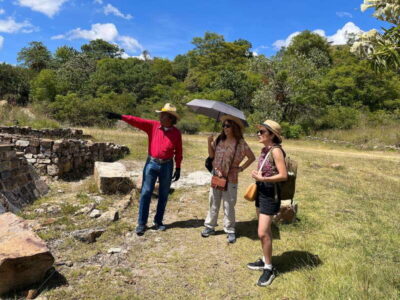
My favorite part is the way the guide frames what you see. When the guide is an archaeology-minded storyteller, like Antonio or Gabriel, the site walk can feel focused and clear, not just a list of names. I also like the contrast later in the day, from Zapotec ceremonial spaces to 16th-century Dominican architecture, then straight into workshop-style art like alebrijes and barro negro pottery.
One consideration before you go: Monte Albán involves uphill walking and stairs, plus standing time for viewpoints. If you have limited mobility or stamina, you might feel it by the time you reach the South Platform. Bring water, pace yourself, and expect sweat, not just sightseeing.
In This Review
- Key Things to Know Before You Go
- First Stops, Clear Route, Real Oaxaca Flow
- Price and Logistics: What $37.55 Covers, and What to Budget
- Getting Into the Monte Albán Rhythm
- Inside Monte Albán: Tombs, Temples, and Los Danzantes
- The South Platform Climb: Views Worth the Sweat
- San Antonio Arrazola: Alebrijes and the Copal Wood Touch
- Cuilapam de Guerrero Convent: Dominican Architecture and the Open Chapel
- Lunch at the Buffet Stop: How to Plan Food Without Losing the Day
- San Bartolo Coyotepec: Barro Negro and the State Museum Stop
- Guides, Group Size, and the English-Spanish Mix
- What to Bring for a Smooth Day
- Should You Book This Oaxaca Day Trip?
- FAQ
- How long is the Monte Albán, Arrazola, Cuilapam, and San Bartolo Coyotepec day trip?
- What time does the tour start?
- Where does the tour meet in Oaxaca City?
- Is the tour in English?
- Is hotel pickup and drop-off included?
- What is included in the price?
- Are tickets included for Monte Albán and Cuilapam?
- Is lunch included?
- Is there walking and climbing?
- Is there a cancellation option with a refund?
- How big is the group?
Key Things to Know Before You Go
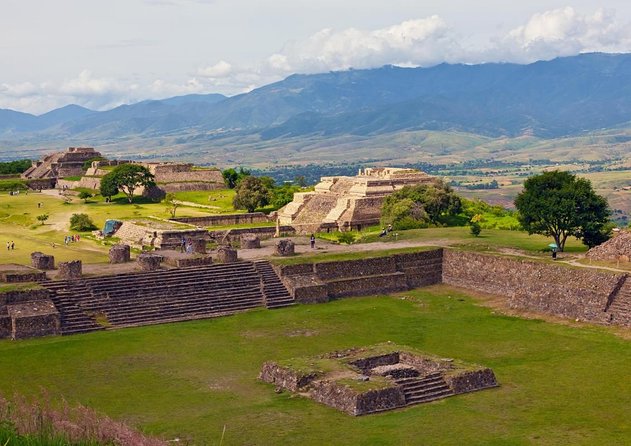
- Monte Albán in about 2.5 hours, with stops around the Grand Plaza, ceremonial platforms, and the Los Danzantes rock carvings
- South Platform climb for the best views, including a wide staircase that rewards the effort
- Arrazola alebrijes from copal wood, with time to stroll and admire the craftsmanship in a small town setting
- Cuilapam de Guerrero convent highlights, including the capilla abierta open chapel and an unfinished basilica
- San Bartolo Coyotepec black pottery, plus a craft market atmosphere that helps you understand how barro negro is made
- Small group size up to 18, which usually makes it easier to hear the guide and manage a full day
First Stops, Clear Route, Real Oaxaca Flow
This tour works because it moves in a logical arc. You start with the big headline, Monte Albán, the Zapotec ceremonial center perched above Oaxaca City and the Oaxaca Valley. From there, you drop down to smaller craft towns and colonial-era sites. It is a smart way to understand Oaxaca, because the day links three themes: ancient power and ritual, indigenous art still made by hand, and Spanish-era religious architecture that shaped daily life.
The day starts with pickup from central Oaxaca, with the tour operating from a meeting point at Quinta Real 5 de Mayo on Independencia Avenue. The scheduled start is 8:30 am, and the drive in an air-conditioned vehicle helps you begin calmer than if you tried to arrange everything yourself on the fly.
The route also keeps you from wasting time. You do not have to coordinate separate drivers, tickets, and directions between multiple towns. The value is less about convenience alone, more about using your energy for the sites themselves.
More Oaxaca valley trips across Oaxaca City, same treatment
- Hierve el Agua, Tule Tree, Mitla and Mezcal Distillery Tour
★ 4.5 · 1,094 reviews - Explore Hierve el Agua, Mitla, Tule, Textile and Mezcal for a day
★ 5.0 · 1,043 reviews - Monte Alban Guided Half Day Tour
★ 5.0 · 880 reviews - Half day tour to Monte Albán
★ 4.5 · 420 reviews - full day tour : Boil the water, Teotitlan, Mezcal, tule and Mitla
★ 4.5 · 229 reviews
Price and Logistics: What $37.55 Covers, and What to Budget
At $37.55 per person, this feels like strong value for an 8-hour day with transport and guiding. You are paying for four big things:
- Pickup and drop-off around Oaxaca City
- An air-conditioned coach
- A guide working in English and Spanish
- Travel insurance
What you need to budget separately:
- Tickets to Monte Albán
- Tickets for Cuilapam de Guerrero
- Lunch is also extra, since you stop at a buffet restaurant and refuel on your own
For the convent stop, there is also an optional museum fee mentioned as 70 pesos per person if you want to add the museum visit. That optional cost is worth knowing ahead of time, so you can decide without feeling pressured in the moment.
A practical tip: when a tour includes admissions that are not in the price, you avoid sticker shock by doing two things. First, bring some cash for tickets and small purchases. Second, set expectations that your full day cost will be a little higher than the base price once you add food and entry fees.
Getting Into the Monte Albán Rhythm
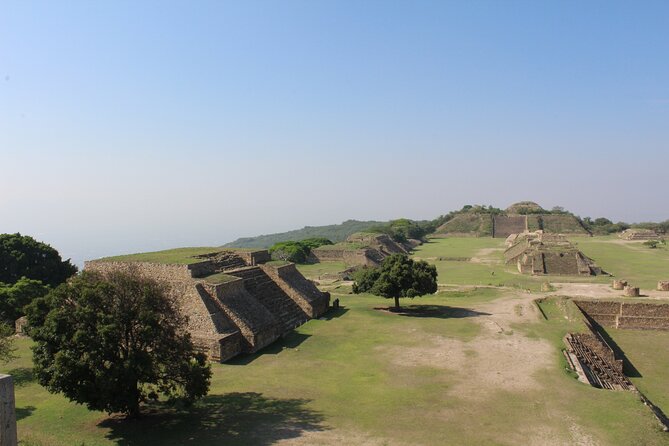
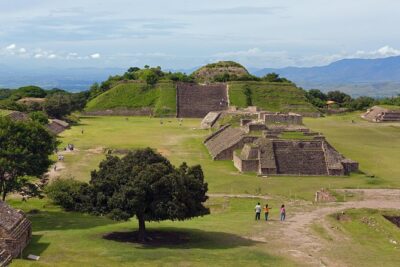
Monte Albán is where the tour earns its reputation. You are there for about 2 hours 30 minutes, which is enough time to see the major features without treating the place like a quick photo stop.
The setting does part of the work for you. Being on a mountaintop means you get wide angles of Oaxaca and the valley. Even if you are not a hardcore history person, the scale helps. You can feel why a civilization would build something monumental here.
The guide route typically includes:
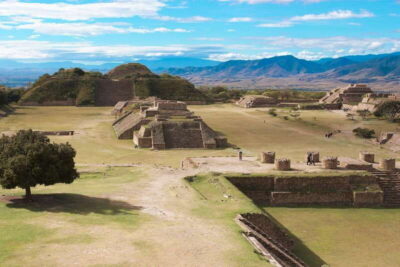
- The Grand Plaza, a large open area on the flattened plateau
- Ceremonial platforms, where rock carvings called Los Danzantes (The Dancers) show how the Zapotec recorded meaning in stone
- Temple and pyramid areas, plus altars and tomb zones
- The I-shaped ball court, dated to around 100 BC
The ball court is a detail I love because it is so specific. It is not just that you see ruins. You see a designed feature tied to games and ritual life.
Inside Monte Albán: Tombs, Temples, and Los Danzantes
Here is what makes Monte Albán more than just impressive ruins: the guide helps you connect objects to purpose. You are walking through spaces that were built for ceremony, hierarchy, and public display.
The tombs matter too. The site contains 170 tombs, and excavations revealed paintings and stone carvings. Even if you only catch bits of the story while walking, the idea lands: this was a living world with artwork and symbolism, not a pile of rocks.
You will also hear about how the Zapotec organized the site. Monte Albán was designed around plazas and platforms, so even though it looks like scattered architecture from a distance, your view becomes clearer as you move through the complex with the guide.
Don’t skip the carvings. Los Danzantes can feel like a bonus stop until you understand what the guide is pointing out. The carvings help you see how this culture communicated through sculpture, not just buildings.
The South Platform Climb: Views Worth the Sweat
One of the strongest moments in the day is the move to the South Platform (Plataforma Sur). This is the area known for a wide staircase and big views.
Plan for it as a mini workout, not a stroll. Multiple guides described as very good at guiding groups will still move at a steady pace, because the tour needs to cover several sites in one day. The best strategy is simple:
- Wear shoes you trust on uneven stone
- Take breaks when you need them
- Use the viewpoints as a reward checkpoint
If you are sensitive to heat, come prepared. The day can get warm fast once you are out in open areas, and the staircase exposes you to sun. Hat, sunscreen, and water make the climb far more comfortable.
- AUTHENTIC OAXACA CULTURAL FOOD TOUR, eat like a local.★ 5.0 · 462 reviews
- Boil the water and distillery mezcal tour★ 5.0 · 413 reviews
- Immersion Tour and Oaxaca Markets, All gastronomy included★ 5.0 · 386 reviews
- Flavors of Oaxaca: Cooking Class with No Set Menu and Local Market Tour★ 4.5 · 333 reviews
- Oaxaca Conmigo Private Tours★ 5.0 · 274 reviews
- The Mezcal Journey★ 5.0 · 273 reviews
- Traditional Oaxaqueña Cooking with Grandma’s Recipes★ 5.0 · 260 reviews
San Antonio Arrazola: Alebrijes and the Copal Wood Touch
After Monte Albán, the tour shifts tone. You head to San Antonio Arrazola, a quieter town at the base of the archaeological site. You have about 45 minutes here, which is short but useful. It gives you enough time to absorb the town and see what locals are making without cutting into the rest of the day.
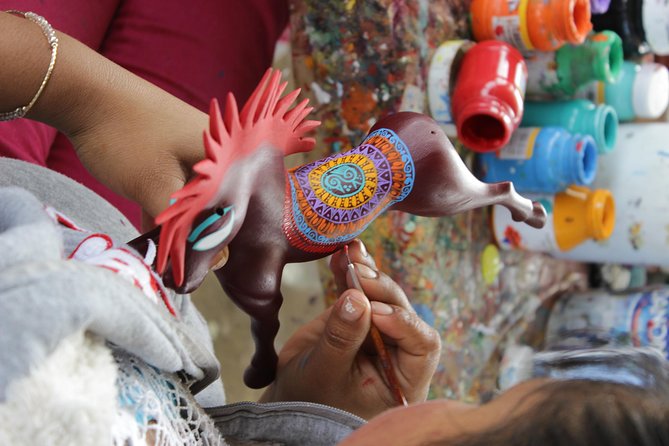
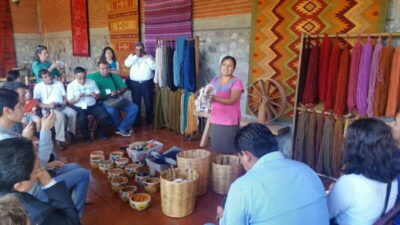
This stop is about alebrijes, the famous fantastic woodcarvings. The key detail: many pieces are carved from copal tree wood. Watching people work, seeing styles close up, and understanding how these creatures reflect imagination rather than realism is part of the point.
What I like about having this stop right after Monte Albán is that it keeps the theme of meaning. Monte Albán communicates through symbol and ritual in stone. Arrazola communicates through symbol and story in carved wood.
It is also the place where you might start thinking about purchases. If you like supporting artisans directly, bring a realistic budget. You can browse, compare, and decide while you still have energy and time.
Cuilapam de Guerrero Convent: Dominican Architecture and the Open Chapel
Next you visit the Cuilapam Convent in Cuilapam de Guerrero, a 16th-century Dominican site. This is a very different kind of monument, and that contrast is exactly why it works in a day trip.
You typically have about 1 hour at this stop. The highlights are the capilla abierta, also called an open chapel, and the unfinished basilica. An open chapel is tied to colonial evangelization methods, meant to help larger groups gather for conversion efforts. If you like architecture with a social purpose, this one tends to land well.
One practical note: entry to the convent is not included in the tour price, so you will pay your own ticket there. For those who want extra context, the museum option is mentioned with an additional 70 pesos per person.
A timing heads-up: this stop can feel a little slower than the artisan stops, because the site invites looking and imagining how people used the space. If you prefer purely “hands-on” experiences, pace yourself through this part so it does not eat too much energy before the final pottery stop.
Lunch at the Buffet Stop: How to Plan Food Without Losing the Day
Lunch happens mid-afternoon around the convent area. You go to a buffet restaurant and you have about 1 hour.
The cost is extra. The provided price range is listed as 200 MXN plus beverages. In real-world day-trip terms, I treat this as a flexible number: expect it to land higher if you add drinks or if you want extra items.
A small but important value tip: do not skip this lunch break. Several guides and schedules build in enough time to refuel before you finish at San Bartolo Coyotepec, which involves both walking around and shopping. If you skip or eat too lightly, the end of the day becomes harder than it needs to be.
San Bartolo Coyotepec: Barro Negro and the State Museum Stop
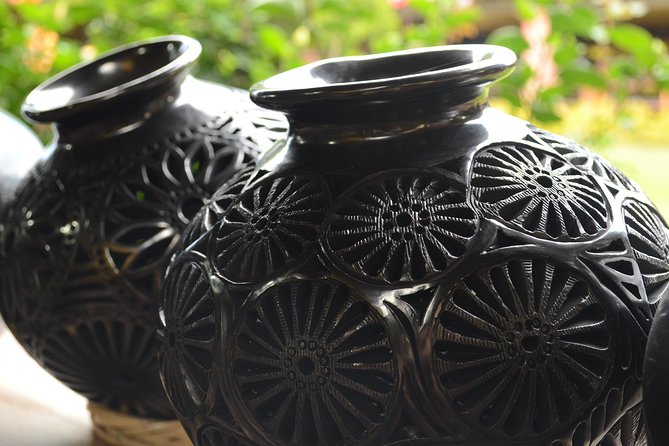
The final stop is San Bartolo Coyotepec, famous for black pottery or barro negro ceramics. You have about 45 minutes here, and it is designed to show you both the craft and the community side.
You can expect:
- A church visit at the 16th-century San Bartolo Coyotepec Church
- A stop at MEAPO, the Oaxaca State Museum of Popular Art
- A craft market area where work from more than a dozen families is on display
- A look at the pottery-making process, including the work style used locally since pre-Columbian times
This stop is great for anyone who wants tangible takeaways. By the time you get here, you have already seen ancient stone forms at Monte Albán and colonial-era religious space at Cuilapam. Now you see how Oaxaca’s craft tradition remains practical and modern, made by real people who keep the technique alive.
If you are shopping, keep it simple:
- Decide early if you want a large statement piece or smaller items
- Ask about what you are looking at while you still have time to compare
- Budget for the fact that good pottery costs more than mass-produced souvenirs
Guides, Group Size, and the English-Spanish Mix
This is a group tour capped at 18 travelers, and that size matters. You can usually hear the guide without constant scrambling for attention, and the group stays manageable during the stair sections.
The guide is described as professional and bilingual, working in English and Spanish. In practice, the balance of languages can vary. If your Spanish is limited, I recommend you set expectations early and ask the guide to slow down or repeat archaeological details in English during the key Monte Albán explanations.
The guide quality is a major reason this trip earns high ratings. Names like Antonio, Emanuel, Moisés, Gabriel, Daniel, Silvia, and Jorge show up as examples of guides who brought strong site storytelling, clear communication, and in-depth explanations. If you get a guide who frames the site like an archaeologist, the Monte Albán walk becomes the kind of day you remember.
What to Bring for a Smooth Day
If you only remember one thing, remember this: it is a walk-and-climb day.
I would pack:
- Water (you will use it)
- Sunscreen and a hat for the open mountaintop areas
- Comfortable shoes with good grip for stones and stairs
- A light layer, since morning can be cooler and afternoons can get hot
If you like taking photos, bring a charged phone or camera, but plan for short walks between viewpoints. Monte Albán rewards patience more than speed.
Should You Book This Oaxaca Day Trip?
I think you should book this tour if you want a well-connected day that hits the big UNESCO site plus artisan Oaxaca, without having to plan transportation between towns. Monte Albán is the main event, and the way the day stitches it together with alebrijes and black pottery makes the trip feel like a real thread, not separate stops you barely connect.
Skip or consider a different style of outing if you dislike stairs and long walking. The South Platform climb and overall walking at Monte Albán are not just minor effort. Also consider your language comfort. The tour is offered in English with bilingual guidance, but the balance can shift during explanations.
If you are curious about Zapotec sites, colonial architecture, and why Oaxaca crafts are still alive today, this is a smart use of one day in Oaxaca City.
FAQ
How long is the Monte Albán, Arrazola, Cuilapam, and San Bartolo Coyotepec day trip?
It runs about 8 hours, with Monte Albán taking around 2.5 hours, plus shorter stops at the artisan and church sites.
What time does the tour start?
The start time is 8:30 am.
Where does the tour meet in Oaxaca City?
The meeting point is Quinta Real 5 de Mayo, 300 Ruta Independencia, Centro, 68000 Oaxaca de Juárez, Oax., Mexico.
Is the tour in English?
Yes. The tour is offered in English, and the guide is described as speaking both English and Spanish.
Is hotel pickup and drop-off included?
Yes, hotel pickup and drop-off from your Oaxaca hotel are included.
What is included in the price?
Included items are a professional English- and Spanish-speaking guide, travel insurance, and an air-conditioned vehicle.
Are tickets included for Monte Albán and Cuilapam?
No. Tickets to Monte Albán and tickets to Cuilapam are not included.
Is lunch included?
No. Lunch is at your own expense, and the plan includes a buffet stop.
Is there walking and climbing?
Yes. You should have a moderate physical fitness level. Monte Albán includes stairs, including the South Platform area.
Is there a cancellation option with a refund?
You can cancel up to 24 hours in advance for a full refund. If you cancel within 24 hours of the experience start time, the amount paid will not be refunded.
How big is the group?
The maximum group size is 18 travelers.
More Oaxaca valley trips that made the Oaxaca City cut
Not quite it? More Oaxaca City tours from our review pile



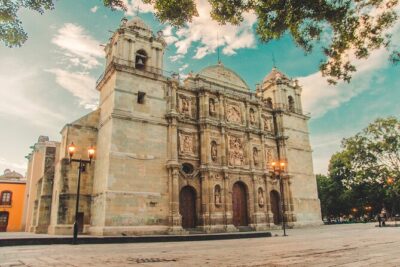

Monte Alban & Hierve el Agua in one list.
 ★ 4.5Hierve el Agua, Tule Tree, Mitla and Mezcal Distillery TourFrom $551,094 reviews
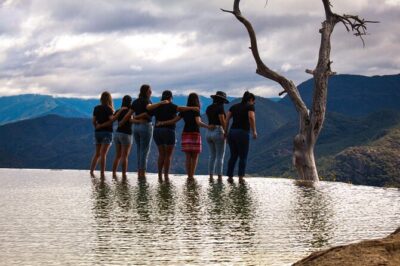 ★ 5.0Explore Hierve el Agua, Mitla, Tule, Textile and Mezcal for a dayFrom $751,043 reviews
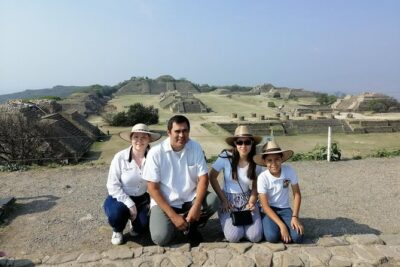 ★ 5.0Monte Alban Guided Half Day TourFrom $32880 reviews
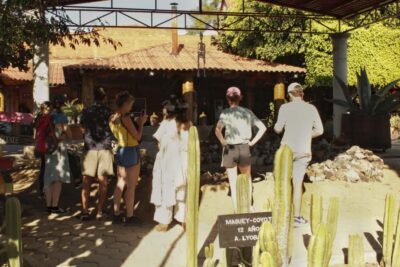 ★ 4.9From Oaxaca de Juarez: Hierve el Agua and Mezcal DistilleryFrom $64615 reviews
 ★ 4.7Oaxaca de Juarez: Monte Alban Half-Day TourFrom $31492 reviews
 ★ 4.7Oaxaca: Tule, Mitla & Hierve el Agua, & Mezcal TourFrom $75456 reviews
 ★ 4.5Half day tour to Monte AlbánFrom $32420 reviews
 ★ 4.2Oaxaca: Monte Alban Guided Archaeological TourFrom $33419 reviews
Where else it sits